
Waist length hair extensions, generally 24 to 28 inches, cost more wholesale for two concrete reasons: the donor hair has to come from a growth phase long enough to reach that length in the first place, and the bundles sold as full and even at that length go through a hand-sorting process called double-drawing. Neither reason is marketing language. Both are measurable, and understanding them is what separates a salon that prices this category well from one that guesses.
What Counts as Waist Length Hair, Exactly?
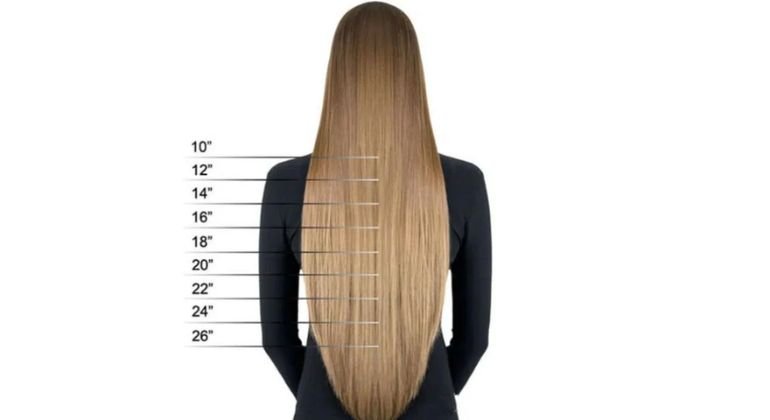
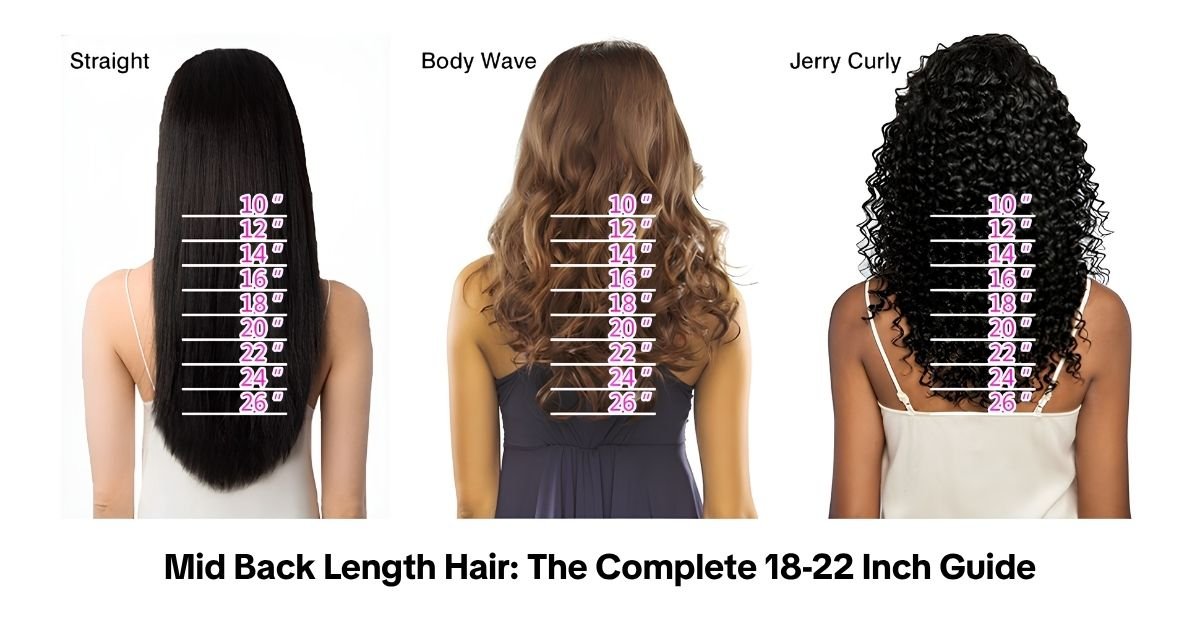
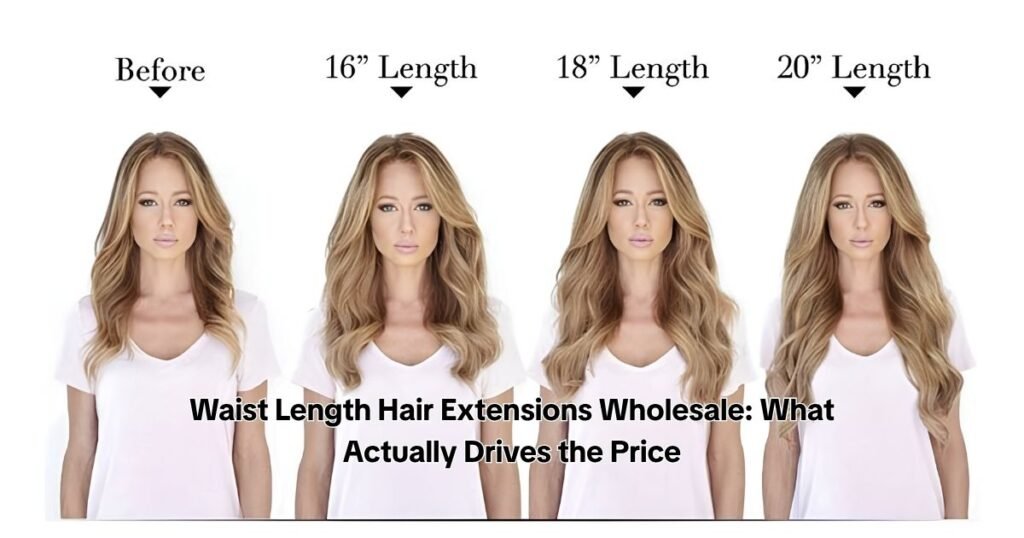
In the wholesale trade, waist length hair extensions usually sit in the 24 to 28 inch range. But a ruler measurement only tells part of the story, because where that length actually lands depends on the client’s height and torso proportions, not the number on the tag. A 5’2″ client can hit a true waist-grazing look at 22 to 24 inches. A client closer to 5’8″ often needs the full 28 inches to reach the same landmark. This is the kind of detail a consultation chart should reflect, and it is worth building into how you present the category to stylists and clients rather than treating every “waist length” order as interchangeable.
| Length | Typical landmark on an average-height client (5’4″-5’6″) |
| 18 inches | Shoulder to upper chest |
| 20 inches | Bra-strap to upper-mid back |
| 22 inches | Mid-back |
| 24 inches | Natural waist |
| 26 inches | Low back to upper hip |
| 28 inches | Hip length |
Treat this as a starting point for a consultation, not a guarantee. Taller clients, or clients whose natural waist sits lower on their frame, should size up a length or two from what the chart suggests.
Why Waist-Length Hair Costs More Wholesale, Really
Most sourcing content stops at “it’s rare,” which is true but incomplete. Two separate mechanisms push the wholesale price of 24 to 28 inch hair above shorter lengths, and buyers who understand both are better equipped to spot a fair price from an inflated one.
The Growth Math Behind the Price Tag
According to the American Academy of Dermatology, scalp hair grows about six inches a year on average, or roughly half an inch a month. That figure alone doesn’t explain scarcity. What does is the anagen phase, the active growth stage every hair follicle cycles through before the strand sheds naturally. Most dermatology sources place the anagen phase at two to six years, varying by individual and by genetics.
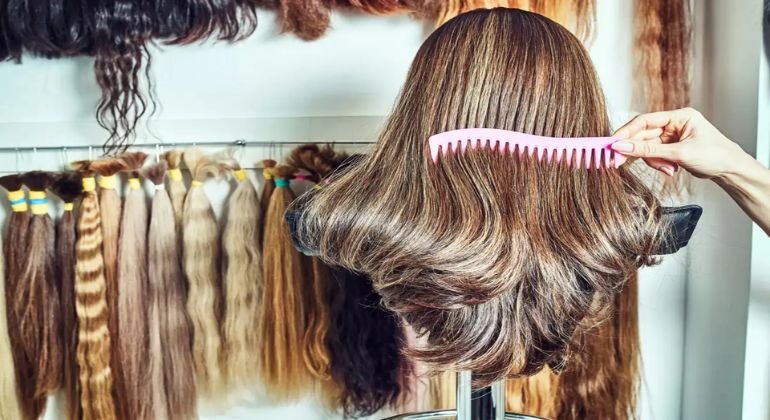
Do the math and the scarcity becomes concrete. A strand with an anagen phase on the shorter end of that range, around two to three years, caps out well short of waist length before it sheds on its own, no matter how carefully it’s cared for. Only donors whose anagen phase runs toward the longer end of that biological range can grow a single, unbroken strand all the way to 24 to 28 inches. That’s a genetic head start, not something anyone can guarantee by simply avoiding scissors. It’s also why a supplier who can consistently deliver genuine waist-length, single-donor bundles is sourcing from a narrower pool of donors than a supplier working in 14 to 18 inch lengths, and that scarcity shows up in the price before any markup is applied.
This is also where sourcing region genuinely matters, separate from marketing claims about origin. A 2020 structural review in Clinical, Cosmetic and Investigational Dermatology found that Asian hair grows faster on average than Caucasian or African hair types, alongside a larger fiber diameter and a thicker, more tightly compacted cuticle layer. A faster average growth rate widens the pool of donors who can plausibly reach waist length within a normal anagen phase, which is one honest reason Vietnamese and other Southeast Asian donor pools show up disproportionately often in genuine waist-length wholesale stock. It’s a population-level average, not a promise about any single bundle, so it still has to be backed up by the verification steps below rather than treated as a shortcut past them.
Single-Drawn vs Double-Drawn: The Difference Buyers Actually Pay For
The second cost driver is how the bundle is finished, and it’s the piece most sourcing guides skip entirely. Hair drawn straight from a donor without further sorting is single-drawn: full at the root, tapering naturally toward the tip because real human heads don’t grow every strand to the exact same length. Double-drawn hair goes through an additional hand-sorting process, traditionally done with a hackle, that pulls out the shorter strands so the bundle stays close to the same thickness from weft to tip. That extra labor and the additional raw hair required per finished bundle is a direct, traceable cost, not an arbitrary premium.
| Attribute | Single-drawn | Double-drawn |
| Root-to-tip shape | Tapers toward the ends | Stays close to uniform, blunt-looking ends |
| How it’s sorted | Minimal sorting; natural strand-length mix | Shorter strands hand-removed for consistency |
| Best suited for | Soft, natural movement | Full, dense volume at waist length |
| Bundles needed for a full install | More, to compensate for thinner ends | Fewer, since fullness holds to the tip |
| Relative wholesale cost | Lower | Higher |
Neither option is wrong. A single-drawn waist-length bundle can look beautiful on a client who wants movement over density. The problem is when a bundle is priced and marketed as double-drawn but tapers like single-drawn hair, which is one of the more common ways buyers overpay or get shorted on density. That’s exactly what the verification checklist below is built to catch.
Does Stocking Waist-Length Hair Still Make Business Sense in 2026?
Worth saying plainly: current hair trend coverage for 2026 leans toward blunt bobs and shorter, texture-driven cuts, not longer lengths across the board. A salon shouldn’t stock waist-length hair on the assumption that it’s the dominant look this season, because it isn’t for most day-to-day clients.
Where it still earns shelf space is as a deliberate, higher-margin niche rather than a volume line. Bridal and formal-event clients consistently ask for dramatic length that their natural hair can’t deliver on a compressed timeline. Wig makers and extension specialists building custom units need waist-length bundles as raw material regardless of what’s trending in everyday cuts. And because fewer suppliers can reliably deliver genuine, verified waist-length hair, a salon or reseller that gets sourcing and verification right occupies a smaller, less price-competitive corner of the market than one competing on 18 to 20 inch bundles that dozens of vendors carry.
Pricing and Positioning Waist-Length Hair Without Guesswork
Start from cost, not from what feels like a premium number. Waist-length bundles require more raw hair, more sorting labor if double-drawn, and typically more bundles per install, so the retail price should reflect all three inputs before you add margin, not just the length on the label.
- Bundle intentionally. Since a full waist-length install needs multiple bundles, a modest per-bundle discount on a multi-bundle package rewards the larger purchase without discounting the category as a whole.
- Sell the aftercare alongside it. Heavier, longer installs put more demand on maintenance. Pairing waist-length bundles with sulfate-free shampoo, a wide-tooth detangling brush, or a heat protectant turns one sale into a recurring one.
- Hold the price. Discounting a category that is genuinely harder to source undercuts the reason a client should trust the length claim in the first place. If the sourcing and verification described above is real, the price should say so.
Caring For and Storing Waist-Length Inventory
Length adds weight, and weight changes how hair needs to be handled both on a client’s head and on your shelf. The American Academy of Dermatology notes that weaves and extensions can damage natural hair and lead to traction alopecia, a form of hair loss caused by repeated pulling, when they’re too heavy, attached too tightly, or worn too long without a break. Dermatologists recommend wearing a set for two to three months at most before giving natural hair a break, using a lightweight application method, and having the hair applied and removed by a trained professional rather than at home. All of that matters more at 24 to 28 inches than it does at 16 inches, simply because there’s more length pulling on the attachment point.
On the inventory side, store bundles flat rather than hanging, inside a breathable silk or satin bag, away from direct light and humidity swings. Hanging waist-length hair for extended periods keeps continuous weight on the weft or bonds, which can stretch or weaken the attachment well before the hair fiber itself shows any wear. For general hair-drying and handling technique that extends the life of any raw bundle, see our guide to drying hair extensions the right way.
Ready to Source Waist-Length Hair You Can Verify?
Every bundle we sell is single-donor, cuticle-intact, and sourced with the kind of traceability described above, not marketing language layered over a mystery blend. Browse our current bundle and closure collection to see available lengths, or contact our team for wholesale pricing and a texture consultation before you place a bulk order. For more on how Vietnamese hair’s structure holds up at longer lengths, see our deeper look at Vietnamese long hair, and for sourcing red flags to watch for beyond length claims, read our guide to where to buy hair extensions in the USA.
Ready to find your perfect match? Contact us today for expert advice and exclusive discounts on premium human hair extensions.
📲Phone/WhatsApp: +1 (206) 698‑5133
🛜Instagram: RAW HAIR LUXURY COMPANY
🌐Tik Tok: RAW HAIR LUXURY
📧 Email: Rawhairluxury.us
🌐Website: rawhairluxury.com