
Few questions come up more often in hair forums and salon chairs than this one: is a weave bad for your hair? The honest answer is more nuanced than a simple yes or no. A weave itself is not inherently damaging it’s an inert bundle of hair fiber. What determines whether your natural hair thrives or suffers underneath it comes down to installation method, tension, duration, and how diligently you maintain your scalp throughout the process.
This guide goes further than the typical surface-level warning list. We’ll break down exactly what happens to the hair follicle under tension, how long is too long to leave a weave in, which installation methods carry the lowest clinical risk, the early warning signs that your hair is in trouble, and a realistic recovery plan if damage has already occurred.
How a Weave Can Actually Damage Your Hair
To understand whether a weave is bad for your hair, it helps to understand what’s happening at the follicle level. Human hair follicles are anchored in the scalp by a structure that can tolerate a normal range of mechanical stress brushing, washing, and everyday movement. Problems begin when that stress becomes sustained and excessive, which is exactly what happens with poorly installed or overly tight weaves.
Traction Alopecia: The Most Common Risk
Traction alopecia is hair loss caused by repeated or constant pulling on the hair shaft and follicle. When a weave is braided, sewn, or bonded too tightly, the follicle experiences continuous tension it was never designed to withstand. Over time, this tension causes inflammation around the follicle, which can progress to permanent scarring and irreversible hair loss if the pattern repeats over months or years.
The hairline and edges are particularly vulnerable because the hair here is naturally finer and the follicles sit at a shallower angle in the scalp. This is why many cases of weave-related hair loss show up first as thinning edges rather than overall hair loss.
Hair Shaft Weakening and Breakage
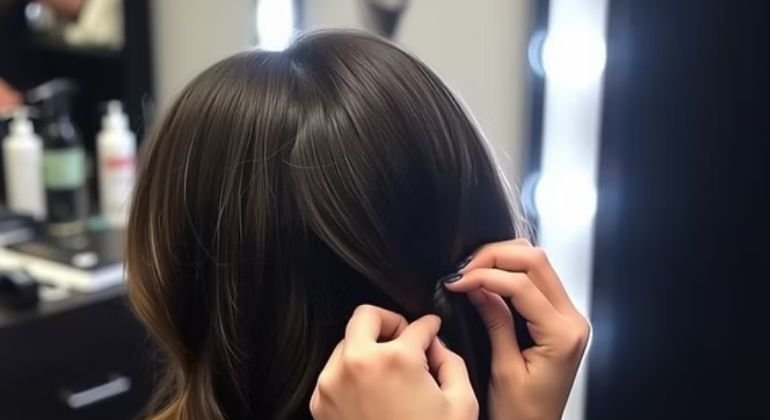
Beyond the follicle itself, the hair shaft can also suffer. Constant friction between a weave and natural hair, combined with the weight of added length, places mechanical stress along the length of each strand. Over weeks, this can cause the hair’s protective cuticle layer to lift and fray, leading to breakage that shows up as noticeably thinner ponytails or unusual shedding once the weave is removed.
Scalp Health Complications
A weave creates a covered, less ventilated environment on the scalp, particularly with sew-in or glued installations. Combined with reduced ability to properly cleanse the scalp, this creates favorable conditions for bacterial and fungal overgrowth. Seborrheic dermatitis and folliculitis (inflamed, sometimes pus-filled bumps around hair follicles) are both more common in people who wear weaves for extended periods without adjusting their cleansing routine.
How Long Can You Safely Leave a Weave In?
This is one of the most practical questions people ask, and most articles skip it entirely. Most professional stylists and trichologists recommend a maximum of six to eight weeks per install, regardless of installation method. Beyond this window, several risk factors compound:

New hair growth at the root creates uneven tension distribution as the install settles further from the scalp surface, increasing pull on the follicle. Product buildup and natural oils accumulate beneath the weave, which is more difficult to fully cleanse the longer the install remains. Matting risk increases significantly after the eight-week mark, particularly at the nape and around the perimeter, which can require aggressive detangling that causes additional breakage.
If you wear weaves regularly, building in a minimum two-week break between installs allows your scalp and natural hair to recover, which significantly reduces cumulative damage over a year of regular wear.
Early Warning Signs Your Weave Is Damaging Your Hair

Catching damage early dramatically improves your chances of full recovery. Watch for these signs throughout your install:
- Persistent tenderness, tingling, or a tight, throbbing sensation at the scalp lasting more than 48 hours after installation
- Small bumps, redness, or visible pustules along the hairline or part lines
- Noticeable thinning specifically at the hairline, temples, or nape areas where tension typically concentrates
- Hair breaking off at varying lengths when you finally remove the weave, rather than coming out evenly
- Unusual itching that doesn’t resolve with normal cleansing
If you notice any of these signs, the appropriate response is to have the weave removed and to give your scalp a genuine recovery period before reinstalling.
How to Minimize Damage While Wearing a Weave
Choose a Skilled, Experienced Installer
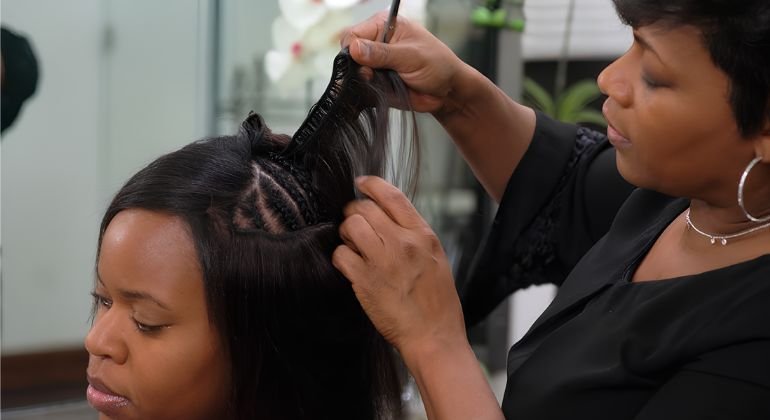
The single biggest variable in weave-related damage is installer skill. A stylist experienced in proper tension distribution will braid foundations that feel secure but never painful, and will recommend appropriate weft placement for your specific hair density and growth pattern.
Prioritize Scalp Hygiene Throughout the Install
Use a diluted, sulfate-free shampoo applied with an applicator bottle to reach the scalp without disturbing the install. Follow with a lightweight, water-based scalp serum containing soothing ingredients like tea tree oil or witch hazel to control bacterial and fungal growth without weighing down the hair.
Moisturize Your Edges and Natural Hair
The hair left exposed at your edges and hairline needs ongoing moisture, since it is no longer receiving the same level of attention as the rest of your scalp. A lightweight, water-based leave-in applied morning and night helps prevent the dryness and brittleness that often precedes breakage.
Sleep With Protection
A satin or silk pillowcase, or a satin-lined scarf, significantly reduces the friction between your weave and your sleep surface, protecting both the install’s appearance and the health of your natural hair underneath.
Respect the Six to Eight Week Window
As covered earlier, this single habit does more to prevent cumulative damage than almost any other single factor.
What If You’ve Already Experienced Damage?
If you’re dealing with thinning edges, breakage, or scalp irritation after wearing weaves, recovery is possible in the majority of cases, particularly if the damage hasn’t progressed to follicular scarring.

Give your scalp and hair a genuine break of at least four to six weeks without any tension-based styling. Incorporate a protein treatment every two weeks to help reinforce the hair shaft, alongside regular deep conditioning to restore moisture balance. Consider a dermatologist consultation if thinning persists beyond eight weeks of rest, as topical treatments like minoxidil can support regrowth in cases of early-stage traction alopecia, though they are far less effective once scarring has occurred.
So, Is a Weave Bad for Your Hair? The Honest Verdict
A weave is not inherently bad for your hair, the damage potential lies almost entirely in execution. Choosing a lower-tension installation method, working with a skilled stylist, maintaining rigorous scalp hygiene, and respecting reasonable wear-time limits allows most people to enjoy the versatility of weaves for years without meaningful hair health consequences.
The people who experience genuine, lasting damage are almost always those who combine high-risk installation methods with extended wear times and minimal scalp care. If you address those three variables deliberately, you can have both the style you want and the healthy natural hair underneath it.
Ready to find your perfect match? Contact us today for expert advice and exclusive discounts on premium human hair extensions.
📲Phone/WhatsApp: +1 (206) 698‑5133
🛜Instagram: RAW HAIR LUXURY COMPANY
🌐Tik Tok: RAW HAIR LUXURY
📧 Email: Rawhairluxury.us
🌐Website: rawhairluxury.com