
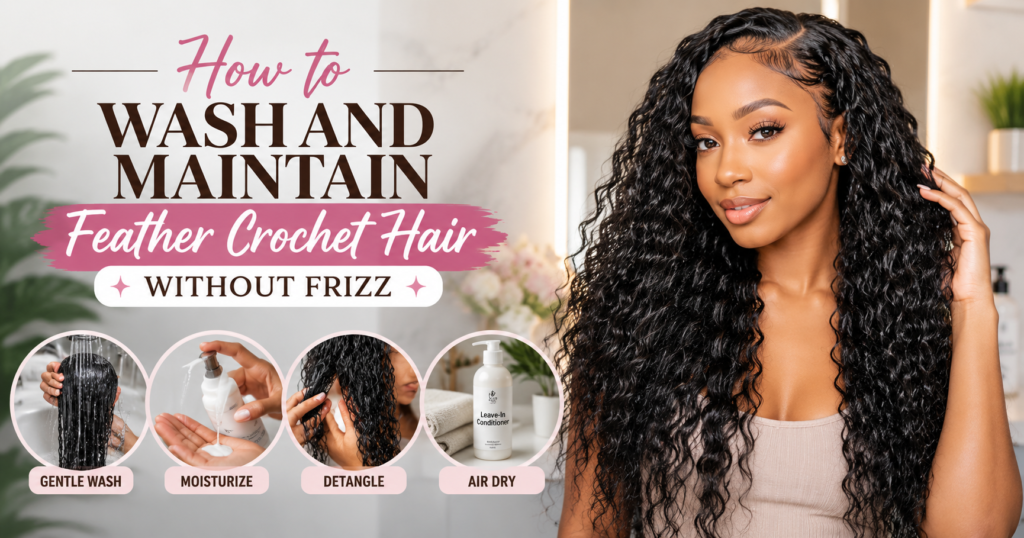
Wash feather crochet hair every two to three weeks using a sulfate-free shampoo diluted in an applicator bottle and aimed at the scalp only. Rinse downward with lukewarm water, keep conditioner off the loops, and dry the braided base completely within two to three hours using cool airflow. Overwashing loosens the install; under-drying causes odor.
That is the short version. The longer version matters, because almost every feather crochet hair problem people blame on the hair the musty smell by day three, the matted patch at the nape, the loops that slip in week four traces back to one of four wash day decisions. This guide walks through each one, with the specifics most care articles leave out: water temperature, dilution ratio, drying time, and the point at which a protective style stops protecting anything.
Why feather crochet hair care is different from box braids or a sew-in
Feather crochet hair is made of fine, wispy human-hair strands attached to a discreet pre-formed loop, then hooked onto cornrows. That construction creates two things you have to care for at once: the extension fiber above, and your own braided hair sealed underneath.
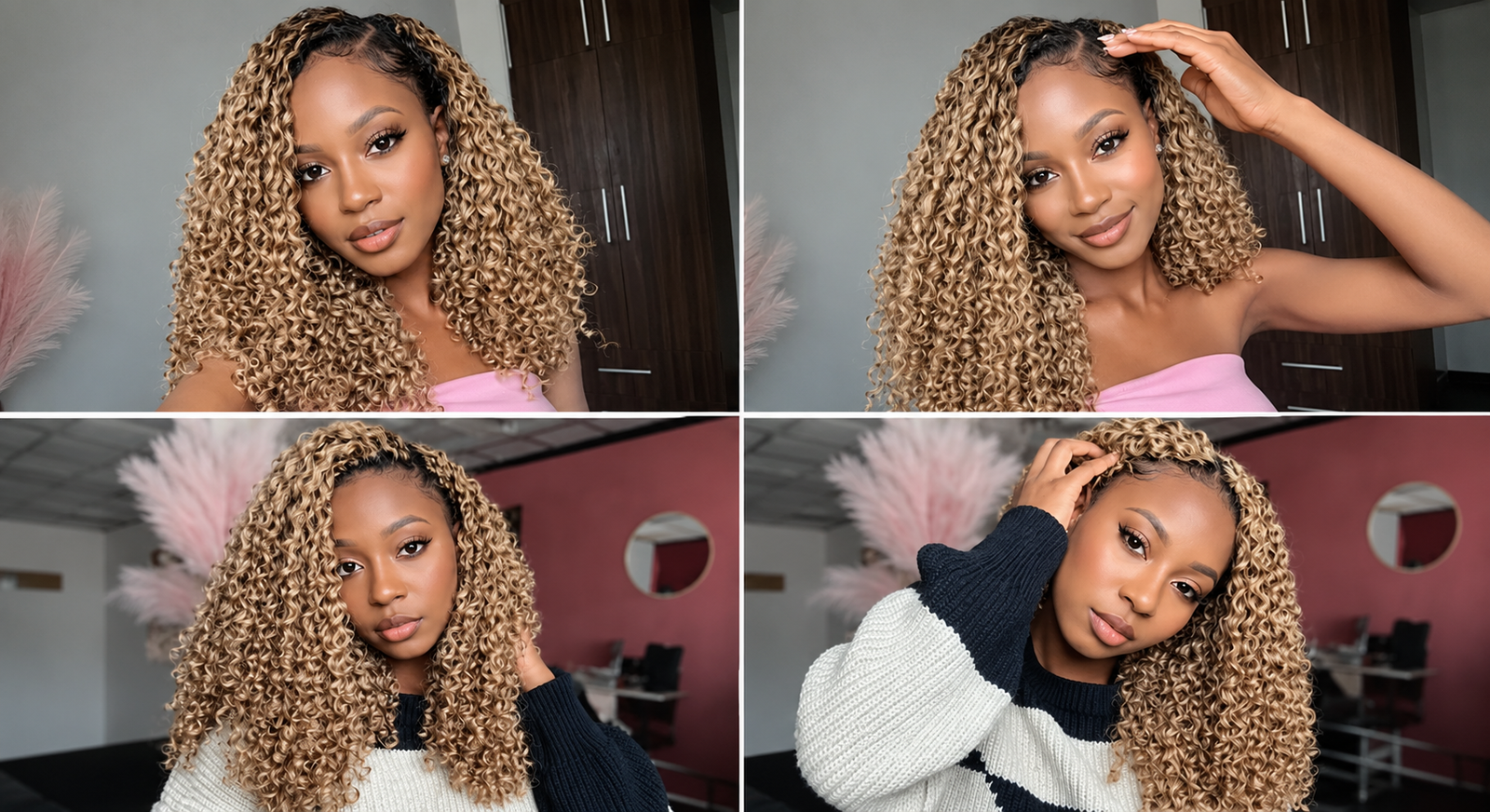
The feathered texture is the vulnerable part. Because the strands are deliberately fine and loosely layered rather than dense, friction and heavy product disturb them far faster than they would a chunky twist or a bulky loc. Meanwhile the extension has no oil supply of its own your scalp’s sebum never travels up into it. Cleansing and moisture therefore have to be delivered to two different places, in two different ways, on the same wash day.
How often should you wash feather crochet hair?
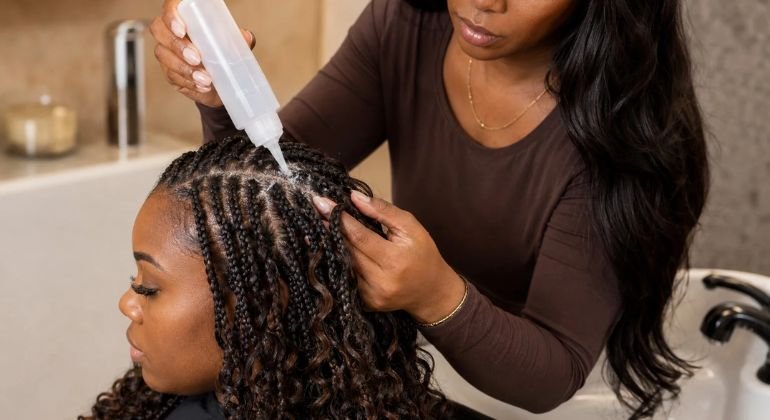
Every two to three weeks is the baseline. The American Academy of Dermatology advises that dry, textured, curly or thick hair be shampooed at least once every two to three weeks, and a crochet install sits squarely in that window. Your real cadence depends on how much you sweat, not on the calendar.
| Your week looks like | Full wash every | Between washes |
| Desk-based, minimal sweat | 3 weeks | Dry scalp refresh weekly with a witch hazel or diluted astringent applicator |
| Gym or training 3–5x weekly | 10–14 days | Cool water rinse-only after heavy sweat sessions; dry the base fully |
| Swimming (chlorine or salt) | Rinse same day, full wash within 48 hours | Saturate with plain water and leave-in before entering the pool |
| Hot, humid climate | 2 weeks | Light mist, never oil-heavy refreshers that trap heat |
| Oily or flake-prone scalp | 7–10 days, scalp-only cleanse | Skip lengths entirely to preserve the feathered texture |
How to wash feather crochet hair while it is installed: 7 steps
- Separate before water touches it. Spend five to ten minutes finger-separating the sections. Water fuses loose strands together, so anything tangled going in comes out matted.
- Pre-rinse lukewarm. Roughly 95 -100°F (35 – 38°C). Hot water swells the hair shaft and lifts the cuticle, which is exactly what you do not want on fine feathered ends.
- Dilute your shampoo 1:4. One part sulfate-free shampoo to four parts water in an applicator bottle. Concentrated shampoo squeezed straight onto a cornrow base is nearly impossible to rinse out, and residue is the number one cause of itch.
- Cleanse the scalp only. Apply along each parting row. Massage with the pads of your fingers, moving with the direction of the braids, roughly 60 – 90 seconds per section. Never scrub in circles.
- Rinse downward, twice as long as feels necessary. Water flows root to tip. Keep going until it runs completely clear.
- Condition mid-length to ends only. Three to five minutes, then a cool rinse. Conditioner at the loop is the mechanical reason installs slip, it lubricates the exact knot holding the extension in place.
- Blot, then dry the base first. Press with a microfiber towel or cotton t-shirt. Never wring or twist.
The drying step most people get wrong
Air drying is not automatically the gentle option. In a controlled study published in Annals of Dermatology, researchers found that hair took over two hours to dry completely under ambient conditions, and the cell membrane complex was damaged only in the naturally dried group. Their conclusion was that a dryer held about 15 cm away, kept in continuous motion, caused less damage than letting hair dry on its own.
Applied to a crochet install, that means: use the cool or low setting, hold the nozzle roughly six inches from the scalp, keep it moving, and aim at the parting rows before the lengths. Target a fully dry base within two to three hours. A base that stays damp overnight under a bonnet is how mildew and that unmistakable musty smell begin. For technique across all extension types, our guide on how to dry hair extensions like a pro breaks the airflow direction down further.
Feather crochet hair maintenance between wash days
Moisture, applied in the right place. The extension wants water; your scalp wants a light oil. Mist the lengths with a water-and-leave-in blend, and apply a lightweight oil to the scalp two or three times weekly. Heavy butters and grease weigh feathered strands into limp clumps and build up faster than a two-week wash cycle can clear.
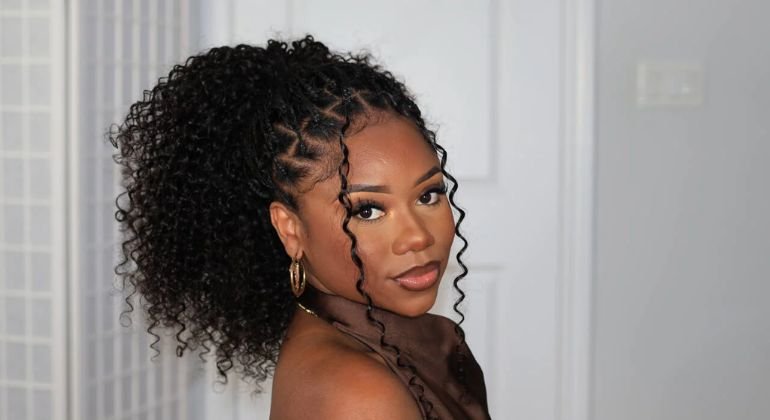
Detangling. Fingers first, always starting at the ends and working upward. Wispy textures benefit from a quick pass once or twice daily a minute a day prevents a two-hour rescue mission later. If you use a comb, the AAD advises a wide-tooth comb on damp, conditioned hair rather than a brush, since hair is at its weakest when wet.
Night protection. Gather into a loose pineapple, then cover with a satin bonnet or silk scarf, and sleep on a satin pillowcase as backup. Cotton wicks moisture straight out of the fiber and creates the friction that produces nape matting. Our walkthrough on how to wrap your hair at night covers the wrap that holds through eight hours of movement.
Troubleshooting: five common feather crochet hair problems
| What you see | Actual cause | Fix |
| Musty smell 2–3 days after washing | The braided base never fully dried | Cool-air dry the parting rows to completely dry; never sleep on a damp base |
| Matting at the nape | Collar friction plus conditioner that reached the loops | Keep conditioner mid-length down; silk scarf at night; separate the nape daily |
| Frizzy halo by week three | Your own new growth lifting at the root | Normal smooth with a light mousse; it signals the halfway point of the install |
| Loops slipping or feeling loose | Oil or conditioner at the knot, or over-soaking | Keep all slip products off the base; shorten rinse time on the roots |
| Itchy, flaky scalp | Product residue, not dryness | Clarify with a diluted cleanse; stop adding oil until the flakes clear |
Scalp health: when to take feather crochet hair down
No maintenance routine outranks knowing when a protective style has run its course. Speaking at the Skin Spectrum Summit, dermatologist Dr. Renée Beach advised that protective styles including braids and crochet should be removed within two months, and that extensions should not exceed roughly double the length of your existing hair.
The AAD’s guidance on hairstyles that pull lists the early warning signs worth checking monthly: broken hairs around the forehead, a receding hairline, patches of loss where hair is pulled tightly, plus stinging, crusts, or a tented look to the scalp. Dermatologists interviewed by Dermatology Times note that traction alopecia often begins as small pimple-like bumps along the hairline with itching and soreness and that it becomes permanent if the tension continues.
A practical rule: six to eight weeks maximum per install, then one to two weeks of low-tension rest before the next one. If the style hurts at any point, that is not “settling in.” That is tension you should have loosened at the chair.
How to wash and store feather crochet hair for reuse
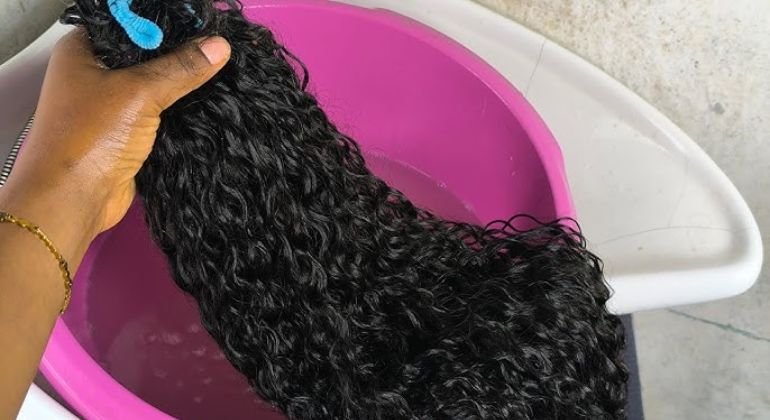
Good-quality human hair feather crochet can be reinstalled if it comes down intact. After removal, separate every strand by hand before it touches water. Fill a basin with lukewarm water and a small amount of diluted sulfate-free shampoo, then swish and stroke downward never in circles. Rinse, apply conditioner from mid-length to ends, rinse again, and lay flat on a microfiber towel to blot. Once bone dry, mist lightly with a leave-in, braid loosely, and store in a breathable bag or box. Sealed plastic with any residual dampness is what ruins otherwise reusable hair. The same principles apply to reviving other pieces see how to revive an old human hair wig.
Frequently asked questions
Can you wash feather crochet hair while it is installed?
Yes. Feather crochet hair is designed to be washed in place. Use diluted sulfate-free shampoo through an applicator bottle aimed at the scalp, rinse downward with lukewarm water, and keep conditioner away from the loops so the install stays secure.
How long does feather crochet hair last?
Most installs are worn four to eight weeks. Dermatologists recommend removing crochet styles within two months to limit tension on the follicles. Quality human hair can be washed, dried, stored, and reinstalled for several cycles after that.
Why does my feather crochet hair smell after washing?
Almost always because the braided base underneath never dried completely. Damp hair sealed under cornrows and a bonnet develops odor within one to two days. Dry the parting rows with cool airflow until fully dry before styling or sleeping.
Can I use a brush on feather crochet hair?
Avoid brushes on feathered and curly textures they break up the layered pattern and loosen knots. Finger-detangle from the ends upward instead. If you need a tool, use a wide-tooth comb only on damp, conditioned hair.
Can I swim with feather crochet hair?
You can, with preparation. Saturate the hair with plain water and a leave-in before entering, which limits how much chlorine or salt the fiber absorbs. Rinse thoroughly the same day and complete a full wash within 48 hours.
Start with hair worth maintaining
A care routine can only preserve what the hair already is. Raw Hair Luxury supplies 100% unprocessed raw Vietnamese human hair to stylists, salons, and resellers across the US — hair that still looks full after the wash days, not just on install day.
Message our team for a texture consultation and wholesale pricing →
Reviewed for accuracy by the Raw Hair Luxury product team. Raw Hair Luxury has supplied raw Vietnamese human hair extensions to stylists and salons in the US, UK, Canada, France, and the Netherlands for over ten years. Care guidance in this article reflects supplier handling experience and is cross-referenced against published dermatology sources, cited inline.
Ready to find your perfect match? Contact us today for expert advice and exclusive discounts on premium human hair extensions.
📲Phone/WhatsApp: +1 (206) 698‑5133
🛜Instagram: RAW HAIR LUXURY COMPANY
🌐Tik Tok: RAW HAIR LUXURY
📧 Email: Rawhairluxury.us
🌐Website: rawhairluxury.com