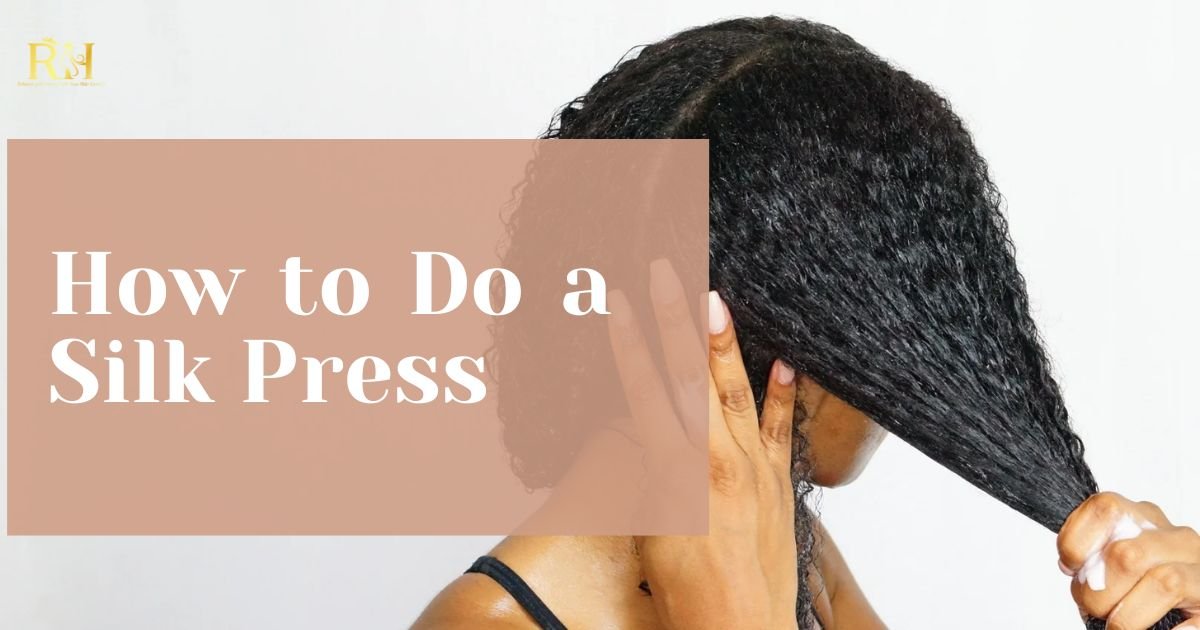

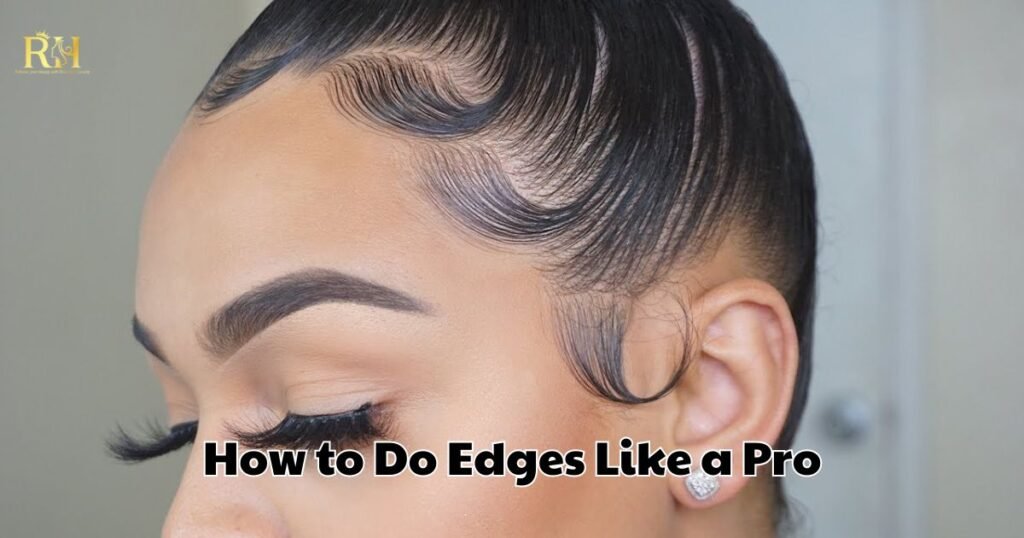
Laid edges finish a sleek ponytail, a silk press, or a lace front wig. Most guides stop at “brush and gel,” though, and skip the three things that decide whether your edges look sharp at 6 p.m.: the order you apply products in, how you adapt the method to your texture, and how you keep a daily habit from thinning your hairline. This guide covers all three, plus how to create and style baby hairs on a lace frontal, which competing tutorials barely touch.
What You Need: Edge Control, Edge Brush, and Setting Tools
You need four things: an edge control product, an edge brush (a soft, new toothbrush works), a rat-tail comb, and a silk or satin scarf. The product choice matters most, and it depends on your texture.
| Your hair | Best product type | Why |
| Fine or wavy (types 2 to 3A) | Light or medium-hold gel | Heavy pomades weigh fine hair down and look greasy. |
| Curly (3B to 4A) | Strong-hold gel | Grips springy curls without stiff crunch. |
| Coily or coarse (4B to 4C) | Pomade-style edge control or wax stick | Denser formulas smooth coarse strands and resist humidity. |
| Lace wig baby hairs | Medium-hold gel plus a mousse or holding spray | Keeps the hair flat against the lace without stiffening it. |
Before you buy, check the label. Products with a high alcohol content near the top of the ingredient list tend to dry the hair out with daily use. If your skin reacts easily, patch test any new edge control behind your ear 24 hours before using it on your hairline.
How to Lay Edges Step by Step
Use this method to do edges on natural hair, leave-out, and wig hairlines. Plan on about 15 minutes the first few times.
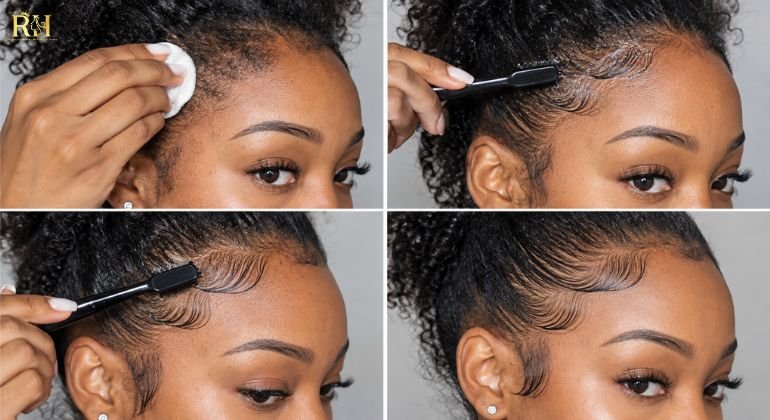
- Start clean. Wipe away old gel with a damp cloth or wash your hairline with a gentle shampoo. New product grips poorly on top of dried residue, and residue causes most flaking.
- Moisturize lightly. Dab a pea-size amount of water-based leave-in onto your edges and give it two minutes to absorb. Skip heavy oils here.
- Map the shape. Brush the baby hairs forward, then look at which way they grow. Place each swoop where the hair already wants to curve. Fighting your growth pattern is why edges pop up by lunchtime.
- Apply edge control in thin sections. Load only the tips of the brush. Work a section about one inch wide: brush the hair down, then curve the ends back toward the hairline. Two thin passes hold better than one thick coat.
- Refine with a rat-tail comb. Use the tail to sharpen each curve and press the ends flat while the gel is still wet.
- Set without tension. Lay a silk scarf over your edges and tie it loosely for five to ten minutes. A tight tie works against you (see the hairline section below).
Pro tip: Do your edges before foundation. Makeup on the hairline stops gel from gripping and leaves a visible line.
Adjusting How to Lay Baby Hairs for Your Hair Type
Laying Edges on 4C and Coarse Hair
Coily edges shrink and resist bending, so add a little water. Mist the brush (not your hairline) with water, then apply a pomade-style edge control. Brush each section two or three times before shaping it, and hold the ends in place with the comb for a few seconds so the product sets. If humidity is high where you live, finish with a light holding spray over the scarf area.
Laying Edges on Wavy or Fine Hair
Fine hair needs less product than you think. Use a light gel, keep sections thin, and let your natural wave form the swoop. For sideburns, twist the hair around the comb tail into a small curl and let it dry in place.
Styling Baby Hairs on a Lace Front Wig or Frontal
A lace unit only looks natural if its hairline looks natural, and baby hairs do most of that work. The process has three stages: pluck, cut, style.
- Pluck the first row. Thin the front row of knots with tweezers so the hairline looks sparse the way a real one does. Work in a zigzag pattern and pluck less than you think; you can always remove more.
- Separate and cut. Part off a strip of hair about as thick as a pencil line along the front. Cut it to one to three inches, with shorter pieces at the center and longer ones at the temples.
- Style. Follow the six steps above. For stubborn hair, press the baby hairs with a flat iron on a low setting before applying gel.
Size changes how much hairline you get to work with. A 13×4 or 13×6 frontal gives you a full ear-to-ear hairline, while a closure only covers part of it. Our guide on choosing the right closure size explains the trade-off, and the lace closure guide covers 4×4, 5×5, and HD lace. A lower density along the front also helps, which our wig density guide walks through. For color, baby hairs a shade lighter than the rest of the unit can mimic new growth, a trick covered in our wig color guide.
Why Hair Grade Affects Baby Hairs
Processing grade shows up at the hairline first. Heavily processed, silicone-coated hair often feels slick, so gel slides off and baby hairs spring back up. Raw, cuticle-intact hair takes gel and heat more predictably and holds a shape once it is set. Unprocessed hair also survives repeated styling at the hairline, the most handled part of any unit. Learn how to tell grades apart in our guide to raw hair.
Edge Control Without Flaking: Causes and Fixes
White flakes nearly always trace back to one of three causes.
- Buildup. Fresh gel on top of old gel cracks. Clean your hairline before every restyle.
- Too much product. A thick coat dries on the outside first and splits. Use thin layers.
- Product clash. An oil-heavy moisturizer under a water-based gel can push the gel into flakes. Let leave-in absorb first, or choose products from the same line.
To refresh mid-day, dampen the brush and reshape. Only add more gel if the hair will not stay down.
Protect Your Edges: Hairline Health Comes First
Laying edges is gentle on its own. The damage usually comes from what surrounds it: tight ponytails, wig combs and clips, adhesive, and scarves tied hard across the forehead. The American Academy of Dermatology lists tightly pulled updos and extensions among the styles that can cause traction alopecia, and advises that a style that hurts is too tight. The hairline is where this hair loss most often appears, according to a 2025 literature review on traction alopecia in Black patients.
Traction alopecia can be reversed if caught early, but it can scar and become permanent if the pulling continues (clinical study; British Association of Dermatologists). Protect your edges with these habits:
- Brush in one direction with light pressure. Do not scrub back and forth.
- Tie scarves and wig bands loosely, and give your hairline gel-free days each week.
- Choose glueless or low-adhesive installs when you can. The AAD also shares tips for preventing damage from weaves and extensions.
- See a board-certified dermatologist if you notice broken hairs, bumps, tenderness, or a receding hairline.
A lace unit with its own styled baby hairs lets you get the laid look while your natural edges rest.
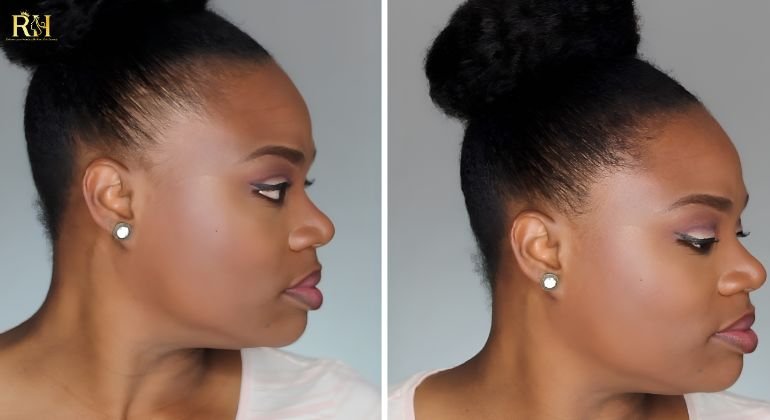
Edge Styles to Try
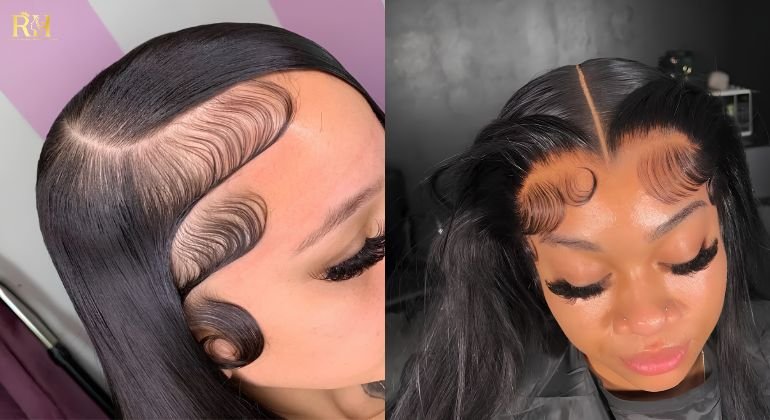
- Classic swoop: one or two soft waves per side. Works with a silk press or sleek bun.
- Stacked waves: three to four small S-curves along the temple for a bolder finish.
- Heart or spiral shapes: sculpted designs for events, best on strong-hold gel and shorter baby hairs.
- Barely there: baby hairs brushed flat with no swoop, the most natural option for wigs.
Frequently Asked Questions
How do I keep my edges laid all day?
Start on clean, lightly moisturized hair, use a thin layer of a strong-hold edge control, and set the style under a silk scarf for five to ten minutes. Thick layers dry slowly and crack, so two thin passes hold better than one heavy one.
Why does my edge control turn white and flaky?
Flaking usually comes from product buildup, too much gel, or layering an oil-heavy product under a water-based gel. Clean off old product, use less, and let your leave-in absorb before applying edge control.
Can laying edges every day cause hair loss?
Gentle brushing with gel is low risk, but hard scrubbing, tight scarves, and tight styles pulling on the same hairline can contribute to traction alopecia. Dermatologists advise stopping any style that hurts and seeing a board-certified dermatologist if the hairline thins.
How do you make baby hairs on a lace front wig?
Pluck the first row of the lace so the hairline looks thinner, separate a very fine strip of hair along the front, cut it to about one to three inches, then style it with an edge brush and gel just like natural baby hairs.
Conclusion: Sharp Edges, Healthy Hairline
Doing edges like a pro comes down to a clean start, thin layers, a method matched to your texture, and zero tension on the hairline. On lace units, the quality of the hair decides how well baby hairs take a shape and hold it. When a wig starts looking tired at the front, our guide on how to revive an old human hair wig can bring it back.
Ready for a hairline that styles the way you want? Browse Raw Hair Luxury’s raw Vietnamese HD lace frontals, closures, and wigs, or message our team on
📲Phone/WhatsApp: +1 (206) 698‑5133
🛜Instagram: RAW HAIR LUXURY COMPANY
🌐Tik Tok: RAW HAIR LUXURY
📧 Email: Rawhairluxury.us
🌐Website: rawhairluxury.com