
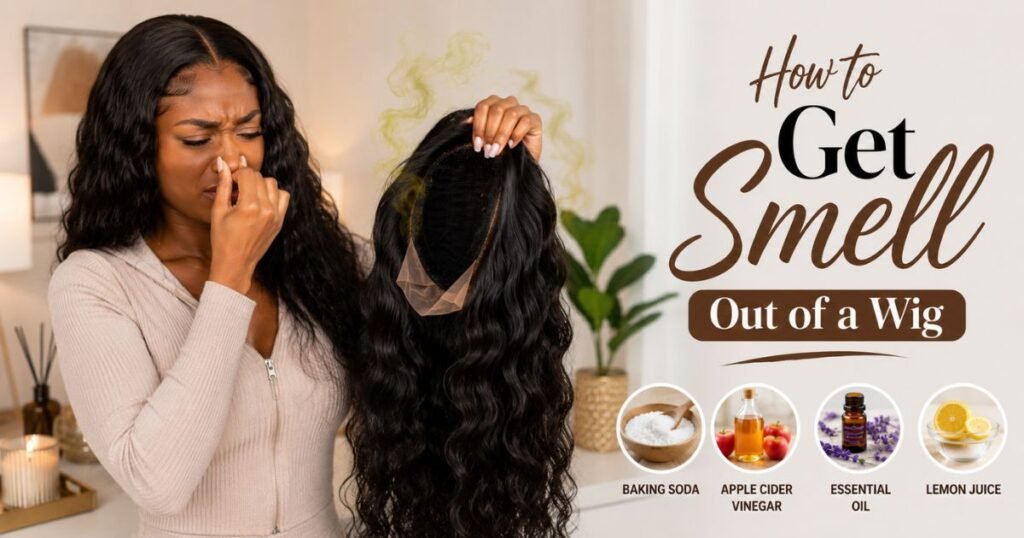
To get smell out of a wig, first identify what you are smelling, then match the treatment to it. A chemical smell on a new wig clears with a cool clarifying wash and 48 hours of open-air drying. A sour or musty wig smell from wear needs a surfactant wash of the cap, not a vinegar soak. Mildew odor usually means the cap has to go. Wrong method, wrong result.
Start by smelling the cap, not the hair. Most wig odor lives where the wig touches your skin.
Why Does My Wig Smell? Five Sources, Five Different Fixes
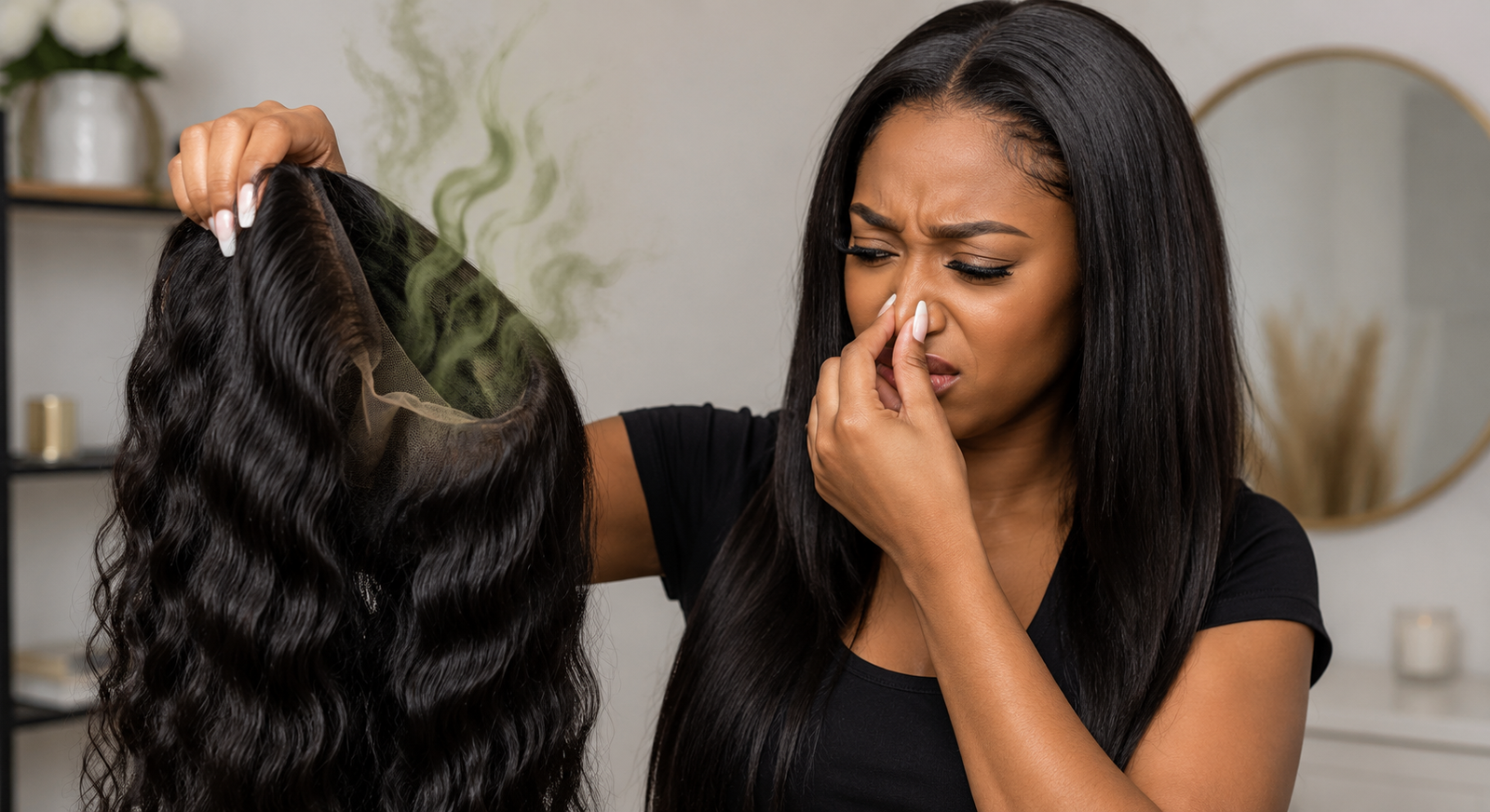
Sweat itself has almost no smell. Skin bacteria create the odor by breaking down the compounds in sweat and sebum, releasing volatile fatty acids such as 3-methyl-2-hexenoic acid, which carries a goat-like note, and thioalcohols, which read as onion. The American Society for Microbiology explains the pathway in detail. That matters for your wig because those compounds are acidic, and acidic odors need an alkaline treatment. Ammonia notes work the opposite way.
Use this table to place your wig before you touch it:
| Odor type | What it smells like | Actual cause | Correct fix | Time needed |
| New wig chemical smell | Plastic, solvent, faintly sweet | Processing residue, silicone coating, sealed packaging | Cool clarifying wash, then open-air drying | 48–72 hours |
| Sour or musty wig smell | Cheesy, stale, gym bag | Oxidised sebum plus bacterial volatile fatty acids (acidic) | Surfactant wash focused on the cap, mildly alkaline | 2–3 hours plus drying |
| Sweat and ammonia odor | Sharp, urine-like, stings the nose | Amines and ammonia (alkaline) | Diluted acidic rinse, 3 minutes maximum | 1 hour plus drying |
| Mildew or mold smell | Damp basement, earthy | Fungal growth inside a cap stored wet | Assess the cap; replace it if growth is visible | Same day decision |
| Smoke or cooking odor | Ash, fried oil, cigarette | Oily VOC residue adsorbed onto the fiber | Wash, then seal with activated charcoal | 3–5 days |
Check the Cap First: Wig Cap Odor Is What Everyone Washes Last
Turn the unit inside out and smell three places: the perimeter band, the lace at the hairline, and any spot where adhesive has built up. In most cases the smell is strongest there, because that surface sits against your scalp and collects sebum, sweat salts, dry shampoo, and glue residue. The hair shafts themselves hold far less.
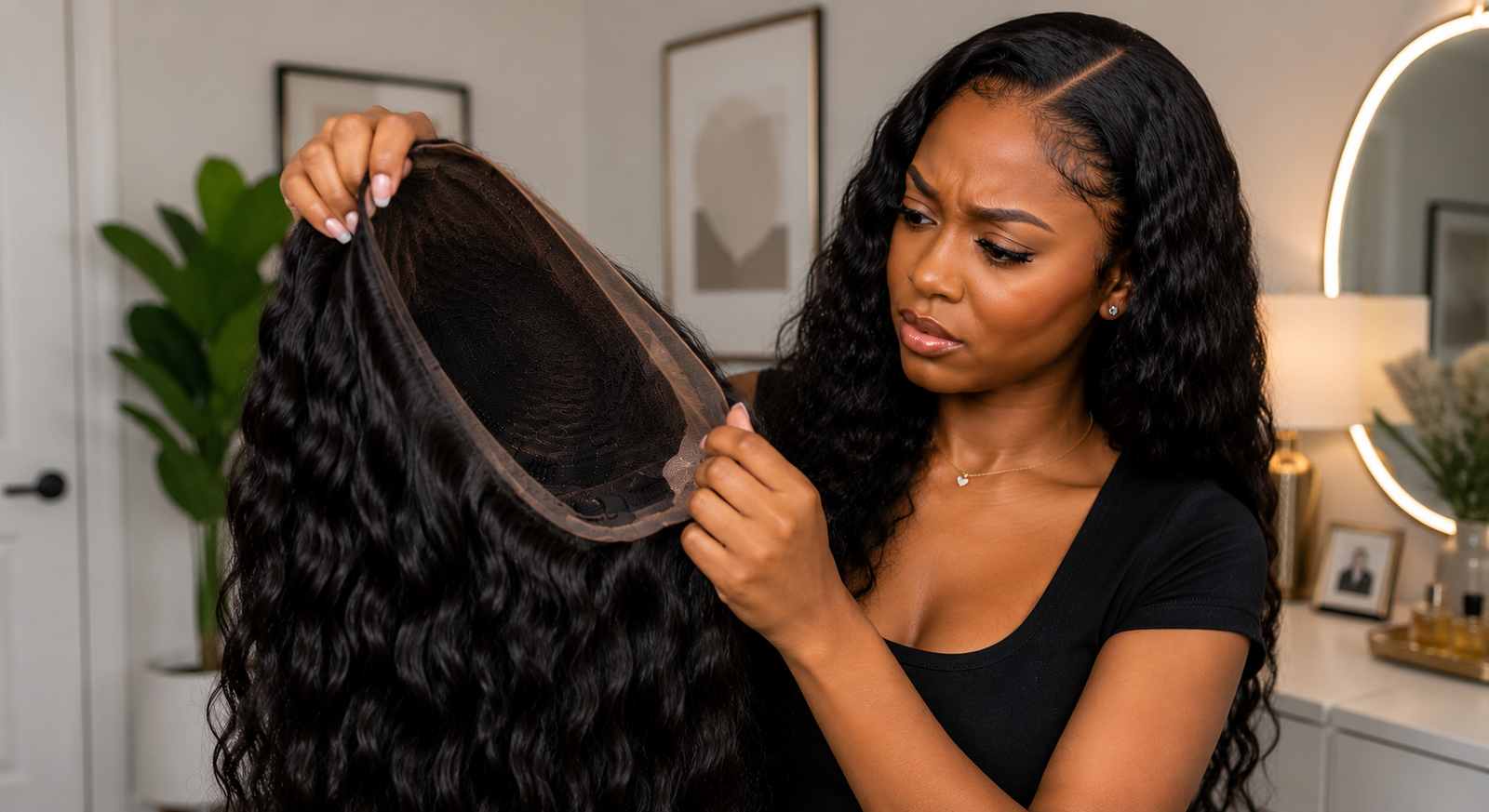
This explains the frustration stylists describe: the hair washes beautifully, the unit smells clean while wet, and the odor returns within an hour of wear. Body heat re-volatilises whatever stayed in the cap. Any real answer to how to get rid of wig smell starts there, not at the lengths. Old adhesive makes it worse, since dried glue traps sebum and resists water. Break it down with 70% isopropyl alcohol or a lace adhesive remover on a cotton pad before you wash.
How to Get Smell Out of a Wig: The Method for Each Odor
1. Removing chemical smell from a new wig
New human hair often arrives with a faint processing or packaging smell. That says nothing about quality; it says the bundle spent weeks in sealed plastic. Skip the vinegar. Wash once with a clarifying, sulfate-free shampoo in cool water, condition the mid-lengths and ends, then hang the unit on a stand in a ventilated room out of direct sun for two to three days. Airflow does most of the work. Our guide on how to dry hair extensions properly covers that stage in detail.
2. Fixing a sour or musty wig smell from regular wear
Sour odor comes from acidic fatty acids, so an acidic rinse cannot neutralise it. You need surfactants to lift the oils feeding the bacteria. Fill a basin with lukewarm water and clarifying shampoo, submerge the unit, and press the cap between your palms for two to three minutes. Rinse until the water runs clear, then condition the hair only. Conditioner left on the band creates the next round of odor.

Baking soda does neutralise these acidic odorants, and that chemistry is real. The problem is the pH. A baking soda solution sits around 8.3, and research published in the Journal of Cosmetic Dermatology found that alkaline conditions above pH 8 lift the cuticle and cause measurable protein damage, while pH 5 to 7 leaves hair structure largely intact. Use baking soda inside the cap if you must, never as a soak for the hair.
3. Clearing sweat and ammonia odor
Sharp, ammonia-like odor is alkaline, so here an acid genuinely helps. Mix one part apple cider vinegar to eight parts cool water. Dip the wig, work the solution through the cap, and rinse after three minutes. Three minutes, not an hour. The same research shows extreme acidic exposure near pH 3 damages the cuticle as reliably as alkaline exposure does, and undiluted vinegar sits close to that line. Follow with conditioner and air dry.
4. Dealing with a mildew smell in a wig
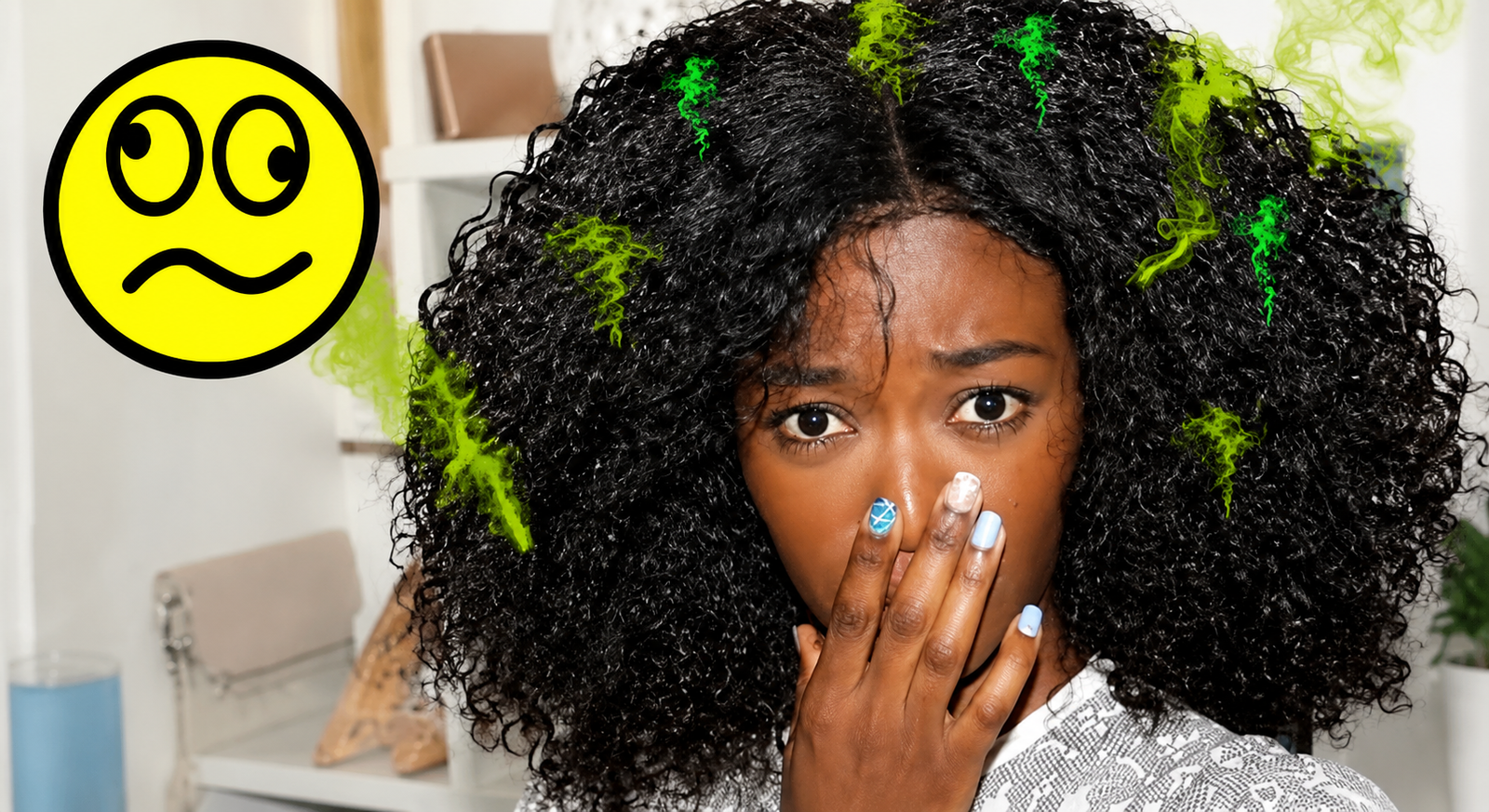
Mildew odor means moisture stayed trapped in the cap. Inspect the wefts and the inside of the cap in daylight for grey, green or black speckling. The US EPA advises against routine bleach use during mold cleanup and notes that porous materials with mold growth often have to be discarded, since the growth penetrates the material instead of sitting on top of it. A wig cap is porous. Visible growth means replacing the cap or the unit. If you smell it but see nothing, wash as in step two, dry fully within 24 hours, and store in breathable cotton.
5. Getting smoke and cooking odor out of a wig
Smoke deposits an oily film that carries the smell deep into the fiber. Wash with clarifying shampoo, dry completely, then place the wig on a stand inside a lidded bin with an open container of activated charcoal beside it, not touching the hair. Leave it sealed for 48 to 72 hours. Charcoal adsorbs residual volatile compounds instead of covering them, which is why it beats every perfumed spray on this odor.
Three Popular Wig Deodorizing Tips That Quietly Damage Human Hair
- Soaking a wig in fabric softener and hot water. Softener deposits cationic agents designed for cotton, not keratin. The coating masks odor for a few days, then traps sebum and returns it worse. Hot water also distorts synthetic curl patterns permanently.
- Hour-long apple cider vinegar soaks. Long exposure at low pH swells the fiber and strips color. Three minutes at 1:8 dilution delivers the same neutralising benefit.
- Dryer sheets and perfume. Both add fragrance on top of the odor instead of removing it, and the alcohol in body perfume dries out human hair.
How to Make a Wig Smell Good and Keep It That Way
- Dry inside-out on a stand. The cap dries last. Never store a unit that feels even slightly damp at the band.
- Wash on a schedule, not on a smell. Every 7 to 10 wears for daily use, every 15 to 20 for occasional wear.
- Wipe the cap band after every wear. Ten seconds with a damp cloth removes the sebum that turns sour by day three.
- Store in cotton or a breathable box. Sealed plastic bags hold humidity and produce the classic musty wig smell.
- Wash your own scalp first. Odor transfers upward, and a proper night routine keeps both cleaner. Our guide on reviving an old human hair wig covers when a saturated cap is past saving.
One buying note: heavily processed hair carries more residual coating, so it smells more out of the bag and again after every wash. Raw hair that has not been acid-bathed or silicone-sealed starts cleaner and stays cleaner. The same processing explains shedding behaviour, covered in how to stop your wig from shedding.
Frequently Asked Questions About Wig Smell
Why does my wig smell bad after only a few wears?
Sebum and sweat collect in the cap band within two or three wears, and skin bacteria convert them into volatile fatty acids. The hair looks and smells fine; the cap does not. Wipe the band after each wear and the problem usually disappears.
Does baking soda remove wig smell?
Yes for acidic odors, because sodium bicarbonate neutralises volatile fatty acids. Keep it off the hair though. At roughly pH 8.3 it lifts the cuticle of human hair. Sprinkle it inside the cap, leave 30 minutes, then brush it out.
Can I use Febreze or a fabric spray on a wig?
Avoid it. Fabric sprays are formulated for textiles and deposit residue that builds up on keratin and lace. A wig-specific refresher or a light leave-in mist does the same job without coating the fiber.
How do I get the chemical smell out of a new wig fast?
Wash once with a cool clarifying shampoo, then hang the wig in a ventilated room for 48 hours. Airflow removes the packaging smell more effectively than any soak, and skipping the drying step is why most people think the smell survived the wash.
Should I throw away a wig that smells like mildew?
Not automatically. If you smell mildew but see no growth, wash and dry it fully and the odor usually clears. If you see speckling inside the cap, replace the cap or the unit, since porous material with fungal growth cannot be reliably cleaned.
How often should I wash a wig to prevent odor?
Every 7 to 10 wears for daily use and every 15 to 20 for occasional wear. Add a clarifying wash roughly every sixth wash to strip the product buildup that holds odor in place.
Start With Hair That Does Not Smell in the First Place
Odor control gets much easier when the hair arrives clean. Raw Hair Luxury supplies 100% unprocessed Vietnamese hair with no acid bath and no silicone seal, which is why our bundles, closures and wigs come out of the bag without a chemical smell to remove.
Message our team on WhatsApp for a sample and wholesale pricing →
Ready to find your perfect match? Contact us today for expert advice and exclusive discounts on premium human hair extensions.
📲Phone/WhatsApp: +1 (206) 698‑5133
🛜Instagram: RAW HAIR LUXURY COMPANY
🌐Tik Tok: RAW HAIR LUXURY
📧 Email: Rawhairluxury.us
🌐Website: rawhairluxury.com