
Mid back length hair is the 18 to 22 inch range of human hair extensions and wigs, the segment that lands between the shoulder blades and the lower back on most frames. It’s the most requested length category among US extensions buyers, but the number on the label doesn’t guarantee where the hair actually falls once it’s installed. Texture, install method, and how the length was measured all change the result.
What Is Mid Back Length Hair, Exactly?
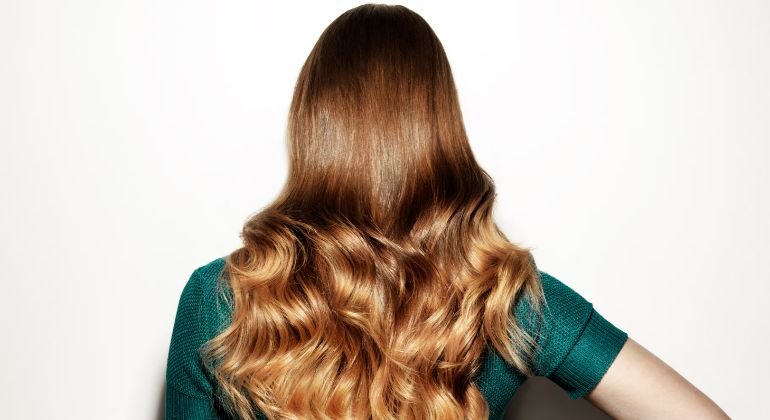
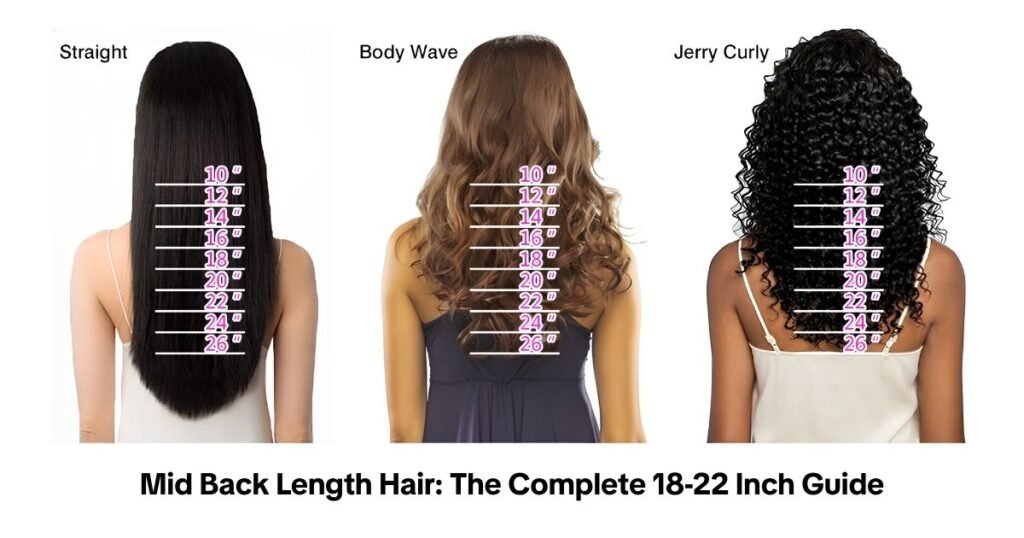
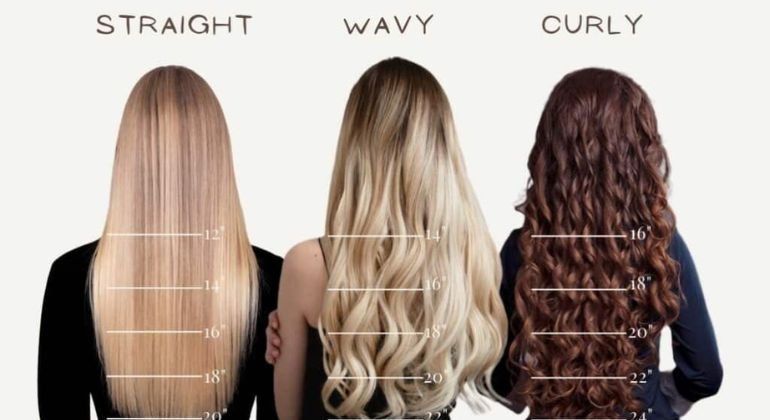
In the wholesale hair supply chain, mid back length is standardized at 18 to 22 inches (45 to 55 cm), measured from the top of the weft or bond to the longest strand when the hair is pulled straight. Inside that range:
- 18 inch hair typically lands just below the shoulder blades.
- 20 inch hair typically lands between bra-strap level and mid back.
- 22 inch hair typically lands at the lower back.
That spec-sheet number is not the same as how far down your back the hair will actually fall once it’s installed, and most buying guides skip this part entirely.
The Measurement Gap Nobody Explains
Two different “20 inches” exist. The first is the SKU length: the physical measurement of the weft or bundle from top to tip. The second is your visible length: the extension blended with wherever your own natural hair ends. If your natural hair sits at your shoulders and the weft is installed a few inches below your crown, the visible drop reads shorter than the label says, because the extension isn’t growing from your scalp. It starts from the install point. This is why two people can order the identical 20 inch bundle and see two different results in the mirror, and it’s the single most common cause of “this doesn’t look like the photos” complaints in the extensions market.
18 vs 20 vs 22 Inch: Comparing the Mid-Back Range
Each length inside the mid-back category serves a different purpose. Here’s how they stack up against each other before you choose one.
| Length | Typical Landing Point | Best For | Everyday Weight |
| 18 inch | Just below shoulder blades | First-time wearers, lighter everyday styles | Lightest of the three |
| 20 inch | Bra-strap to mid back | The balance point: noticeable length without extra bulk | Moderate |
| 22 inch | Lower back | Dramatic, glamorous looks, special occasions | Heaviest of the three |
For a deeper breakdown of each length on different body types and textures, see the full 18 inch hair length guide, the 20 inch hair length guide, and the 22 inch hair extensions guide. If mid-back still feels short of your goal, the 24 inch hair extensions guide covers the next length tier up.
Why Texture Changes What “Mid-Back” Actually Looks Like
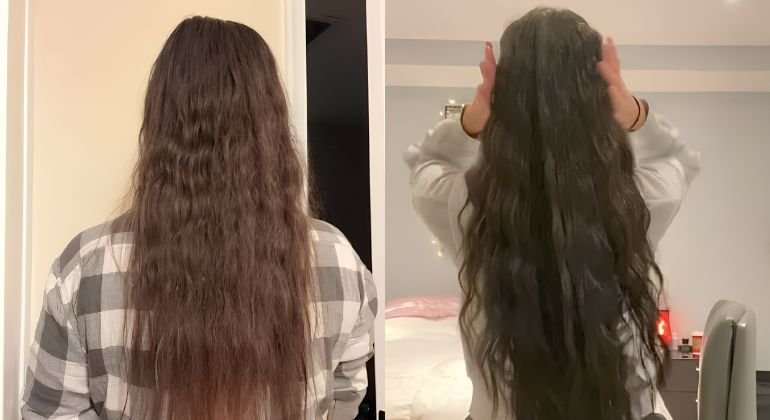
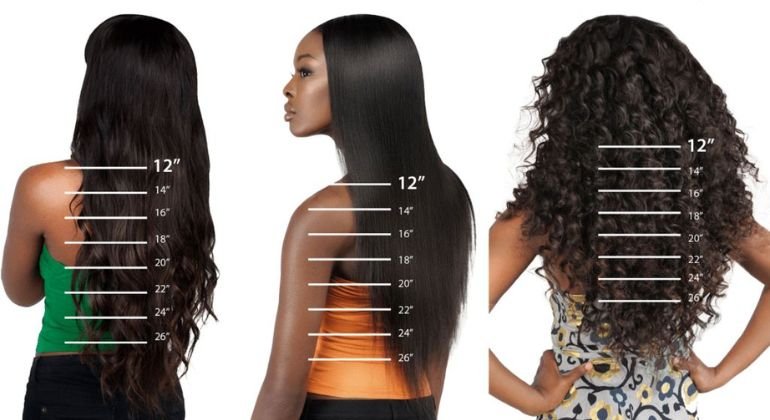
This is the technical reality that costs first-time buyers the most in returns and disappointment: mid back length hair does not deliver a true mid-back drop for every texture. Curl pattern is now recognized in the dermatology literature as a distinct structural variable that changes how a given length behaves and appears, not just a cosmetic preference.A 2026 systematic review in the Journal of Cosmetic Dermatology proposed a formal clinical framework for classifying curl pattern precisely because it affects so much about how hair performs, including its apparent length.
In practice, that structural difference shows up as shrinkage: tighter curl patterns coil the hair shaft, so the same physical strand length reads shorter to the eye once it’s dry and settled into its natural pattern.
| Texture | Typical Visual Shrinkage | Visual Result at 20″ | Buying Tip |
| Straight / Bone Straight | Minimal | True mid-back placement | Order true to length |
| Body Wave / Loose Wave | Slight | Just above mid-back | Order true to length |
| Deep Wave / Water Wave | Moderate | Bra-strap area | Consider sizing up to 22 inch |
| Curly / Kinky Curly | Significant | Shoulder length | Order 2 to 4 inches longer than your target look |
The shrinkage percentages that circulate online for each curl type are estimates from stylists and hair educators rather than a single standardized measurement, so treat the table as a directional guide, not an exact conversion. The safest move if you want a true mid-back result in a curlier texture: size up rather than guess.
How Long Would It Take to Grow Mid-Back Length Hair Naturally?
Scalp hair grows at an average of about half an inch per month, according to the National Institutes of Health’s MedlinePlus consumer health resource, which works out to roughly six inches a year. Going from shoulder-length hair to a true 20 inch mid-back look naturally, without breakage eating into that growth, generally takes over a year. That’s the real reason mid back length extensions sell as well as they do: they deliver a look in one salon visit that would otherwise take upward of twelve months of uninterrupted, breakage-free growth to reach.
Growth rate also varies by hair type and genetics, which is part of why donor hair origin matters for buyers who care about future growth potential on their own natural hair, not just the extensions themselves. Our Vietnamese hair wigs guide covers the structural differences in more depth.
Is Mid-Back Length Easier on Your Natural Hair Than Very Long Extensions?
Often, yes, and this is a scalp-health question most length guides skip entirely. The American Academy of Dermatology’s guidance on weaves and extensions is direct about the risk: any install that pulls tightly on the hairline can cause traction alopecia, a form of hair loss from repeated tension that can become permanent if it isn’t caught early. The AAD’s recommendations include having a professional stylist do the install, stopping if the style hurts or causes headaches, and taking a break from extensions every two to three months.
Weight matters here. Mid back length hair, at 18 to 22 inches, is lighter than 24 inch-plus extensions, which means less tension pulling on the roots over a full day of wear. That makes it a reasonable starting point for first-time wearers, anyone with fine natural hair, or anyone easing back into extensions after a break, without ruling out longer lengths later once your natural hair and scalp have adjusted.
Bundles, Wigs, or Clip-Ins: Choosing Your Install for This Length
The length you pick should match the install method you’re planning, since the two interact more than most buyers expect.
- Machine weft bundles with a closure or frontal give the most natural, long-wear result at mid-back length and work well for anyone who wants the style to hold for weeks between maintenance visits.
- Wigs avoid direct tension on your own hairline entirely, which makes them a strong option if the AAD’s traction-alopecia guidance above is a concern for you. See the Vietnamese hair wigs buying guide for cap construction and density considerations at this length.
- Clip-ins let you test mid back length hair for a single event before committing to a longer-wear install, and they carry zero ongoing tension since they come out at the end of the day.
What to Look for When Buying Mid Back Length Hair Extensions
At 18 to 22 inches, the ends of the hair take more visible wear than they would on a shorter cut, so quality signals matter more, not less.
- Cuticle alignment. Hair with the cuticle layers running in one direction resists tangling and matting far better over weeks of wear. Our guide on how to verify original bone straight hair walks through physical checks you can run before you commit to a bundle.
- Single drawn vs. double drawn. Single drawn bundles taper naturally from root to tip, which reads as more realistic but thinner at the ends. Double drawn bundles keep a fuller, more uniform thickness all the way down, which matters more at mid-back length than at shorter lengths because the ends are more exposed to daily handling.
- Where the hair ships from. Overseas factory-direct orders commonly carry shipping windows of a week or more before the hair even leaves the country. Raw Hair Luxury holds inventory at our Marysville, WA warehouse, so mid back length orders ship from US stock rather than an overseas queue.
- Return and exchange terms. Confirm the seller’s policy before you buy, especially for a length and texture combination you haven’t tried before.
Ready to find your perfect match? Contact us today for expert advice and exclusive discounts on premium human hair extensions.
📲Phone/WhatsApp: +1 (206) 698‑5133
🛜Instagram: RAW HAIR LUXURY COMPANY
🌐Tik Tok: RAW HAIR LUXURY
📧 Email: Rawhairluxury.us
🌐Website: rawhairluxury.com