
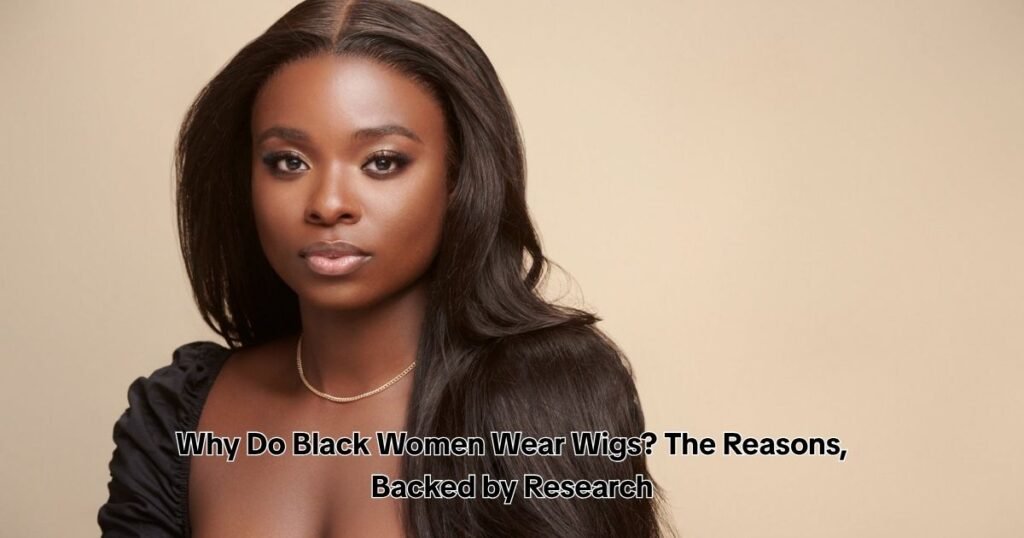
Black women wear wigs for five overlapping reasons: hair protection, hair loss or scalp conditions, workplace hair bias, convenience, and style. Dermatology research, CROWN Act workplace studies, and documented history back all five. Few women choose a wig for one reason alone. Most are answering two or three of these questions at once.
That overlap is why the question resists a one-line answer. Understanding it means looking at what dermatologists know about traction alopecia, what workplace research shows about hair bias, and how a detail almost no buying guide mentions, the processing grade of the hair itself, changes whether a wig protects the hair underneath it or damages it.
A History That Starts Long Before Social Media
Wig-wearing among Black women in the United States did not begin as a beauty trend. During slavery, women enslaved as house servants were often required to wear wigs resembling those of the people who enslaved them, while women enslaved as field laborers typically covered their hair instead, according to feminist studies scholar Cheryl Thompson, as reported by Smithsonian Magazine. That early split, hair as forced presentation versus hair as private practice, set a pattern that outlasted slavery by more than a century.
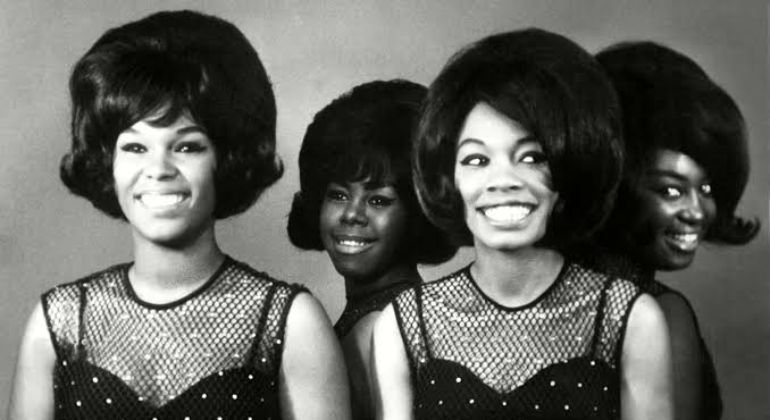
By the early 1900s, Madam C.J. Walker built the country’s first self-made female millionaire fortune on Black hair care products. Her company later leaned into hot-comb straightening, a technique that could burn scalp and hair, and helped cement a beauty standard in which straighter hair read as more presentable in professional settings. The tension between straightening as self-care and straightening as compliance with Eurocentric beauty norms has run for more than a century, and it still surfaces in conversations about wigs today, according to the Smithsonian Center for Folklife and Cultural Heritage.
That history is why “why do Black women wear wigs” rarely has one clean answer. Adaptation under pressure in one era became a wider menu of choices in another. The CROWN Act, the law that now bans hair-based discrimination in dozens of states, grew directly out of this lineage. It started in California in 2019, more than a century after the pressures that shaped Madam Walker’s business first took hold.
Protective Styling: How a Wig Can Help Natural Hair
Protective styling is the term dermatologists use for any style that shields hair ends and follicles from daily manipulation, heat, and tension. Wigs qualify when worn correctly, but “worn correctly” is the operative phrase. The American Academy of Dermatology lists wigs and other hairpieces among the styling factors that can either protect the hairline or damage it, depending on how much sustained pulling the install applies to any one point on the scalp.
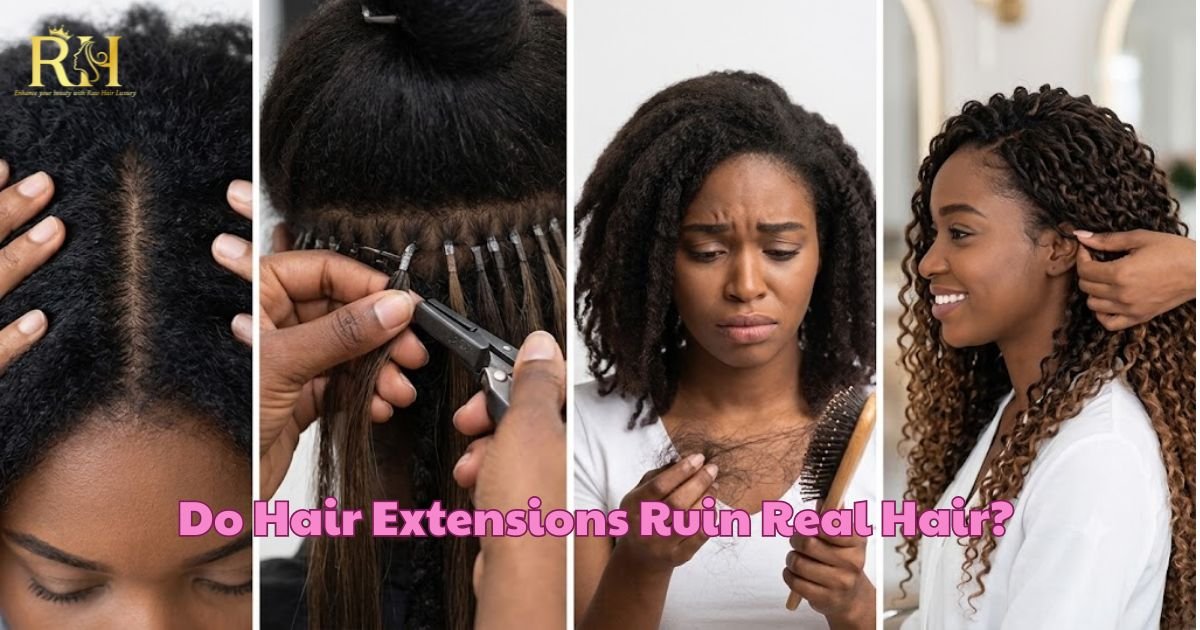
The mechanism behind the damage has a name: traction alopecia, hair loss caused by prolonged tension on the hair root. Research from Johns Hopkins University, published in the Journal of the American Academy of Dermatology, found that roughly one-third of African-American women experience traction alopecia at some point, making it the most common form of hair loss in that population. Tight braiding, chemically relaxed hair combined with pulling styles, and glued-down lace fronts all carry documented risk.
The answer is not avoiding wigs. It is choosing an install method that does not concentrate weight or adhesive at the temples and hairline. A closure secured with an adjustable band instead of glue creates close to zero tension at the edges, which is part of why glueless methods have become the default recommendation for anyone growing out a damaged hairline. Our guide to lace closures covers the mechanics of how a glueless install achieves that.
Hair Loss: More Common, and Less Discussed, Than Most People Think
Hair loss in Black women happens more often, and gets talked about less, than most people assume. Central centrifugal cicatricial alopecia, a scarring form of hair loss, is estimated to affect nearly 15 percent of Black women, according to dermatologist Valerie Callender, speaking at the American Academy of Dermatology’s 2023 annual meeting. Traction alopecia adds to that figure separately. Dermatologists now treat hair loss in Black women as common enough to warrant dedicated diagnostic protocols, not as a rare exception.
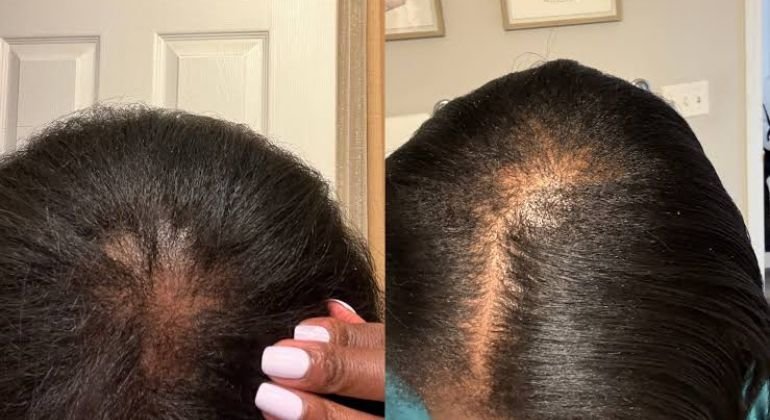
For a woman managing thinning hair, active treatment, or a diagnosis she did not choose, a wig offers something practical: a stable, styleable look while the underlying issue is addressed. That motivation differs from wearing a wig purely for fashion, though the two often overlap once a woman finds a unit she likes for reasons beyond coverage.
The CROWN Act and the Workplace Reality Behind the Choice
Hair bias in professional settings shows up in data, not only in individual stories. The 2023 CROWN Workplace Research Study, co-commissioned by Dove and LinkedIn, surveyed nearly 3,000 employed women and found that Black women’s hair is rated as unprofessional at 2.5 times the rate of other groups, according to the official CROWN Act research summary. Two-thirds of Black women in the study said they had changed their hair for a job interview, and 41 percent of those switched from curly to straight. More than one in five Black women ages 25 to 34 reported being sent home from work specifically because of their hair.
The CROWN Act, short for Creating a Respectful and Open World for Natural Hair, exists to make that kind of treatment illegal. As of 2026 it has been enacted in 27 states, according to the NAACP Legal Defense Fund, though a federal version has not passed. In states without protection, or in workplaces where informal bias persists regardless of the law, a wig can function as a way to control how hair reads in a meeting or interview without altering the hair underneath it at all. That is a rational response to a documented pressure, not a personal insecurity.
Convenience and Time: A Reason That Holds Up Under Scrutiny
Time is a legitimate factor in any beauty decision, and wigs save a measurable amount of it. A wig removes the daily step of styling natural hair from a morning routine, which matters most during weeks packed with early meetings, caregiving, or long shifts.
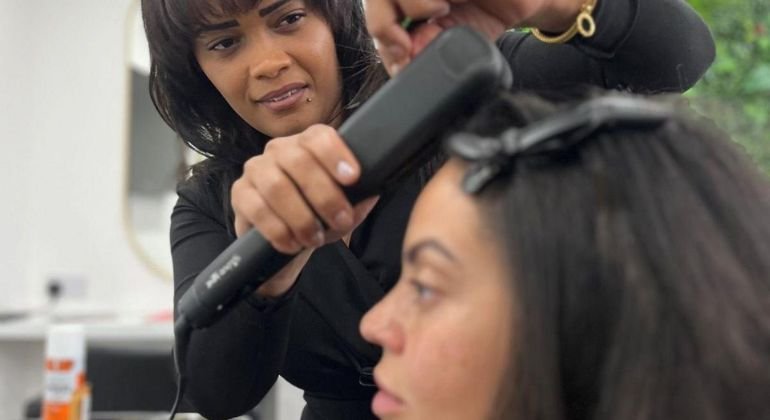
That convenience only holds up if the wig itself is easy to maintain. A unit that mats, sheds, or develops odor within a few weeks trades one kind of daily effort for another. Wash frequency, drying method, and hair grade all affect how much upkeep a wig needs. Our wig care and styling guide covers the wash-and-dry routine that keeps a unit low-maintenance week to week.
Self-Expression and the Freedom to Change
Not every reason is defensive or medical. A wig lets a woman test a color, length, or texture with zero commitment from her own hair, and that freedom is a motivation on its own. Changing a look for a season, a mood, or an event is a form of styling, not a form of hiding, and reading it as the latter misreads what is happening.
The Grade Question Most Buying Guides Skip
Every reason above, protection, hair loss coverage, convenience, style, depends on one variable almost no article about “why Black women wear wigs” mentions: the processing grade of the hair itself. A wig is not one product with one set of trade-offs. Raw hair, never chemically processed or steamed, keeps its cuticle intact and behaves the most like natural hair under tension and heat. Virgin hair is chemically unprocessed but often steamed into a uniform texture, which shortens its lifespan. Remy and non-Remy grades sit lower still, with non-Remy hair typically stripped of cuticle and coated in silicone to fake a shine that washes out within weeks.
That distinction matters specifically for protective styling. A cap built from a lower grade tends to shed faster and need replacing more often, which means more frequent installs and more frequent tension events at the hairline over a year. A raw or virgin unit, installed with a glueless or low-tension method, holds up longer between touch-ups. Our full breakdown of raw versus virgin hair covers the sourcing and care differences in more depth.
| Grade | Cuticle Condition | Typical Lifespan | Install Frequency Needed | Best For |
| Raw | Fully intact, never steamed | 3–5 years | Lowest | Long-term protective wear |
| Virgin | Unprocessed, but steam-textured | 1–2 years | Moderate | Style versatility |
| Remy | Cuticle-aligned, lightly processed | Shorter than virgin | Higher | Budget-conscious daily wear |
| Non-Remy | Cuticle stripped, silicone-coated | Shortest of the four | Highest | Occasional or short-term wear |
A full pros-and-cons comparison, including how each grade performs under heat and humidity, lives in our human hair wig advantages and disadvantages guide.
What People Often Get Wrong
Two assumptions come up often enough to name directly. The first is that there is one reason behind the choice. There usually is not; a woman managing thinning edges can also enjoy trying a new color the same week, and both things are true at once. The second is that wearing a wig means a woman does not care for the hair underneath it. Braids, twists, silk presses, and wash-and-gos stay in regular rotation for most wig wearers. A wig adds an option. It does not replace the others.
| Reason | What the Evidence Shows | Source |
| Hair protection | Traction alopecia affects roughly 1 in 3 Black women; low-tension installs reduce risk | Johns Hopkins / JAAD |
| Hair loss coverage | CCCA affects nearly 15% of Black women | AAD, Dr. Valerie Callender |
| Workplace bias | Black women’s hair rated unprofessional 2.5x more often; 66% change hair for interviews | 2023 CROWN Workplace Research Study |
| Legal context | CROWN Act enacted in 27 states as of 2026, no federal law yet | NAACP Legal Defense Fund |
| Convenience | Removes daily natural-hair styling step from routines | Practical/behavioral |
| Self-expression | Enables color, length, and texture changes with no commitment | Practical/behavioral |
Choosing a Wig That Protects Your Hair
Whichever reason brought a woman to this question, protection, hair loss, workplace pressure, convenience, or style, the grade of the hair and the tension of the install decide whether the wig helps or works against her hair long term. Raw Hair Luxury sources raw and virgin Vietnamese and Cambodian hair specifically because that grade holds up to daily wear without forcing frequent, hairline-stressing reinstalls. Contact Raw Hair Luxury for a grade-matched wig recommendation based on your hair goals, wear frequency, and budget.
Ready to find your perfect match? Contact us today for expert advice and exclusive discounts on premium human hair extensions.
📲Phone/WhatsApp: +1 (206) 698‑5133
🛜Instagram: RAW HAIR LUXURY COMPANY
🌐Tik Tok: RAW HAIR LUXURY
📧 Email: Rawhairluxury.us
🌐Website: rawhairluxury.com