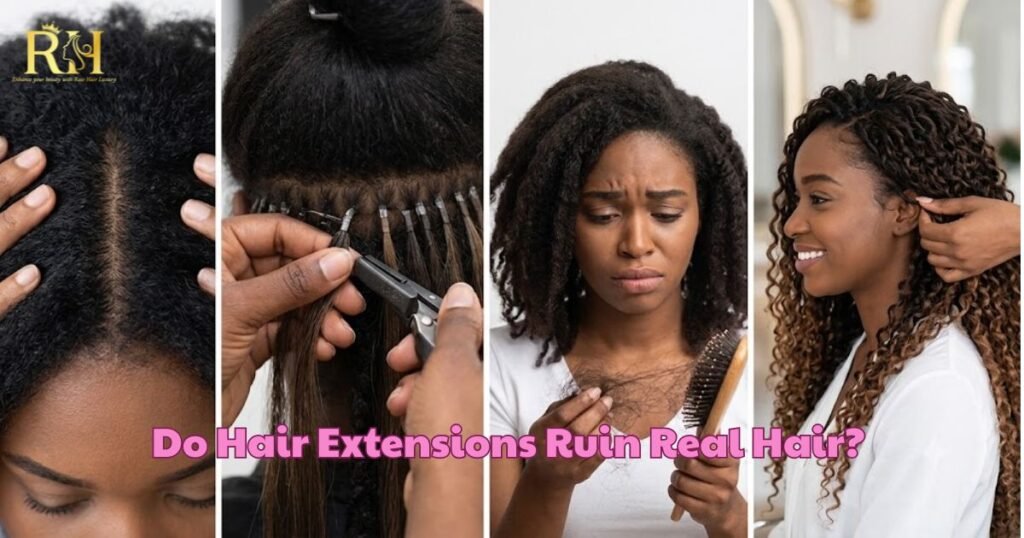
Hair extensions are a popular way to add length, volume, and versatility to your hairstyle without waiting for your natural hair to grow. However, many people worry about whether wearing extensions can damage their real hair or cause hair loss.
The good news is that hair extensions do not automatically ruin your natural hair. When chosen, installed, and maintained correctly, they can be worn while keeping your natural hair healthy. However, improper installation, excessive tension, and poor maintenance can lead to breakage and scalp problems.
Understanding the potential risks can help you choose the right extensions and protect your natural hair.
Can Hair Extensions Damage Natural Hair?
Yes, hair extensions can damage natural hair if they place too much tension on the roots or are not maintained properly. The level of risk depends on your hair’s condition, the extension method, and how long you wear them.
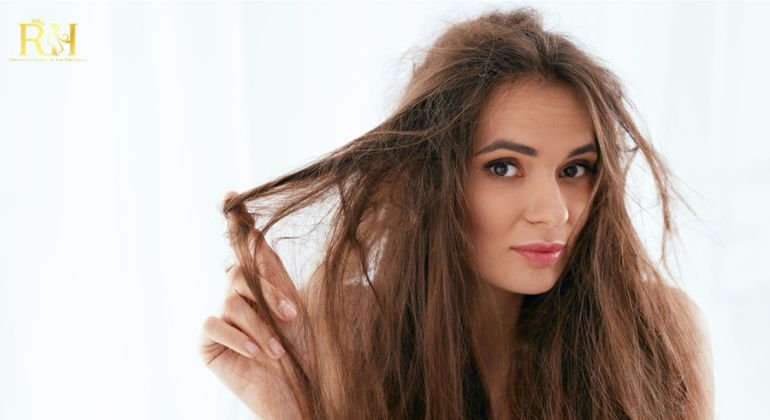
For example, extensions that are too heavy for fine or fragile hair may pull on the roots. Repeated tension can cause breakage or traction alopecia, a type of hair loss associated with prolonged pulling on the hair follicles.
However, choosing an appropriate extension method and following a consistent care routine can help minimize these risks.
5 Reasons Hair Extensions May Damage Your Hair
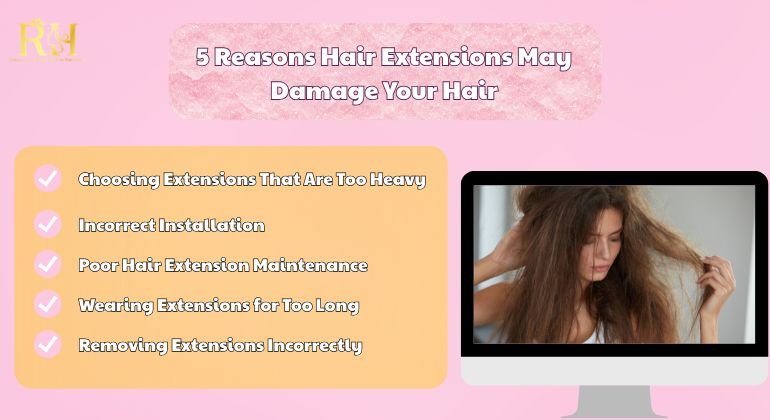
1. Choosing Extensions That Are Too Heavy
Longer, thicker extensions can create a beautiful, voluminous hairstyle. However, adding too much weight to your natural hair may place unnecessary stress on the roots.
This is particularly important for people with fine hair, weak strands, or existing hair loss.
How to prevent damage: Choose extensions that match your natural hair density and strength. A professional stylist can recommend an appropriate length and weight to achieve your desired look without excessive tension.
2. Incorrect Installation
Improper installation is another common cause of hair extension damage. Extensions attached too tightly or positioned incorrectly can pull on the scalp and natural strands.
Signs of excessive tension may include headaches, scalp soreness, itching, or small bumps around attachment points.
How to prevent damage: Always choose a qualified stylist who understands your preferred extension method. Your extensions should feel secure without causing pain or discomfort.
3. Poor Hair Extension Maintenance
Hair extensions require regular care to prevent tangling, dryness, and unnecessary friction. Neglecting brushing or allowing knots to develop near attachment points can make detangling more difficult and increase the risk of breakage.
How to prevent damage: Brush gently from the ends upward using a suitable brush. Follow the recommended washing routine, detangle regularly, and dry your hair thoroughly after washing.
4. Wearing Extensions for Too Long
Some extension methods require regular maintenance or removal. As your natural hair grows, attachment points may shift, increasing the likelihood of tangling and pulling.
Leaving extensions in beyond the recommended period can make them harder to manage and may place additional stress on your natural hair.
How to prevent damage: Follow your stylist’s maintenance schedule. The appropriate timeframe depends on the extension method, your hair growth, and the condition of your natural hair.
5. Removing Extensions Incorrectly
Removing extensions without the correct technique can cause significant damage. Pulling, cutting too close to your natural hair, or forcibly separating bonded sections may lead to breakage.
How to prevent damage: Have professionally installed extensions removed by someone experienced with that specific method. Avoid pulling extensions out yourself, even when they appear loose.
Which Hair Extensions Are Best for Natural Hair?
The best hair extensions depend on your hair type, lifestyle, and styling preferences. Different methods offer different benefits and maintenance requirements.
- Clip-in hair extensions: These are removable and can be taken out before sleeping. They are suitable for occasional styling when their weight and placement are appropriate.
- Weft hair extensions: These add length and volume, but proper attachment and weight distribution are essential to reduce tension.
- Tape-in hair extensions: These use adhesive tabs and require careful installation and removal to minimize pulling and breakage.
- Keratin bond extensions: These provide longer-term wear but require professional application and removal.
- Human hair extensions: These offer natural movement and styling versatility. However, human hair extensions are not automatically safer than other options if they are too heavy or improperly installed.
When selecting extensions, consider your natural hair’s strength, the desired look, and how much maintenance you can manage.
How to Protect Your Natural Hair While Wearing Extensions
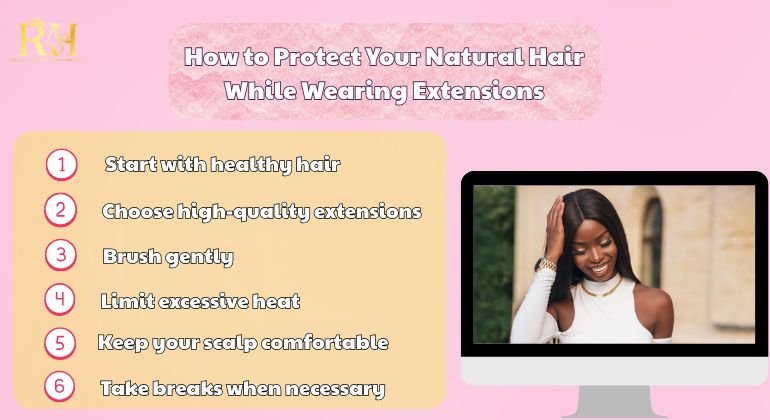
Following a few simple habits can help reduce the risk of damage and keep your extensions looking beautiful.
Start with healthy hair. If your natural hair is already breaking or thinning, address these concerns before installing extensions. Consult a dermatologist if you have unexplained hair loss or scalp problems.
Choose high-quality extensions. Look for extensions that meet your expectations for texture, durability, and appearance. Remember that quality alone cannot prevent damage caused by improper installation.
Brush gently. Remove tangles from the ends upward, supporting your hair near attachment points to reduce pulling.
Limit excessive heat. Frequent high-temperature styling can weaken natural hair. Use heat protectant products and moderate temperatures whenever possible.
Keep your scalp comfortable. Persistent pain, tightness, itching, or visible thinning should never be ignored. Seek professional advice if these symptoms develop.
Take breaks when necessary. If your natural hair shows signs of stress, consider removing your extensions and switching to a lighter or removable option.
Frequently Asked Questions
Do hair extensions cause permanent hair loss?
Hair extensions do not always cause permanent hair loss. However, prolonged tension can lead to traction alopecia, which may become permanent when hair follicles are severely damaged. Early intervention can help prevent further damage.
Can I wear hair extensions every day?
Yes, depending on the method and your hair’s condition. Removable extensions can be taken out when not needed, while other methods require specific maintenance schedules. Avoid wearing extensions that cause discomfort or excessive tension.
Are human hair extensions safer than synthetic extensions?
Human hair extensions generally provide a more natural appearance and greater heat-styling flexibility. However, neither material guarantees damage-free wear. Proper installation, suitable weight, and regular maintenance are essential.
Final Thoughts
So, do hair extensions ruin real hair? Not necessarily. The risk depends on the extension method, installation technique, weight, and maintenance routine.
By choosing suitable extensions, working with an experienced stylist, and caring for your natural hair consistently, you can enjoy added length and volume while reducing the risk of damage. Always prioritize scalp comfort and address signs of breakage or thinning early to keep your natural hair healthy.
📲Phone/WhatsApp: +1 (206) 698‑5133
🛜Instagram: RAW HAIR LUXURY COMPANY
🌐Tik Tok: RAW HAIR LUXURY
📧 Email: Rawhairluxury.us
🌐Website: rawhairluxury.com