

Human hair wigs offer the most natural movement, the fullest heat styling range, and the longest lifespan of any wig category, but they cost more, need regular maintenance, and react to humidity. None of that is fixed. Every one of those trade-offs shifts depending on whether the wig is raw, virgin, Remy, or non-Remy hair, a distinction most buying guides skip entirely.
The Quick Answer: Advantages and Disadvantages at a Glance
Five advantages and five disadvantages show up in nearly every honest review of these wigs. The table below lists them. The sections after it explain which ones change based on hair grade and which ones apply no matter what a buyer chooses.
| Advantages | Disadvantages |
| Natural movement, shine, and part | Higher upfront cost |
| Full heat styling range with a protectant | Regular washing and re-styling |
| Can be professionally dyed or toned | Reacts to humidity and sun exposure |
| Longest lifespan of any wig category | Heavier feel than synthetic fiber |
| Usable for medical hair loss, beyond fashion | Install tension can affect the hairline |
The Real Advantages of Human Hair Wigs
Three advantages hold up regardless of hair grade. One depends on it entirely.
Natural Movement and Full Styling Versatility
Human hair strands move, part, and catch light the way hair growing from a scalp does, because they are hair, harvested from someone else’s scalp instead of the wearer’s own. Synthetic fiber can approximate the look but not the physics: real keratin fiber bends, holds a curl under heat, and releases that curl under more heat. A human hair wig can go from a sleek blowout to loose curls and back again in the same week without replacing the unit. The guide to coloring a wig covers how far that versatility extends: a wig starting as virgin or raw hair can be professionally lifted to blonde or toned to a new shade, something no synthetic fiber will do without melting.
Longevity That Scales With Grade
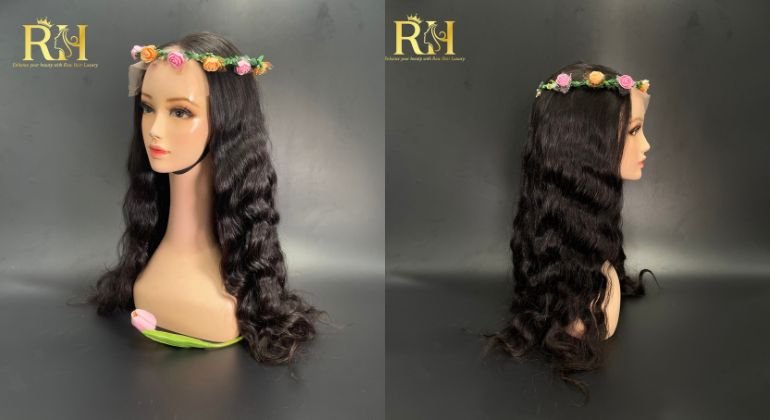
Lifespan is the advantage sales pages lean on hardest, and it is real, but the range is wide enough to be close to meaningless without a grade attached. Raw hair, never steamed or chemically altered, commonly lasts 3 to 5 years of regular wear. Virgin hair that has been steam-processed into a uniform texture typically runs 1 to 2 years. Remy and non-Remy grades land in between or below that, depending on how much the cuticle was stripped before the wig was constructed. The guide to raw hair breaks down what separates these categories in the donor material, before a single wig is sewn.
A Legitimate Medical Option, Not Only a Fashion One
Wigs are not only a styling choice. Dermatologists estimate roughly 80 million people in the United States are affected by some form of hereditary or medical hair loss, and human hair wigs are one of the standard non-drug options a board-certified dermatologist may recommend alongside or instead of medication. A wig will not regrow hair or treat the underlying cause, but it gives an immediate, natural-looking result the day it is fitted, which is part of why the American Academy of Dermatology lists it among the recommended options for patients who want results without a months-long treatment timeline.
The Real Disadvantages of Human Hair Wigs
Four disadvantages apply across the board, though two of them get noticeably better or worse depending on processing grade.
Higher Upfront Cost
Quality wigs in this category typically run from several hundred dollars past two thousand, driven by donor sourcing, cuticle-alignment sorting, and hand-tied construction. That range reflects real cost inputs rather than markup for its own sake: single-donor hair collected, sorted by cuticle direction, and hand-tied into a cap takes measurably more labor than extruding synthetic fiber on a machine. [INSERT: current Raw Hair Luxury wig pricing by grade] gives buyers the specific comparison this general range cannot.

Maintenance Time and Products
A wig disconnected from a scalp receives no sebum, so it needs sulfate-free shampoo, conditioner, and a wash-day restyle on a schedule the wearer sets rather than one the body sets automatically. Most stylists recommend washing every 7 to 14 days. The short wig care guide covers the exact wash interval and drying method that keeps a unit from matting between washes.
Sensitivity to Humidity, and the Reason Behind It
Most buying guides state that these wigs frizz in humidity and stop there. The mechanism is specific and worth knowing: chemical processing strips a fatty lipid layer on the cuticle surface, and once that protective coating is gone, the hair fiber absorbs atmospheric moisture more readily, which is what produces frizz and swelling in humid weather, a pattern documented in cosmetic-science research on hair fiber structure (MDPI Cosmetics). Raw and virgin hair arrive at the wig cap with that layer largely intact, which is why they tend to hold shape in humid conditions noticeably longer than heavily processed or non-Remy hair. The guide to what causes frizzy hair and extensions goes further into the cuticle mechanics behind this.
Hairline Tension and Traction Alopecia Risk
One disadvantage almost never appears in wig buying guides: install method, not hair origin, is what puts the hairline at risk. The American Academy of Dermatology lists wigs and other hairpieces among the styling factors that can contribute to traction alopecia, a form of hair loss caused by sustained pulling on the same section of scalp, when adhesive, combs, or a tight cap apply constant tension at one point (American Academy of Dermatology). The fix is mechanical, not cosmetic: rotate glueless or low-tension applications, avoid pulling the cap tight at the temples, and give the hairline recovery time between installs.
Why the Pros and Cons Change by Processing Grade
This is the piece most competing guides collapse into a single “human hair wigs” category, which flattens four distinct products into one set of pros and cons.
| Grade | Cuticle Condition | Typical Lifespan | Heat Tolerance | Humidity Resistance |
| Raw | Fully intact, unidirectional, never steamed | 3 to 5 years | Highest | Best |
| Virgin | Chemically unprocessed, but steamed for uniform texture | 1 to 2 years | High | Good |
| Remy | Cuticle-aligned, light processing | Varies, often shorter than virgin | Moderate to good | Moderate |
| Non-Remy / processed | Often stripped and silicone-coated | Shortest of the four | Low; style at the lowest setting or not at all | Weakest |
The safe heat styling guide by grade and the raw hair guide linked above document these same ranges in more depth, kept consistent here on purpose since the grade, not the marketing name on the listing, is what determines the trade-off.
Human Hair Wigs vs Synthetic Wigs: The Short Version
| Factor | Human Hair Wig | Synthetic Wig |
| Heat styling | Full range with a protectant | None, or low-heat only on heat-friendly fiber |
| Lifespan | 1 to 5+ years, depending on grade | Weeks to a few months of daily wear |
| Weather performance | Needs anti-frizz care in humidity | Holds a pre-set style in humidity |
| Coloring | Possible on virgin and raw grades | Not possible |
| Cost | Higher | Lower |
That is the surface comparison. The full human hair vs synthetic wigs comparison guide works through the cost-per-wear math, the heat-friendly synthetic middle category, and which wearers benefit from owning both.
Who a Human Hair Wig Is For
Three groups get the most value from human hair over synthetic. Daily wearers who style differently from day to day benefit from the heat range. Anyone managing medical hair loss benefits from an option that photographs and moves like natural hair. Salons and resellers benefit because inventory that visibly justifies a premium price point sells itself. For wholesale buyers in that third group, the guide to sourcing by country is useful for checking supplier claims against what the donor hair is, separate from grade.
Occasional wearers, people in consistently hot and humid climates without reliable air conditioning, and anyone unwilling to commit to a wash-day routine get less value from the higher price. A heat-friendly synthetic or an entry-grade wig may serve those situations better, at least for a first purchase before upgrading.
How to Make the Advantages Outweigh the Disadvantages
Every disadvantage on this page has a workaround that depends on the wig’s grade and how it is worn.
- Match heat habits to the hair’s grade. Raw and virgin hair tolerate higher heat with a protectant applied first. Remy tolerates moderate heat. Non-Remy or heavily processed hair should be styled at the lowest setting that works, if at all.
- Wash on a fixed schedule, not on impulse. Every 7 to 14 days with a sulfate-free shampoo and conditioner, air-dried on a stand, keeps buildup and dryness from compounding between washes.
- Rotate installs to protect the hairline. Alternating glueless or low-tension applications and avoiding a cap pulled tight at the temples gives the hairline recovery time between wears.
- Store the wig away from sun and humidity. A stand in a cool, dry place, covered when not in use, slows the moisture and UV exposure that ages the cuticle fastest.
- Ask for grade documentation before buying. A direct answer on whether the hair is raw, virgin, Remy, or non-Remy matters more than the name on the listing, since grade is what determines nearly every trade-off in this guide. Checking a wig density guide alongside grade also helps set expectations on comfort and weight before the unit arrives.
Cost Over Time: Is a Human Hair Wig Worth It?
Sticker price alone makes synthetic wigs look like the obvious choice, but cost per wear tells a different story for anyone wearing a wig several times a week. A synthetic wig replaced every few months adds up across a year of steady use. A single raw or virgin wig, maintained on the schedule above, can cover that same year and several more after it, which is the arithmetic professional wig wearers and resellers run before buying rather than looking at the price tag alone.
The Bottom Line
Human hair wigs win on realism, styling range, and lifespan, and lose on cost, upkeep, and weather sensitivity, but every one of those disadvantages softens when the grade is right for how the wig will be worn. A raw or virgin wig maintained on schedule outperforms a non-Remy wig on almost every measure in this guide except price. Ready to match a grade to how you wear a wig? Contact Raw Hair Luxury for a grade-matched recommendation based on wear frequency, styling habits, and budget.
Ready to find your perfect match? Contact us today for expert advice and exclusive discounts on premium human hair extensions.
📲Phone/WhatsApp: +1 (206) 698‑5133
🛜Instagram: RAW HAIR LUXURY COMPANY
🌐Tik Tok: RAW HAIR LUXURY
📧 Email: Rawhairluxury.us
🌐Website: rawhairluxury.com