
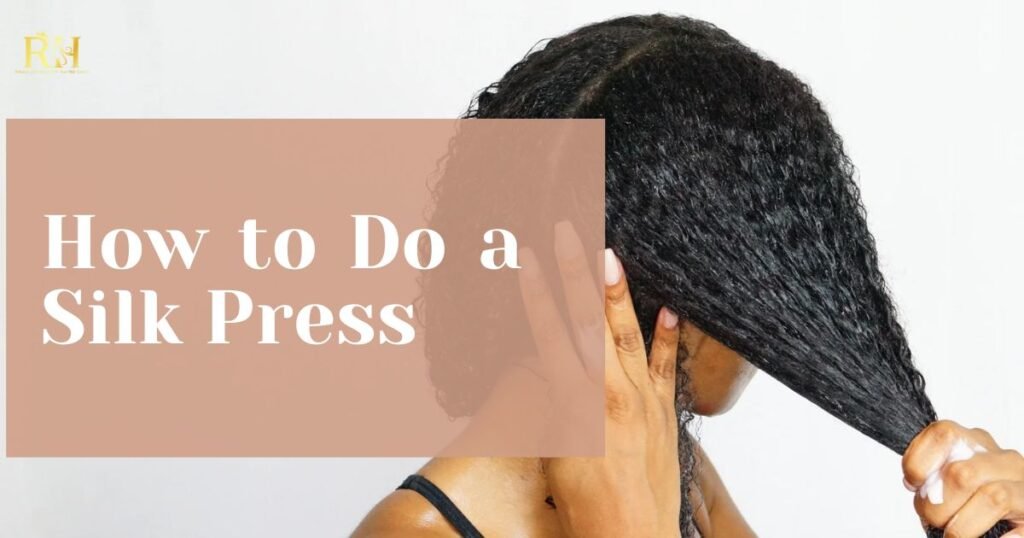
A silk press turns coily or curly hair bone straight with heat alone, and it washes back to your curls when you are ready. The catch: most guides skip the numbers. They tell you to “turn down the heat” without saying what that means, so you guess, and guessing is how people lose their curl pattern.
This guide shows you how to do a silk press at home with specific temperatures, section sizes, and timing, backed by dermatology guidance and hair science research. It also covers what most guides leave out: how to spot heat damage early, and how to press leave-out so it blends with a sew-in.
What Is a Silk Press on Natural Hair?
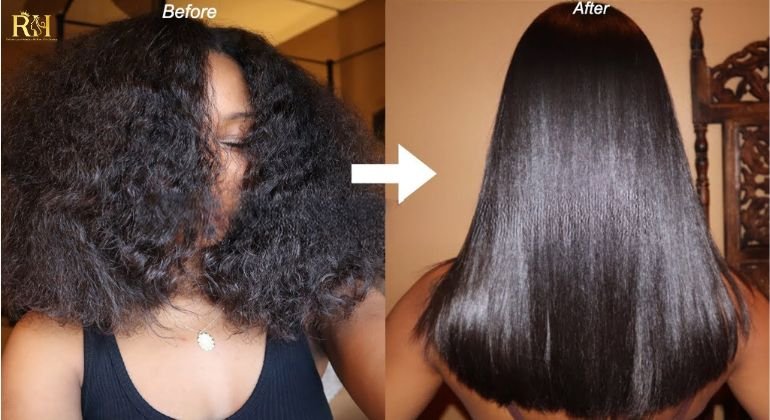
A silk press is a thermal straightening method for silk press natural hair: you wash, deep condition, blow dry, and then flat iron the hair into a smooth, moving finish. It sits apart from a relaxer because nothing chemical touches your strands. Heat only reshapes hair temporarily, which is why water and humidity revert it.
Silk Press vs Relaxer
A relaxer permanently breaks the internal bonds that give your hair its curl. Once relaxed, that hair stays straight until it grows out. A silk press gives you the same sleek look for a week or two, then a wash day brings your texture back. If you want to switch between curly and straight, the press is the only one of the two that lets you.
What You Need for a Silk Press at Home
- A clarifying or sulfate-free shampoo and a moisturizing deep conditioner
- A heat protectant rated for flat iron use
- A blow dryer with a comb attachment
- A flat iron with a digital temperature readout (ceramic or titanium plates, 1 inch wide for most lengths)
- A fine-tooth comb, a wide-tooth comb, and 4 to 6 sectioning clips
- A light serum and a satin scarf or bonnet
The digital readout matters more than any brand name. A dial marked 1 to 10 gives you no idea what your hair is actually getting. If you style for clients, our list of hair extension tools every stylist should have covers the rest of a working kit.
How to Do a Silk Press Step by Step
Block out about three hours for your first time. Thick, waist-length hair can take longer.
Step 1: Check Your Hair Before You Start
Trim split ends first; a flat iron makes frayed tips look worse, not better. Skip the press if you bleached or relaxed within the past few weeks, or if you notice heavy breakage. Chemically processed hair has less structure left to protect it from heat.
Step 2: Clarify and Shampoo
Shampoo twice. Oils, butters, and silicone buildup sizzle under a hot iron and leave hair stiff instead of silky. Focus the lather on your scalp and let the rinse clean your lengths.
Step 3: Deep Condition
Leave a moisturizing deep conditioner on for 15 to 30 minutes, under a hooded dryer if you have one. Rinse with cool water. Detangle while your hair is still damp using a wide-tooth comb, which the American Academy of Dermatology recommends for textured hair and tight curls.
Step 4: Apply a Heat Protectant for Silk Press Styling
Work the heat protectant through damp hair in four sections so no strand gets missed. Lab research on flat ironing found that protective pretreatments reduced both breakage and keratin breakdown compared with untreated hair (Zhou et al., 2011). Protectant reduces damage; it does not license higher heat.
Step 5: Blow Dry Natural Hair in Sections
Use medium heat, keep the nozzle about 6 inches (15 cm) from your hair, and keep it moving. A study in the Annals of Dermatology found that hair surface damage rose as dryer temperature went up, and that drying from 15 cm with the dryer in constant motion caused less damage than blasting at close range (Lee et al., 2011). The same study found that hair left wet for hours showed its own internal damage, so a controlled blow dry beats a long air dry here.
Stretch each section until it is completely dry. If you hear sizzling or see steam when the iron touches your hair, stop: there is still water in the strand.
Step 6: Set the Right Silk Press Temperature
Research on hot flat ironing notes that irons often run above 200°C (392°F) and that this range can significantly damage hair keratin (Zhou et al., 2011). The AAD advises using flat irons on dry hair on a low or medium heat setting. Use this as a starting point:
| Hair type or condition | Starting flat iron temperature |
| Fine, color-treated, or previously damaged | 300 to 330°F (150 to 165°C) |
| Medium density 3C to 4A | 330 to 360°F (165 to 180°C) |
| Thick, coarse 4B to 4C | 360 to 390°F (180 to 200°C) |
Test one small section at the back. If a single slow pass leaves it wavy, raise the heat by 10 to 15 degrees and test again. The right temperature is the lowest one that works in one pass.
Step 7: Press With the Chase Method
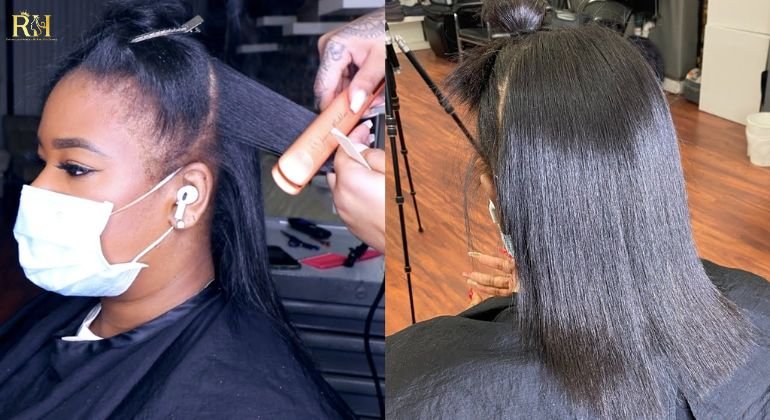
Take sections about half an inch wide. Run a fine-tooth comb through the section and follow right behind it with the flat iron, root to ends, in one slow, steady glide. The comb holds tension and separates strands so the plates reach every hair. One slow pass does less harm than four fast ones.
Work from the nape up and finish at your hairline, where hair tends to be finest and needs the least heat.
Step 8: Finish, Cool, and Wrap
Smooth two or three drops of light serum over your ends only. Heavy oil at the roots weighs the style down within a day. Let your hair cool completely before you wrap it, because warm hair still takes shape from whatever it touches.
How to Spot Silk Press Heat Damage Early
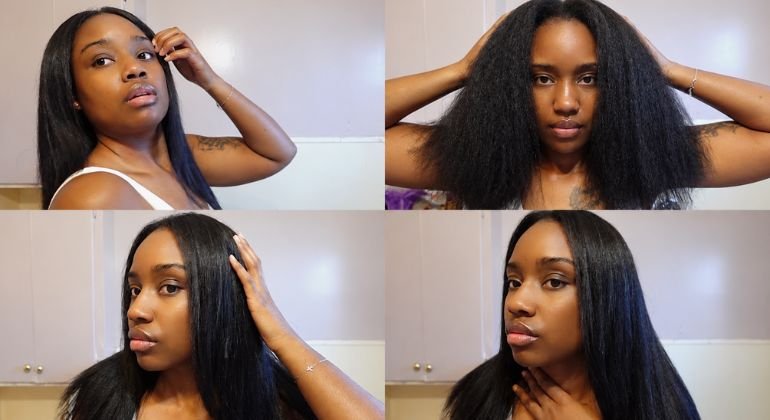
Heat damage shows up on wash day, not on press day. After you wash out a press, check for:
- Straight or limp pieces that will not curl back, often at the front and ends
- Mixed patterns, where one section coils and the one beside it hangs loose
- Rough, dull ends that snap when stretched gently
You cannot repair heat-damaged strands; you can only trim them. If you see these signs, lower your temperature next time and wait longer between presses. The AAD recommends that you limit hot tools overall, so treat a silk press as an occasional style rather than a weekly habit.
Silk Press Maintenance: How Long Does a Silk Press Last?
Expect one to two weeks from a well-done press. Your climate and your workout routine decide most of that range.
- Wrap every night. Comb hair around your head and tie it under a satin scarf, then add a bonnet.
- Beat humidity. Carry a scarf or umbrella on damp days. Moisture in the air starts reverting roots within hours.
- Protect workouts. Wear a satin-lined band and pin hair up, since sweat reverts the hairline first.
- Skip touch-ups. Re-ironing the same sections every few days stacks up heat exposure fast. Pin curls or a wrap refresh the style without heat.
Silk Press on Extensions and Leave Out
Many stylists press a client’s leave-out to blend with a sew-in or quick weave. The blend only works if the extension texture matches the pressed hair. Pressed 4B hair rarely looks like glassy silky straight bundles; it has a soft, slightly coarse finish closer to a kinky straight or yaki texture. Our guide to matching extensions to your curl pattern walks through how textures line up. If you want less leave-out to press at all, a lace closure covers the part so your natural hair stays protected.
Why Hair Grade Matters More Than Origin When You Apply Heat
If you plan to flat iron extensions, the processing grade decides how they handle heat. Raw hair keeps its cuticle intact and has not been chemically treated, so it presses, reverts, and presses again the way your own hair does. Virgin hair comes close. Non-Remy hair usually has its cuticle stripped and a silicone coating added to fake shine; once heat burns that coating off, the hair tangles and frizzes. The country printed on the label tells you far less than the grade does. Learn how to check for yourself in our guide to identifying authentic raw hair, and see safe settings for units in can you use heat on human hair wigs.
A quick note on honesty: we sell raw Vietnamese hair, and Vietnamese hair is naturally straight to wavy. If you need a true kinky straight texture to blend with pressed 4C leave-out, [INSERT: confirm whether a kinky straight or yaki SKU is currently in stock; if not, say so plainly here and recommend asking for a texture match before ordering].
Frequently Asked Questions
How long does a silk press last?
A silk press usually holds for one to two weeks. Humidity, sweat, and water revert it fastest, while a satin wrap at night and dry-weather days help it last longer.
What temperature should I use for a silk press?
Start near 350 degrees Fahrenheit and increase only if one slow pass leaves the section wavy. Most healthy coily hair presses well between 330 and 390 degrees Fahrenheit. Fine or color-treated hair needs less.
Can a silk press cause heat damage?
Yes. Too much heat, repeated passes, or pressing damp hair can permanently loosen your curl pattern. If a section stays straight after a wash, that section is heat damaged.
Is a silk press better than a relaxer?
A silk press is temporary and uses heat instead of chemicals, so your curls return after washing. A relaxer permanently breaks bonds in the hair and cannot be reversed.
Can you silk press hair extensions?
Yes, if the extensions are human hair with the cuticle intact, such as raw or virgin hair. Use the same low-to-medium heat and a heat protectant. Synthetic hair will melt.
Press Smarter, Keep Your Curls
A great silk press comes down to three things: clean, fully dry hair, the lowest temperature that straightens in one pass, and a nightly wrap. Get those right and you can go sleek for two weeks and curly again on wash day with your pattern intact.
Stylists and salon owners: if you press leave-out for sew-in clients and need bundles that take heat the same way natural hair does, contact Raw Hair Luxury for wholesale pricing and request a texture-matched sample before you stock up.
📲Phone/WhatsApp: +1 (206) 698‑5133
🛜Instagram: RAW HAIR LUXURY COMPANY
🌐Tik Tok: RAW HAIR LUXURY
📧 Email: Rawhairluxury.us
🌐Website: rawhairluxury.com