

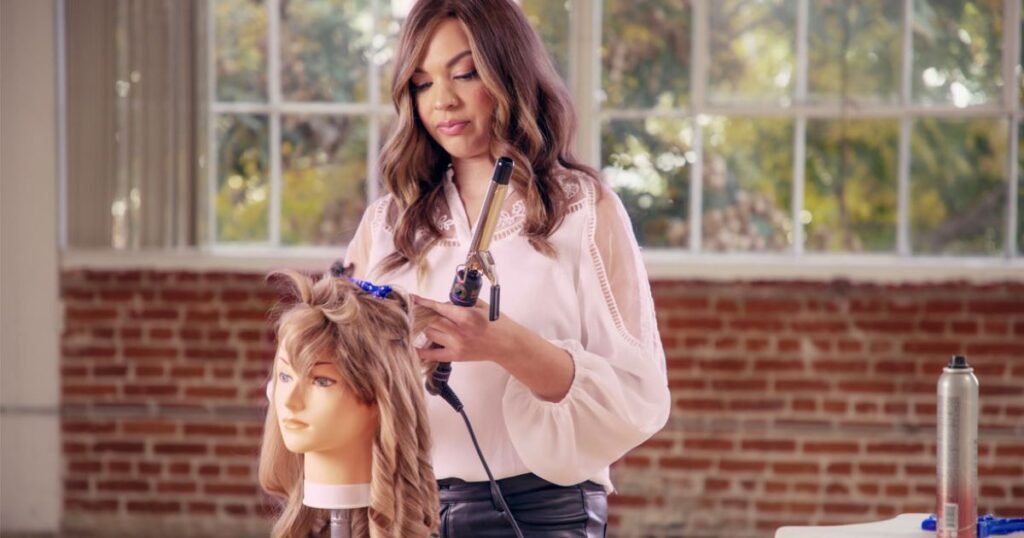
You just invested in a quality human hair wig. Now you want a sleek blowout for work, beachy waves for the weekend, or tight curls for a night out and you’re wondering whether reaching for your flat iron is going to ruin everything you paid for.
The short answer is yes, you absolutely can use heat on human hair wigs. But doing it safely is a different skill set from styling your natural hair, and the stakes are higher. A wig does not benefit from scalp oils, it cannot regenerate from the root, and every degree of unnecessary heat chips away at its lifespan.
This guide covers everything you need to know about human hair wig heat styling the right temperatures for every look, the best tools, what heat damage actually looks and feels like, and how to get years of gorgeous styles out of one wig.
Why Human Hair Wigs Respond Differently to Heat Than Natural Hair
Before diving into tools and temperatures, it helps to understand why using heat on human hair wigs requires more care than styling the hair on your head.

Natural hair receives a constant supply of sebum from your scalp. This oil coats each strand, providing a degree of natural heat resistance and moisture retention. Human hair wigs, even those made with 100% virgin or Remy hair, are severed from that supply permanently. Every wash and every heat styling session depletes moisture that the hair cannot replenish on its own.
This does not mean your wig is fragile it means it needs intentional moisture management and smart heat habits to stay beautiful. Once the hair cuticle is irreversibly damaged from excessive heat, no product in the world can fully undo it.
Does the Grade of Hair Matter for Heat Styling?
Absolutely, and this is one of the most important factors most styling guides skip over entirely.
Virgin human hair wigs are made from hair that has never been chemically processed no coloring, no perming, no relaxing. The cuticle layer is intact and running in the same direction. This makes virgin hair the most resilient when it comes to safe heat temperature for wigs, and it holds styles longer.
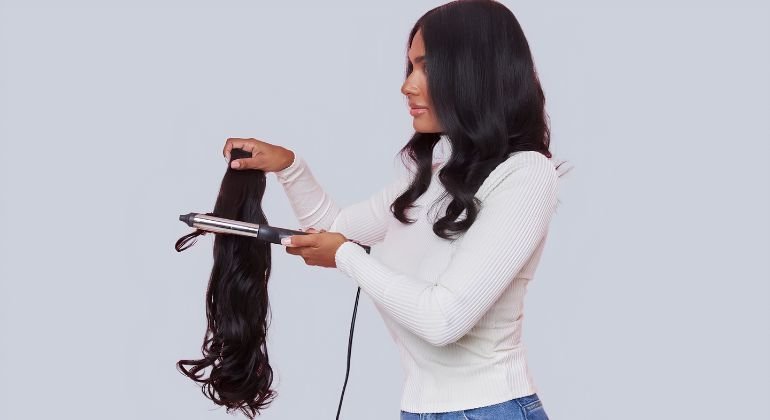
Remy human hair wigs are also cuticle-aligned and of high quality, though the hair may have undergone some light processing. Remy hair responds very well to heat styling and is the most widely available premium option.
Non-Remy and processed wigs use hair that has been chemically treated to appear smooth. The cuticle is often stripped and coated with silicone to create an artificial shine. These wigs are significantly more vulnerable to heat damage and should be styled at the lowest possible temperatures, if at all.
The practical rule: the more processed the hair, the lower the heat and the more careful your technique needs to be.
Temperature control is the single most important factor in safe human hair wig heat styling. Here is a practical guide by styling goal:
For straightening a coily or kinky-textured wig, temperatures between 375°F and 400°F (190°C–205°C) may be needed, but only for virgin or high-quality Remy hair, and only with a quality heat protectant applied first.
For smoothing a wavy or lightly textured wig, stay within the 300°F to 350°F (150°C–175°C) range. This is sufficient to elongate the wave pattern without stripping the cuticle.
For creating curls with a curling iron or wand on a body wave or straight wig, 280°F to 320°F (138°C–160°C) is the sweet spot. Curls at this range hold well and the hair suffers minimal moisture loss.
For blow drying, always use the medium heat setting combined with a concentrator nozzle. Keep the dryer moving and maintain at least four to six inches of distance from the hair at all times. High heat on a blow dryer while the hair is damp causes significant cuticle damage.
The universal rule for heat on human hair wigs: always start lower than you think you need, test a small section at the back, and only increase the temperature if the result is genuinely insufficient.
Choosing the Right Heat Tools for Your Wig
Not all styling tools are created equal, and the wrong one can do real damage even at a moderate temperature.
Ceramic flat irons heat evenly across the plate surface, reducing hot spots that can scorch individual sections. They are the most forgiving option for human hair wigs and a reliable choice for smoothing or straightening.
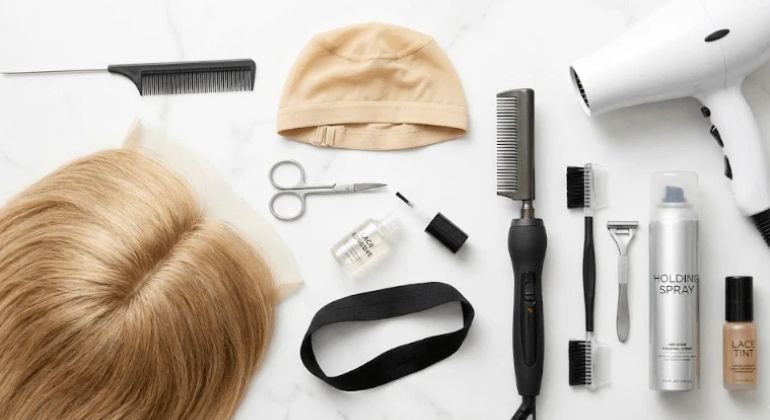
Titanium flat irons heat up faster and reach higher temperatures, which can be useful for thick, coarse, or very curly wig textures. However, the temperature precision required is higher use these only if your tool has an accurate, reliable dial and you are confident in your technique.
Tourmaline tools (either flat irons or curling wands) emit negative ions that smooth the hair cuticle as they style, reducing frizz and adding shine. They are excellent for human hair wigs because they counteract some of the drying effect that direct heat causes.
Avoid cheap, non-branded tools with no temperature control. The inconsistent heat output is far more damaging than a quality tool at a slightly higher setting.
Step by Step: How to Safely Heat Style a Human Hair Wig
Follow this process every time you use heat on human hair wigs, and your wig will reward you with a much longer lifespan.
Step 1 — Start clean and fully dry. Styling a human hair wig while it is even slightly damp is one of the most common causes of wig heat damage. Water trapped inside the hair shaft turns to steam under direct heat, expanding and fracturing the hair from within. Wash, condition, and air-dry or blow-dry on medium heat before any direct heat styling.
Step 2 — Secure the wig on a mannequin head. This gives you a stable, even surface to work on and protects the cap construction from unintentional tension. Use T-pins to hold the wig firmly in place.
Step 3 — Apply heat protectant thoroughly. Choose a lightweight, spray-on heat protectant that contains silicone derivatives (such as dimethicone or cyclopentasiloxane) or natural polymers like rice protein. These ingredients form a protective coating over the cuticle that significantly reduces heat penetration. Apply section by section, making sure every strand is lightly coated — not soaked.
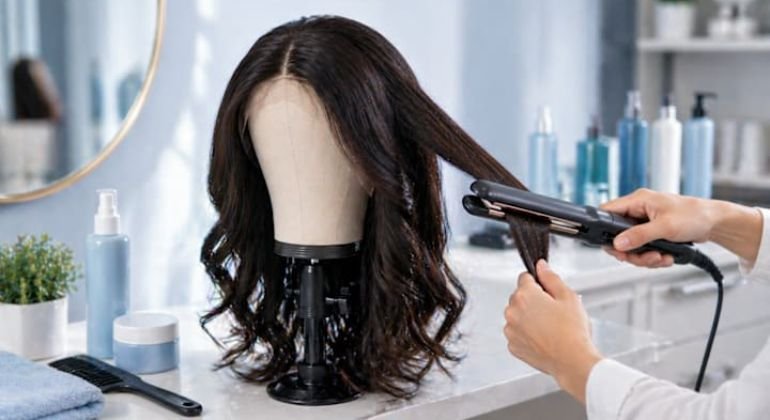
Step 4 — Section the hair into four or more manageable parts. Working in large, uncontrolled sections leads to uneven styling and forces you to pass the tool over the same hair multiple times. Clip away the sections you are not currently working on.
Step 5 — Style with continuous, fluid movement. Never hold a flat iron clamped in one position. Never wrap hair around a curling iron and leave it unattended. Move the tool steadily and deliberately. One clean pass is almost always enough when the temperature is appropriate.
Step 6 — Finish with a lightweight serum or setting spray. A pea-sized amount of argan oil or a shine serum applied to the palms and smoothed gently over the styled hair adds a finishing sheen and helps seal any lifted cuticle edges. Avoid heavy oils that will weigh down the style or create buildup at the roots of the wig cap.
How to Recognize Heat Damage on a Human Hair Wig
Knowing what heat damage looks like on a wig helps you catch it early and adjust your technique before it becomes irreversible.
The earliest sign is persistent dryness and a dull, flat appearance even after deep conditioning. Healthy human hair, even in wig form, has a degree of natural sheen. If your wig consistently looks matte and feels rough to the touch, excessive heat is likely stripping the cuticle.
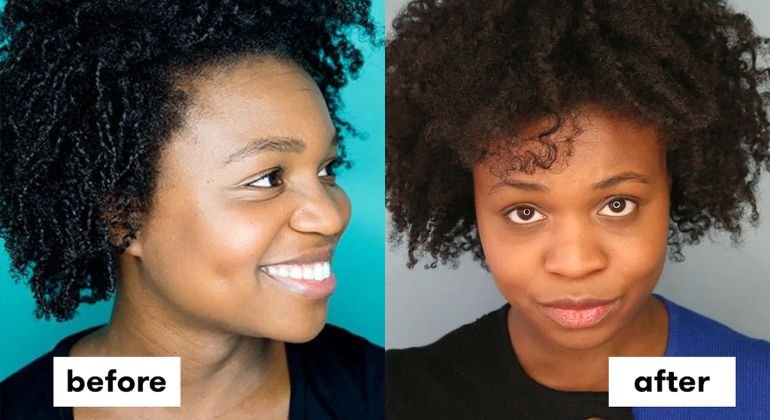
More advanced heat damage presents as split ends, excessive tangling (particularly if the wig did not tangle before), and hair that no longer holds a style — a condition called “heat trained” hair, where the strand has become so structurally compromised that it no longer responds predictably to heat.
In severe cases, individual strands may begin to feel brittle or break with minimal tension. At this stage, a wig cannot be fully restored, though deep conditioning masks and protein treatments can slow further deterioration.
How Often Is It Safe to Heat Style a Human Hair Wig?
This is one of the most practical questions that rarely gets a direct answer. The recommendation from most professional wig stylists and trichologists is to limit direct heat styling to no more than two to three times per week for high-quality virgin or Remy wigs, and no more than once per week for processed or previously colored wigs.
Between heat sessions, allow the wig to air-dry naturally, deep condition regularly (once every one to two weeks), and use heatless styling methods — flexi rods, foam rollers, and braid-outs — to maintain the style or create new ones without the cost of additional heat exposure.
The Bottom Line on Heat Styling Human Hair Wigs
Using heat on human hair wigs is not only possible, it is one of the main reasons women invest in human hair over synthetic alternatives. The versatility is genuinely extraordinary. A single high-quality wig can go from pin-straight to voluminous curls and back again, worn beautifully for a year or more with the right care.
The non-negotiables are these: always heat protect, always control your temperature, always start with dry hair, and always replenish moisture after styling. Get those four things right consistently, and your wig will continue to perform at its best regardless of how often you switch up the style.
Ready to find a wig that’s built to handle all your styling goals? Browse our collection of 100% virgin and Remy human hair wigs and contact us today for a personalized recommendation plus an exclusive discount on your first order.
Ready to find your perfect match? Contact us today for expert advice and exclusive discounts on premium human hair extensions.
📲Phone/WhatsApp: +1 (206) 698‑5133
🛜Instagram: RAW HAIR LUXURY COMPANY
🌐Tik Tok: RAW HAIR LUXURY
📧 Email: Rawhairluxury.us
🌐Website: rawhairluxury.com

2 Replies to “Can You Use Heat on Human Hair Wigs? The Complete Safe Styling Guide”
Advantages and Disadvantages of Human Hair Wigs
[…] safe heat styling guide by grade and the raw hair guide linked above document these same ranges in more depth, kept consistent here […]
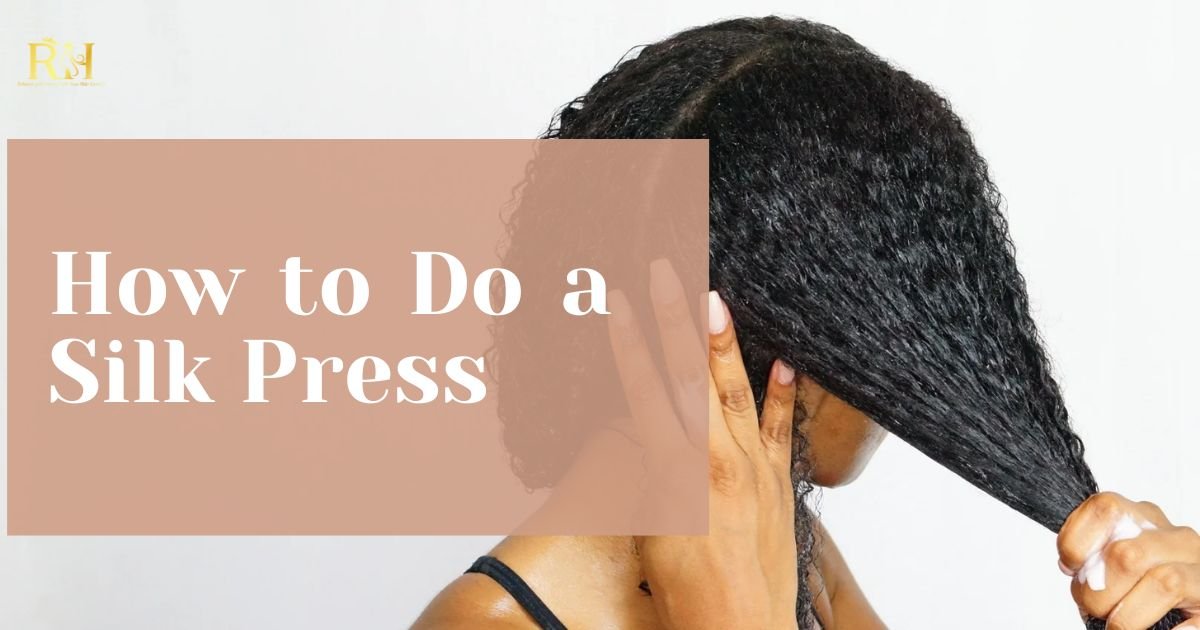
How to Do a Silk Press: The Step-by-Step Guide
[…] If you plan to flat iron extensions, the processing grade decides how they handle heat. Raw hair keeps its cuticle intact and has not been chemically treated, so it presses, reverts, and presses again the way your own hair does. Virgin hair comes close. Non-Remy hair usually has its cuticle stripped and a silicone coating added to fake shine; once heat burns that coating off, the hair tangles and frizzes. The country printed on the label tells you far less than the grade does. Learn how to check for yourself in our guide to identifying authentic raw hair, and see safe settings for units in can you use heat on human hair wigs. […]