
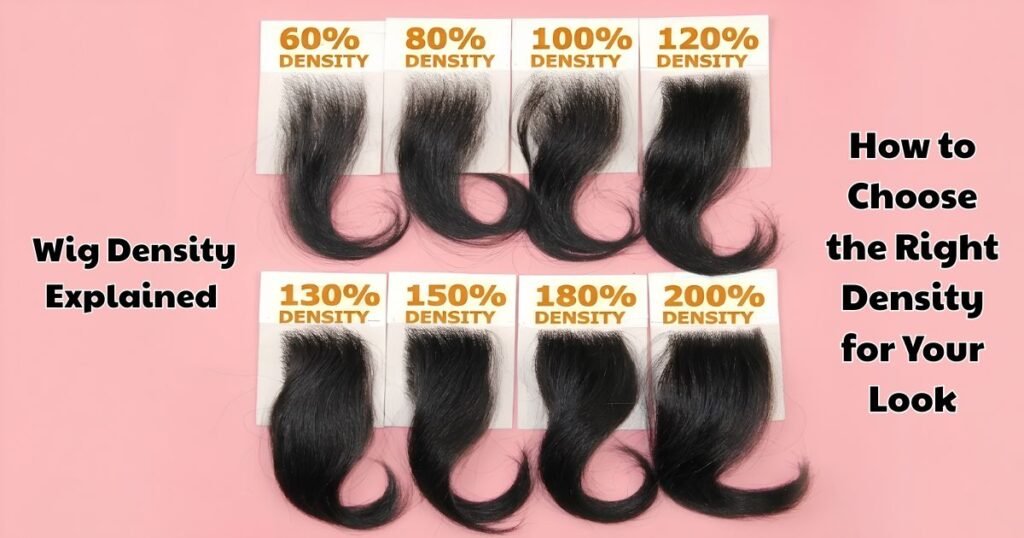
Choosing a wig involves more than selecting the right length, color, or texture. Wig density also affects how full your hair looks, how the style falls, and how comfortable the wig feels. Understanding the difference between 130%, 150%, 180%, and 200% wig density can help you choose the right option for your needs.
In this guide, you will learn what wig density means, how popular density levels compare, and how to select a natural-looking human hair wig.
What Is Wig Density?
Wig density refers to the amount of hair attached to a wig cap. It is commonly expressed as a percentage, such as 130%, 150%, or 180%. Generally, a lower percentage creates a lighter appearance, while a higher percentage provides more volume.
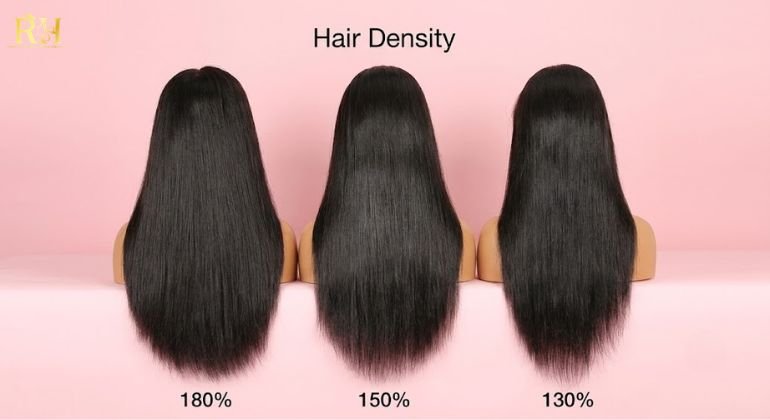
However, wig density percentages are not standardized across all manufacturers. Two wigs labeled 150% may look different depending on hair length, texture, cap construction, and hair distribution.
Quick answer: A 130% – 150% wig density is a useful starting point for a relatively natural everyday look. Choose 180% for fuller hair or 200% and above for more dramatic volume.
Wig Density Chart: 130%, 150%, 180% and 200%
| Wig density | Appearance | Best suited for |
| 100%–120% | Light and relatively thin | Subtle hairstyles |
| 130% | Natural, moderate fullness | Everyday wear |
| 150% | Balanced volume | Versatile styling |
| 180% | Full and voluminous | Glamorous looks and waves |
| 200%+ | Very full and dramatic | Statement hairstyles and special occasions |
These descriptions are general guidelines. Actual fullness depends on the manufacturer’s specifications and the finished wig’s construction.
130% Density: Light and Natural
A 130% density wig is suitable for people who prefer a lighter, understated appearance. It can work well with short hairstyles, sleek bobs, and everyday looks. However, long straight wigs may appear less full toward the ends, so check product photos before buying.
150% Density: Balanced and Versatile
A 150% density wig provides a balance between natural-looking fullness and noticeable volume. It is a practical option for everyday wear and different styling preferences. For many shoppers, it offers a good starting point when choosing their first human hair wig.
180% Density: Full and Voluminous
An 180% density wig creates a fuller appearance and can suit long hairstyles, waves, and glamorous looks. The additional hair may increase the wig’s weight and warmth, so consider comfort if you plan to wear it for extended periods.
200% Density and Above: Maximum Fullness
Wigs with 200% density or higher are designed for substantial volume. They can work well for dramatic hairstyles, events, and photography. However, very high density is not always necessary and may look bulky if the hairline and shape are poorly balanced.
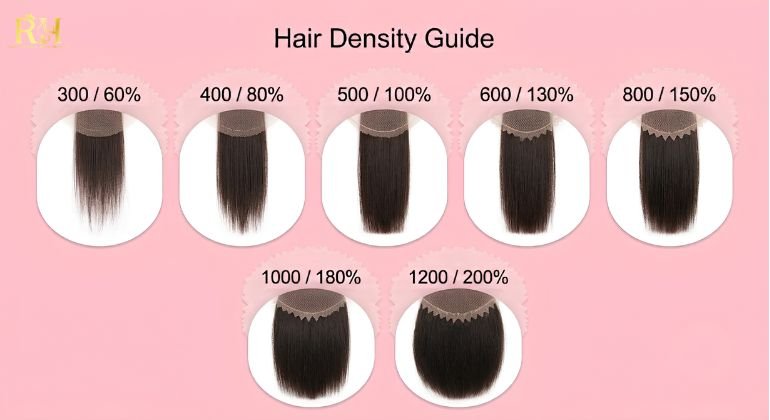
150% vs 180% Wig Density: Which Is Better?
The main difference between 150% and 180% density is the intended level of fullness.
Choose 150% density if you want balanced volume, versatile styling, and a relatively natural everyday appearance.
Choose 180% density if you prefer fuller hair, more body through the lengths, or a more glamorous finish.
Neither option is universally better. Compare wigs with the same length, texture, and cap construction to evaluate their actual appearance.
Does Hair Length and Texture Affect Wig Density?
Yes. Hair length and texture can significantly affect how dense a wig looks.
Long straight hair may appear less full toward the ends because the volume is distributed over a greater length. Shorter styles can achieve their intended shape with less hair.
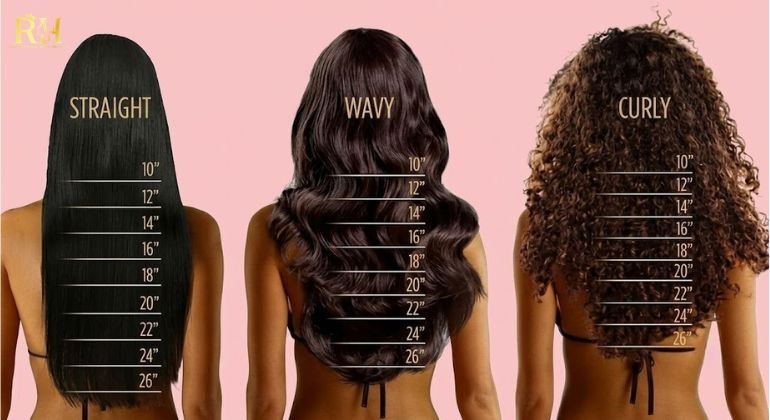
Wavy and curly textures create additional visual volume through their shape and movement. As a result, a curly wig may look fuller than a straight wig with a similar density percentage.
When shopping online, compare the finished hairstyle rather than relying exclusively on the density label.
Frequently Asked Questions
What wig density looks the most natural?
A 130% – 150% density wig can be a good starting point for a natural appearance, depending on the length, texture, and construction.
Is 180% wig density too thick for everyday wear?
Not necessarily. It depends on your preferred volume, the wig’s weight, and your comfort.
Does 200% density mean better quality?
No. Higher density means more fullness, not necessarily better hair quality.
Can a stylist reduce wig density?
Yes. A professional stylist can thin a wig, but the change is generally permanent. Choosing the right density initially can help avoid unnecessary alterations.
Final Thoughts
The best wig density depends on your preferred hairstyle, desired volume, and comfort. A 130% wig offers a lighter appearance, 150% provides balanced fullness, and 180% or higher suits people who prefer more volume.
Before buying a human hair wig, compare its length, texture, hairline, construction, and real product photos. These details will help you choose a wig that matches your expectations.
📲Phone/WhatsApp: +1 (206) 698‑5133
🛜Instagram: RAW HAIR LUXURY COMPANY
🌐Tik Tok: RAW HAIR LUXURY
📧 Email: Rawhairluxury.us
🌐Website: rawhairluxury.com