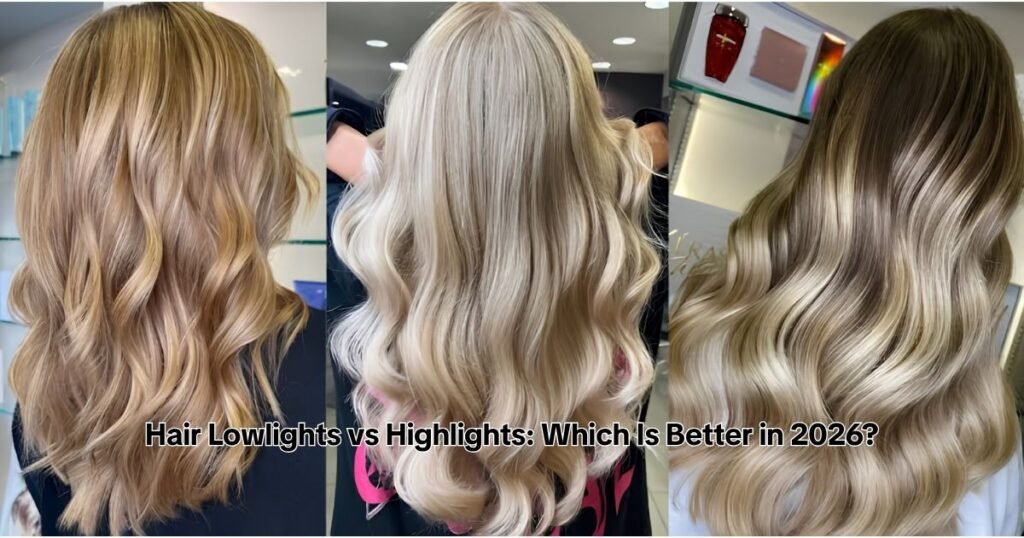
Highlights add lighter pieces to your base color. Lowlights add darker ones. Neither is objectively better: highlights brighten and open up your face, while hair lowlights add depth and hide regrowth longer. The right choice depends on how much upkeep you want and how much your hair can handle without breaking.
Most guides stop at that definition and hand you a table of pros and cons copied from a salon brochure. This one goes further. It explains why the same lowlight formula looks completely different on two heads of hair, what dermatologists actually say about the damage involved, and how to get either look with zero risk to your natural strands using pre-colored extensions.
What Are Hair Lowlights?
Lowlights deposit color that is darker than your natural base, usually one to three shades deep. A colorist sections small pieces of hair, most often near the crown and part line where regrowth is most visible, and paints or foils in a deeper brunette, espresso, or ash tone.
`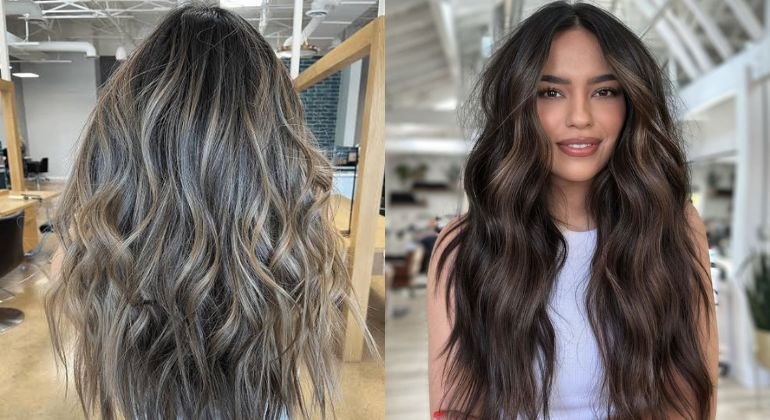
The effect reads as shadow rather than shine. Lowlights are the technique behind most “your hair just looks thicker” comments, because dark pieces sitting underneath lighter ones create the illusion of volume and dimension even on fine hair. They also do quiet work covering gray: instead of a flat all-over dye that grows out with an obvious line, lowlights blend gray into a multi-tonal base so the regrowth is less noticeable.
What Are Hair Highlights?
Highlights do the opposite job. A lightener, usually bleach or a high-volume developer, lifts small sections of hair two or more shades brighter than the base. The result mimics the way hair naturally lightens from sun exposure, which is why highlighted hair reads as brighter and more dimensional in photos.
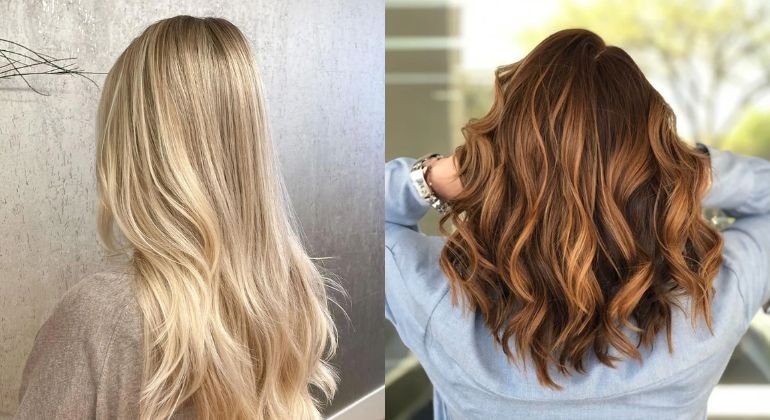
Placement and technique change the finish. Foiled highlights create defined, uniform streaks. Balayage is hand-painted freehand, so the color fades in gradually with no visible line of demarcation. Face-framing highlights concentrate the lightest pieces around the hairline to brighten the complexion without lightening the whole head. All three start from the same chemistry: peroxide opening the hair’s cuticle to remove or oxidize the natural pigment underneath. If cooler, ashier tones are the goal rather than warm sun-kissed pieces, our guide to cool hair colors covers how those shades are achieved and maintained.
Hair Lowlights vs Highlights: Key Differences
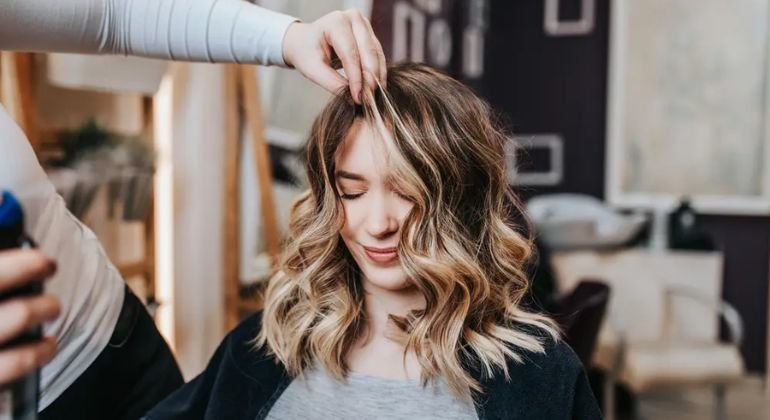
Side by side, the two techniques trade off on five points that actually affect your decision: direction of color, visual effect, chemical process, upkeep, and how much stress the hair fiber absorbs.
| Factor | Lowlights | Highlights |
| Color direction | Darker than natural base | Lighter than natural base |
| Primary chemistry | Deposit-only permanent or demi-permanent dye | Bleach or high-volume lightener |
| Visual effect | Depth, shadow, added perceived thickness | Brightness, dimension, sun-kissed contrast |
| Regrowth visibility | Blends in gradually | Shows sooner at the root |
| Relative damage | Lower, cuticle stays mostly closed | Higher, cuticle is chemically lifted |
| Best for | Adding depth, softening gray, thin hair needing volume | Brightening the face, sun-kissed dimension, contrast on dark hair |
The one line every competing article skips: the table above describes the technique, not the outcome on your specific hair. Two clients can request the same lowlight formula and leave the salon with visibly different color, and the reason has nothing to do with the stylist’s skill.
Hair Lowlights vs Highlights: Which Should You Choose?
Choose lowlights if you want more dimension without more maintenance, you have thin or fine hair and want the illusion of thickness, or you are transitioning gray hair and want it to blend rather than announce itself. Choose highlights if you want brightness around your face, you have dark hair and want visible contrast, or you are comfortable with more frequent salon visits and stronger aftercare.
Many colorists combine both in the same appointment, weaving darker pieces near the root and lighter pieces toward the mid-lengths and ends. This “dimensional color” approach balances the brightness of highlights with the low-maintenance blending of lowlights, and it is now the most requested combination in salons for exactly that reason.
How to Match Extension Color to Your Natural Highlights or Lowlights
Professional colorists work on the international 1 to 10 hair color depth scale, where 1 is true black and 10 is lightest blonde. Understanding this scale makes shopping for extensions far more precise than eyeballing a swatch on a screen. A level 4 hair color, for example, is dark brown, two levels darker than a medium brown level 6 and three levels lighter than true black.
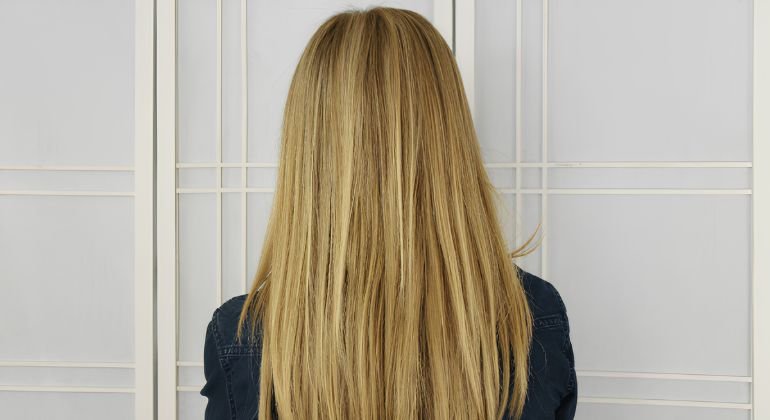
To recreate a lowlight effect with extensions, choose a set one to two levels darker than your natural ends and concentrate it toward the crown, mimicking where a colorist would place lowlight foils. To recreate highlights, look for wefts pre-toned two or more levels lighter, or a pre-lightened base like 613 platinum blonde that can be custom-toned by a stylist without ever touching your own hair with bleach. Mixing two or three weft shades in the same set, rather than buying a single uniform color, is what makes a dimensional, salon-colored result instead of a flat, obviously-added piece, a technique covered in more depth in our guide to building custom clip-in sets.
Maintaining Your Color, Natural or Extension
Whether the color lives on your own hair or on a set of extensions, the aftercare rules overlap. Wash with sulfate-free, color-safe products to slow pigment loss. Reduce hot water, which opens the cuticle further and rinses color out faster. Limit sun exposure or use a UV-protectant spray, since the AAD’s guidance on sun damage to colored hair applies equally to human hair extensions.
If you are wearing clip-ins or a weave rather than color on your own scalp, the American Academy of Dermatology’s guidance on weaves and extensions adds one more rule that colorists rarely mention. Dermatologists recommend wearing a weave or set of extensions for two to three months at most before giving your natural hair a break, since prolonged tension at the same attachment points can strain the follicle over time regardless of how the extension hair itself is colored.
Ready to Try Both, Without the Risk?
Contact Raw Hair Luxury for a free color consultation on virgin and Remy extensions pre-toned to match your ideal lowlight or highlight formula. Whether you want a subtle dimensional blend or a bold platinum contrast, browse our full collection of raw and virgin hair extensions and let our team help you find a set that delivers salon-level color with zero damage to your natural hair.
Ready to find your perfect match? Contact us today for expert advice and exclusive discounts on premium human hair extensions.
📲Phone/WhatsApp: +1 (206) 698‑5133
🛜Instagram: RAW HAIR LUXURY COMPANY
🌐Tik Tok: RAW HAIR LUXURY
📧 Email: Rawhairluxury.us
🌐Website: rawhairluxury.com