
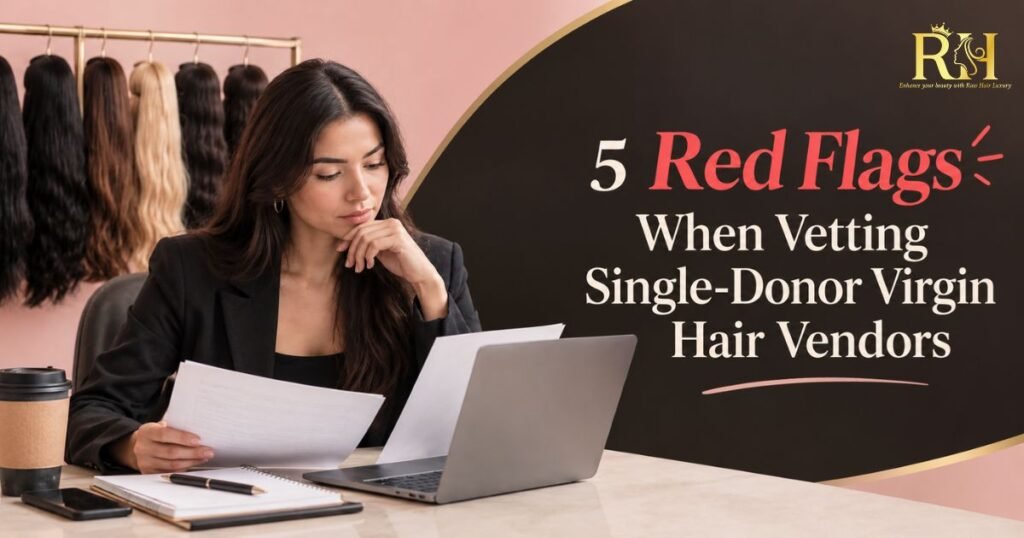
If you buy for a salon, a wig line or an extension brand, you’ll also learn which popular hair tests prove nothing about virgin status, and which documents a legitimate wholesale hair vendor can send before you pay a deposit. Here are the 5 Red Flags When Vetting Single-Donor Virgin Hair Vendors.
| Red flag | What it usually means | How to check |
| Price or stock too good for one donor | Mixed-donor or processed hair with a new label | Ask for grams in stock per length and the donor count |
| Grade terms left undefined | The vendor can’t back the claim | Request a written spec sheet for your lot |
| Identical bundles, shine that fades | Acid-washed hair coated in silicone | Two clarifying washes on a sample |
| No origin trail or live proof | Resold or untraceable stock | Live video, business records, collection region |
| “Pay only by crypto or app” | No recourse if the lot is off-spec | Pay by card or to a matching company account |
What Makes Hair Single-Donor Virgin? Remy vs Virgin Hair Explained
Single-donor virgin hair comes from one person’s ponytail. It is cuticle-aligned hair, with every strand running root to tip, and nobody has colored, permed or acid-washed it. Because one donor supplies each bundle, color, texture and wear stay consistent across the weft.
The labels stack by processing grade. Raw hair has had no chemical or steam processing. Virgin hair has no chemical color or perm, though some vendors steam it to set a wave. Remy hair keeps its cuticles aligned but may be colored. Non-Remy hair mixes cuticle directions and depends on acid and silicone to stop tangling. At Raw Hair Luxury we ask about grade first and origin second, since a processed bundle from a famous hair region still behaves like processed hair. Our guide to raw hair covers each grade in more depth.
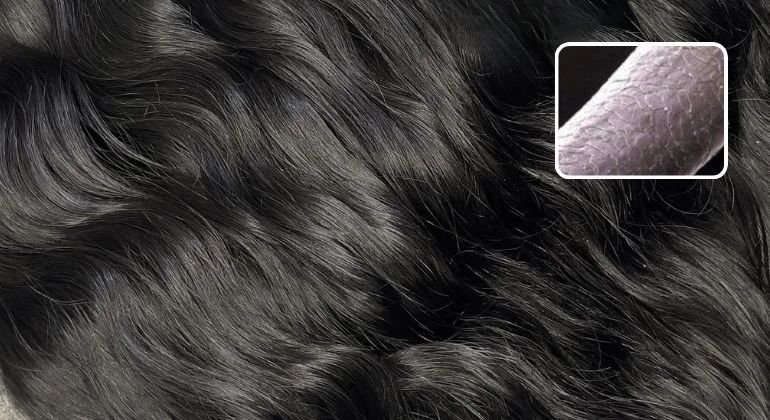
5 Red Flags When Choosing Single-Donor Virgin Hair Vendors
Red Flag 1: Wholesale Single Donor Hair Priced or Stocked Like Mixed Hair
One donor grows one ponytail. That caps how much matched hair a vendor can sell at each length, and supply shrinks as length grows, because long ponytails are the scarcest raw material in the trade. A vendor who quotes single-donor 28-inch bundles at mixed raw hair prices, or promises unlimited matched stock, is selling something else.
Ask two questions before you look at price: how many grams of this length do you hold right now, and from how many donors? A real single donor hair vendor answers with numbers.
Red Flag 2: The Vendor Won’t Define Raw, Virgin or Remy in Writing
Many vendors treat raw, virgin, Remy and single-donor as interchangeable sales words. Ask for a spec sheet that states, for the exact lot you are buying:
- Donor count per bundle
- Any steaming, coloring or chemical treatment
- How they measure length and the weight tolerance per bundle
- Single drawn or double drawn, with the share of short hairs
The FTC’s advertising guidance for businesses says sellers need evidence for objective claims before they make them. “Single-donor” and “unprocessed” are objective claims. A vendor who refuses to write them down can’t support them. For how each grade performs once installed, see our breakdown of the key features of high quality hair extensions.
Red Flag 3: Identical Bundles and Acid-Washed Hair Hidden Under Shine
Real donors differ. Across a lot of single-donor bundles you should see small shifts in natural color and wave, and within one bundle the ends can run a shade lighter than the roots from years of sun. Hundreds of bundles with the same tone and the same glossy wave point to dye, perm or batch processing. Dyed-black bundles sold as raw are a common case; see how dyed black hair differs from raw hair.
The shine can mislead you too. Factories strip non-Remy hair in acid baths so mismatched cuticles stop catching, then coat it with silicone. A review in the International Journal of Trichology notes that some silicones re-seal lifted cuticle scales and add shine by reflecting light, and that products differ in how easily they wash out. Two clarifying washes strip much of that coating and show you the fiber underneath.
Red Flag 4: A Raw Hair Supplier With No Traceable Origin
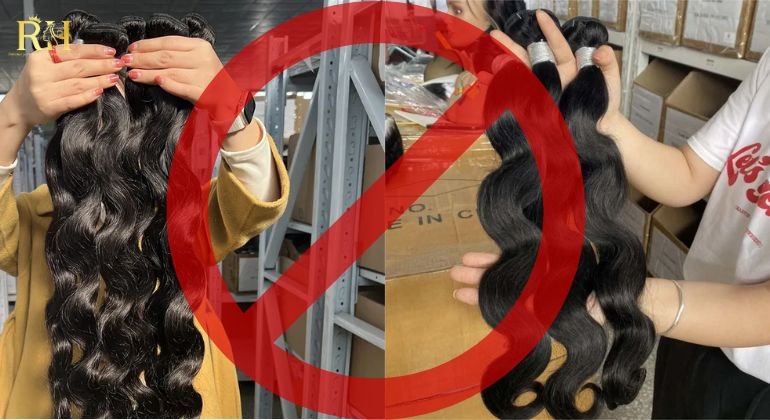
Many single-donor virgin hair vendors sell through Instagram and WhatsApp, where stolen factory photos cost nothing. Live proof takes effort. Ask for a live video call and choose what you see: name a length, ask the vendor to weigh a bundle on camera, and ask to see the sorting area. Then request a business registration document and the region where the hair was collected.
Origin also carries legal weight for US importers. In July 2020, U.S. Customs and Border Protection detained about 13 tons of hair products, worth more than $800,000, from a Xinjiang manufacturer suspected of using forced labor. Since June 21, 2022, the Uyghur Forced Labor Prevention Act has presumed that goods made wholly or partly in Xinjiang involve forced labor unless the importer proves otherwise with clear and convincing evidence. If your raw hair supplier can’t document where the hair came from, your shipment carries that risk at the port. For a starting shortlist, see our roundup of wholesale Vietnam hair vendors for raw hair.
Red Flag 5: Wholesale Hair Vendor Terms That Leave You No Recourse
Watch how the vendor wants to be paid. In a July 2026 consumer alert, the FTC warned that anyone who says you can only pay by bank transfer, wire, cryptocurrency, payment app or gift card is probably a scammer, and noted that credit cards let you dispute charges. Wires are normal for large B2B orders, so judge the details: the receiving account should carry the same company name as the business registration, and the vendor should accept a card or buyer-protected payment for a first hair sample order.
Get return terms in writing before you pay. A trustworthy wholesale hair vendor states what happens when a bulk lot misses the spec sheet: replacement, credit or refund, and within how many days. Compare any offer against a published policy such as our shipping and returns page.
Raw Hair Supplier Checklist: Documents to Request Before You Pay
A legitimate single donor hair vendor can send all five of these before you pay:
- A written spec sheet for your lot (donor count, processing, length method, weight tolerance, drawn type)
- A business registration that matches the name on the invoice and the bank account
- The collection region and export records from past shipments
- Written replacement or refund terms for off-spec lots
- Photos or video of the actual lot, not catalog images
Put Every Vendor Claim on Paper Before You Pay
The best single-donor virgin hair vendors make vetting easy. They quote real stock by length, define every grade term in a spec sheet, show you the lot on live video, document where the hair came from, and accept payment terms that protect a first-time buyer. A vendor who dodges any of those five checks has told you enough. Pair that paper trail with a split sample and five simple tests, and you’ll catch acid-washed or mixed hair before it reaches a client’s head.
Ready to compare? Request a Raw Hair Luxury sample along with its written spec sheet, then run every test in this guide on it. Contact our wholesale team to request your sample.
📲Phone/WhatsApp: +1 (206) 698‑5133
🛜Instagram: RAW HAIR LUXURY COMPANY
🌐Tik Tok: RAW HAIR LUXURY
📧 Email: Rawhairluxury.us
🌐Website: rawhairluxury.com