
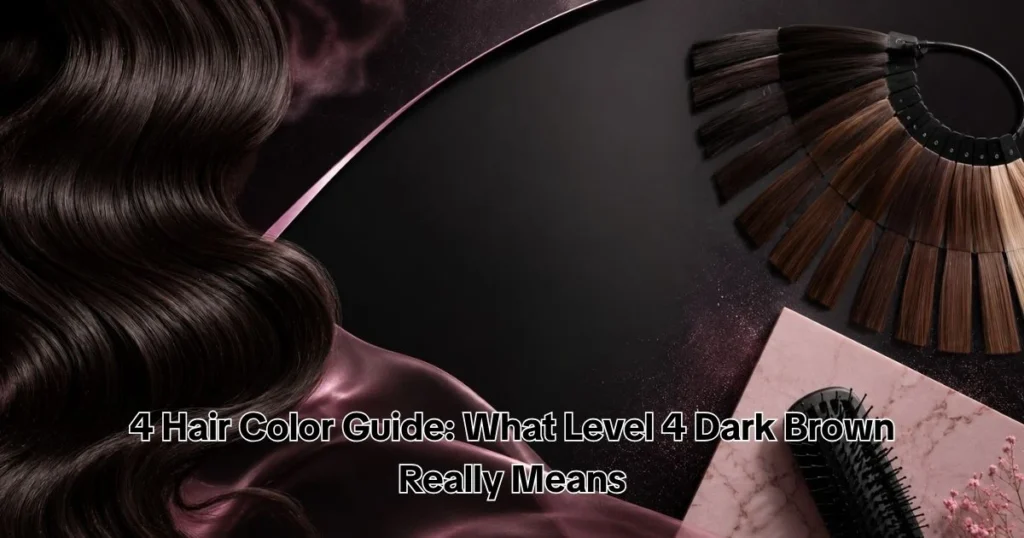
4 hair color is level 4 on the international 1 – 10 hair color depth scale, the professional term for dark brown. It sits two levels darker than medium brown (level 6) and three levels lighter than true black (level 1), which is why it looks rich and deep without reading as black in daylight. This guide breaks down the level system behind the number, matches the most common 4 mixtures to real skin undertones, and covers how to reach the shade safely, whether you’re coloring your own hair or a set of raw hair extensions.
What Is 4 Hair Color? Understanding the Level System Behind the Number
Every shade code you see on a box or a bundle label, “4,” “4/27,” “6N,” follows the same logic. Hair color professionals worldwide use a 1–10 depth scale where 1 is the darkest black and 10 is the lightest platinum blonde. The number before the slash or dot is the level, the number or letter after it is the tone (sometimes called “reflect”), which tells you whether the shade leans warm, cool, or neutral. A code like 4/27 means “level 4 depth, with a 27 (honey blonde) reflect blended in.”
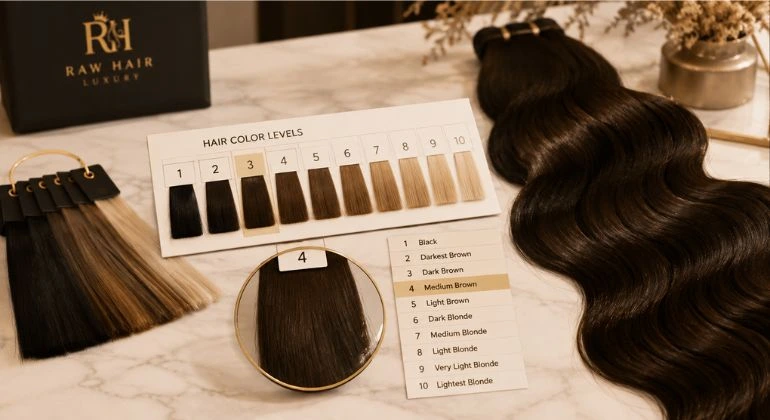
Level 4 sits in the middle-dark band of the scale, one shade lighter than level 3 (deep brown) and one shade darker than level 5 (chestnut/medium brown). Because it carries a high concentration of natural eumelanin, level 4 hair reads as a true dark brown rather than black in most lighting, which is exactly why it photographs so differently indoors versus in direct sun. The table below places 4 in context against the full scale.
| Level | Common Name | Typical Reflect Behavior |
| 1 | Black | Blue-black undertone, minimal warmth |
| 2 | Off-black / darkest brown | Slight brown warmth visible in sun |
| 3 | Deep brown | Cool to neutral, low warmth |
| 4 | Dark brown | Neutral base, easily blended warm or cool |
| 5 | Chestnut / medium brown | Noticeable warmth begins to show |
| 6 | Light brown / dark blonde border | Golden to red warmth common |
| 7–10 | Blonde range | Warmth increases until toned ash/cool |
One correction worth making up front: level 4 is not “the color between medium brown and black” in a vague sense, it is a specific, measurable point on a standardized scale used by Wella, Redken, Matrix, L’Oréal Professionnel, and virtually every other color manufacturer. Knowing your exact level (not just eyeballing “dark brown”) is what lets a colorist tell you, correctly, how much lift or deposit a formula needs.
Does Your Skin Undertone Suit 4 Hair Color?
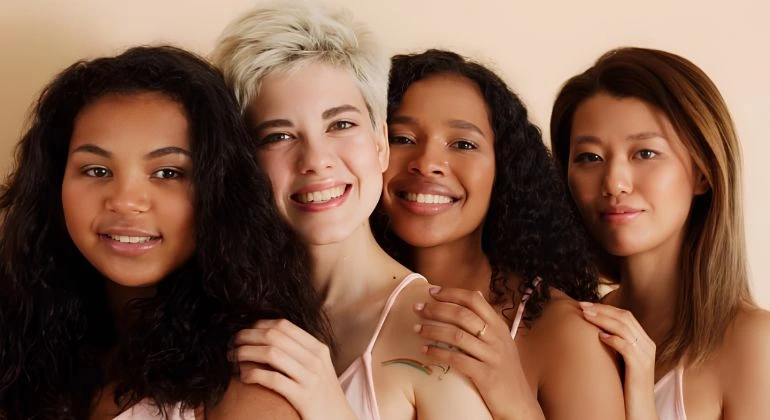
Level 4 is one of the most forgiving depths on the scale because it’s dark enough to read as neutral on most people, but the reflect you pair it with matters more than the level itself. A fast way to check your own undertone: look at the veins on the inside of your wrist in natural light. Blue or purple veins generally indicate a cool undertone, green veins indicate warm, and a mix of both usually means neutral.
| Undertone | Vein Test | Best 4 Mixtures |
| Warm | Green-ish veins | 4/3, 4/5, 4/6, 4 Mocha |
| Cool | Blue/purple veins | 1B/4, 4N (neutral-leaning) |
| Neutral / Olive | Mix of blue and green | 4/27, 4/30, 4/33 |
Top 4 Hair Color Mixtures Compared
Below are the most requested level-4 mixtures, but with the detail most shade guides skip: what it actually takes to reach each one, and how fast it fades. This is the information that determines whether a mixture is a weekend project or a multi-session process.
| Shade Code | Description | Undertone | Processing Note |
| 4N | Neutral dark brown, no added reflect | Neutral | Deposit-only; single-process, lowest fade risk |
| 1B/4 | Natural black blended into dark brown | Cool | Deposit-only; softest transition from black |
| 4/3 | Dark brown + golden brown | Warm | Deposit-only; fades to a soft golden cast |
| 4/5 | Dark brown + medium auburn | Warm-neutral | Deposit-only; red pigment fades fastest of any mixture |
| 4/6 | Dark brown + dark auburn (mahogany cast) | Warm | Deposit-only; needs red-safe shampoo to hold tone |
| 4/30 | Dark brown + light auburn | Warm | Deposit-only on dark hair; light auburn strands may need pre-lightening on extensions |
| 4/33 | Dark brown + deep red | Warm | Deposit-only; vivid reds oxidize and dull fastest under UV |
| 4/27 | Dark brown base + honey blonde pieces | Neutral-warm | Honey sections require lifting first; base 4 is deposit-only |
| 4/613 | Dark brown base + platinum blonde pieces | Neutral-cool | Platinum sections require multi-session lightening; highest maintenance of the group |
Notice the pattern: any mixture that’s entirely level 4 (1B/4, 4N, 4/3, 4/5, 4/6) is a deposit-only process, meaning color is added without needing to strip existing pigment first. That makes these the safest, fastest options for both natural hair and hair extensions. The moment a mixture pairs level 4 with a much lighter reflect, 4/27 or 4/613, part of the hair has to be lightened before the color goes on, which is a different (and more damaging) process entirely. If you’re weighing a 4/613 look, our hair bleaching safety guide covers what that lightening step actually involves before you commit.
How to Get 4 Hair Color Safely
Patch Test First, Every Time
Most permanent and semi-permanent dyes, including virtually every level-4 formula, contain paraphenylenediamine (PPD) or a related compound to produce a true, non-fading brown. PPD is also the single most common cause of allergic contact dermatitis linked to hair dye, and reactions can range from mild itching to significant swelling. Patch-test positivity to PPD runs at roughly 6.2% in North America, which is not rare enough to skip the test.[1][2] The American Academy of Dermatology recommends testing any store-bought color on a small patch of skin 48 hours before a full application, and stopping immediately if you notice redness, burning, or swelling.[1]
Dyeing Your Own Hair to Level 4
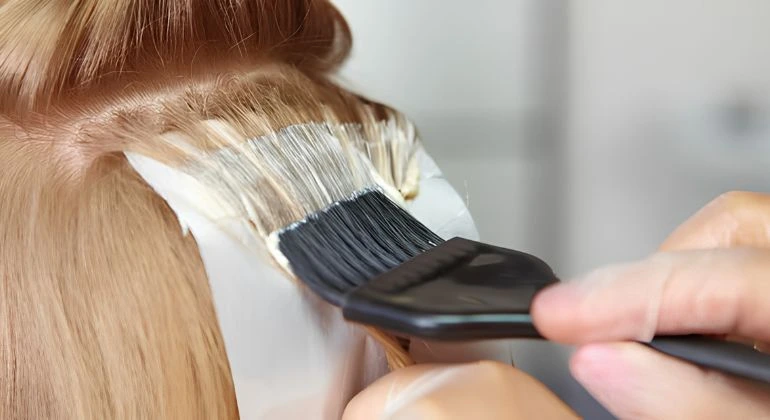
If your natural level is darker than 4 (levels 1–3), you’re depositing color, no lightening needed, and a 10–20 volume developer is standard. If your natural level is lighter than 4 (levels 5 and up), permanent color can safely deposit and lift up to two to three levels in one session; going further requires bleach applied in gradual steps rather than one aggressive pass, since hydrogen peroxide breaks down both melanin and the keratin protein bonds that give hair its strength.[3] Always run a strand test 24–48 hours before the full application, this confirms both timing and that you’re not allergic to the formula.
Coloring Raw or Virgin Hair Extensions to Level 4
This is the part most 4 hair color guides skip entirely, and it’s the one that actually determines whether your color job holds up. Hair extensions are not all equally receptive to color. The deciding factor is whether the cuticle, the hair’s outer protective layer, is still intact and aligned in one direction.
Raw and virgin hair that has never been chemically processed keeps its cuticle fully intact, which means color deposits evenly across every strand and holds closer to the shade you tested. Hair that’s already been through an acid bath, silicone coating, or prior dye job has a compromised or partially stripped cuticle, so it absorbs pigment unevenly, one section can end up noticeably darker or duller than the rest, even when the same formula is applied throughout. If you’re starting from one of our natural color raw bundles, you’re working with hair much closer to level 3 as it grows, so most level-4 mixtures on this list only need a deposit-only formula rather than any lightening. For a full walk-through of lightening the base first when a mixture calls for it, see our guide on bleaching hair without damage. When in doubt about whether a specific bundle or wig can take a given mixture, message our team before you buy the dye, it’s a five-minute question that saves a $150 install.
How to Maintain 4 Hair Color
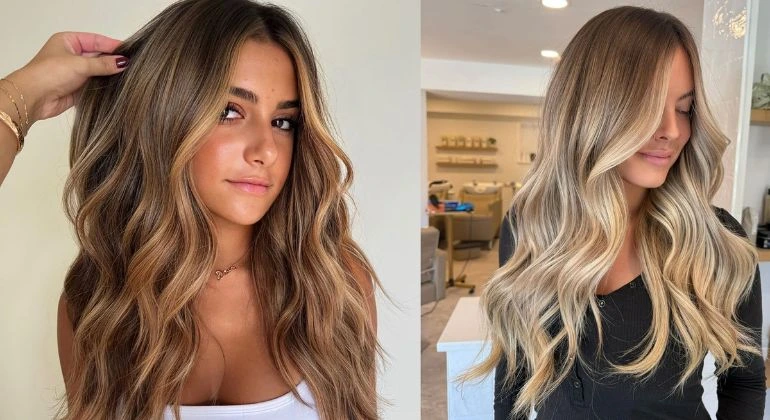
Dark brown mixtures fade differently than blonde ones: instead of going brassy, level-4 color typically fades warm and dull as the reflect pigment breaks down under UV exposure, leaving the base looking flat rather than off-tone. The American Academy of Dermatology recommends protecting colored hair from direct sun exposure, since UV weakens and dries treated strands the same way it does skin.[1] A few habits noticeably extend color life:
- Wash with sulfate-free, color-safe shampoo to slow pigment stripping between washes.
- Rinse with cool or lukewarm water, heat opens the cuticle and lets color rinse out faster.
- Deep condition weekly, healthy, moisturized hair holds pigment better than dry, porous hair.
- Wear a hat or use UV-protectant spray during extended sun exposure, especially for red-based mixtures like 4/33 and 4/6.
If your 4 shade has started to look flat rather than fully faded, you don’t necessarily need a full re-dye. Our guide on refreshing hair color without redyeing it covers gloss treatments and color-depositing conditioner, both of which work well on dark brown mixtures.
Ready to Find Your 4 Hair Color Match?
Whether you’re dyeing your own hair to level 4 or starting from a set of raw extensions and building the shade from there, getting the base right matters more than the formula. Message our team with a photo of your current hair or the bundle you’re working with, and we’ll help you figure out which 4 mixture will actually hold on your specific hair before you buy a single box of dye.
📲Phone/WhatsApp: +1 (206) 698‑5133
🛜Instagram: RAW HAIR LUXURY COMPANY
🌐Tik Tok: RAW HAIR LUXURY
📧 Email: Rawhairluxury.us
🌐Website: rawhairluxury.com