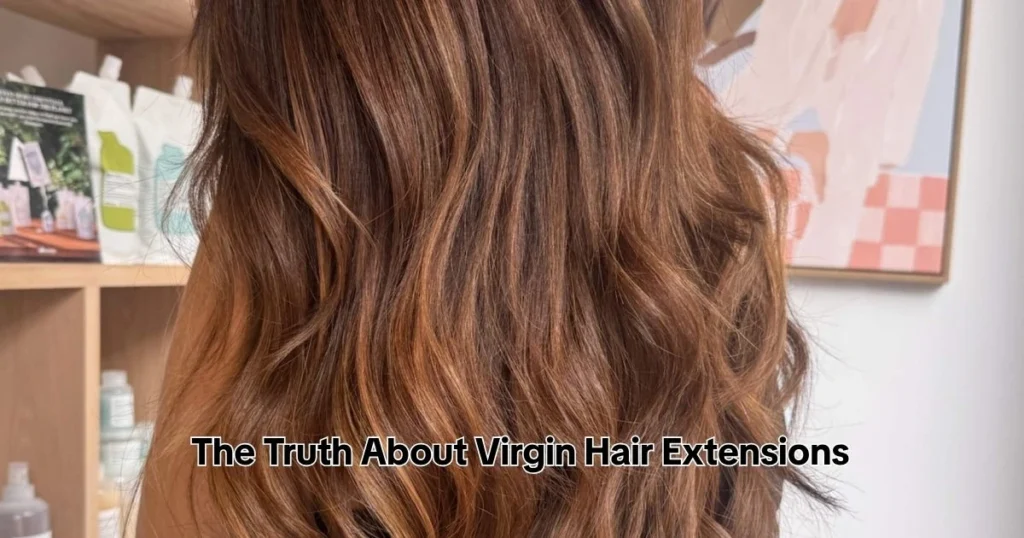
Virgin hair extensions are hair collected from a single donor that has never been dyed, permed, relaxed, or bleached, with the cuticle still intact and running in one direction. That’s the working definition the industry uses. What most listings don’t tell you is that “virgin” has no legal definition in the United States: the only federal guide that ever defined the term was rescinded by the FTC in 1995. That gap is exactly why fake virgin hair is so easy to sell.
If you’ve shopped for extensions or a human hair wig, you’ve seen “virgin” attached to almost everything, often paired with “Brazilian,” “Peruvian,” or “100% virgin Remy.” Some of it is accurate. A lot of it is a label with nothing behind it. This guide covers what virgin hair actually is, where it legitimately comes from, why the term is so easy to misuse, and how to check a bundle yourself before you commit to it.
What “Virgin Hair” Actually Means
Two things have to be true for hair to qualify as virgin:
- It comes from one donor. Not blended, not pooled from a collection bin, one person’s cut.
- It has never been chemically processed. No color, no perm, no relaxer, no bleach. The donor’s own hair, exactly as it grew.
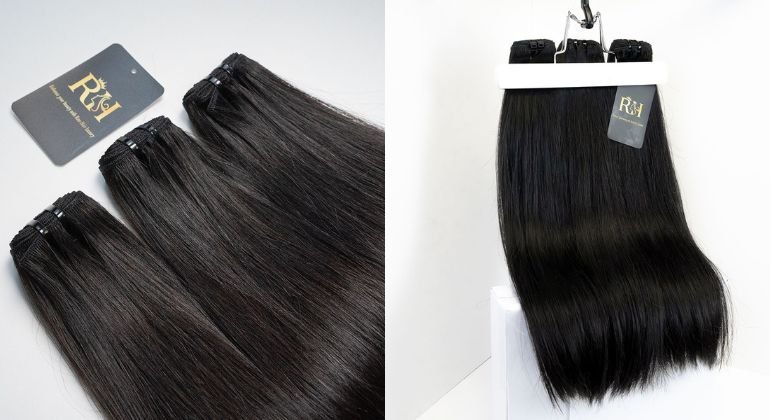
Because it’s unprocessed, the outer cuticle layer, the overlapping scale-like cells that coat each strand, stays intact and undamaged. Human hair fiber research describes this cuticle as the structure that reflects light and reduces friction between strands, which is the physical reason healthy virgin hair looks glossy and resists matting compared to chemically stripped hair.
Virgin hair is not the same thing as Remy hair, even though sellers use the words interchangeably. Virgin describes chemical purity. Remy describes whether the cuticles are aligned in one direction, which can be true of hair that has been colored or permed. Hair can be Remy without being virgin, and in rare cases virgin without being Remy, if it was reverse-collected and the cuticles run in mixed directions. For the full grading breakdown, including how raw, virgin, Remy, and non-Remy compare side by side, see our guide to Vietnamese hair bundle grading.
Why Fake “Virgin” Hair Is So Common
Genuine single-donor, unprocessed hair is expensive to source because it’s naturally scarce. Most people who cut or sell their hair have colored, permed, or heat-treated it at some point, and single-donor collection is slower and costlier than pooling hair from many sources. That scarcity, paired with strong demand and no enforcement mechanism, creates a straightforward incentive to relabel processed or blended hair as virgin.

The most common workaround is a controlled acid bath: hair from multiple sources or already-processed origins is stripped and re-coated with silicone to fake the shine and smoothness of an intact cuticle. It looks convincing on day one. The silicone washes out within a few washes, and the underlying processed hair underneath tangles and dulls fast, which is usually the first sign a “virgin” bundle wasn’t.
The “Brazilian virgin hair” and “Peruvian virgin hair” labels deserve a specific note here. Hair trade analysts and sourcing reports have repeatedly pointed out that neither Brazil nor Peru maintains an organized, large-scale hair collection industry comparable to Vietnam, India, or China. In most listings, “Brazilian” and “Peruvian” describe a texture or curl pattern the seller is marketing, not an actual place of origin. Treat those labels as style descriptors, not sourcing claims.
Where Virgin Hair Actually Comes From
Three countries account for most of the world’s legitimately single-donor human hair supply, and each has a different sourcing model worth understanding.
Vietnam
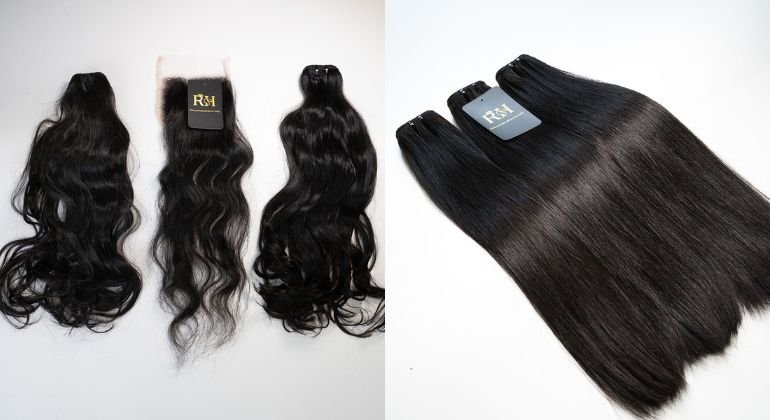
Vietnamese virgin hair is typically collected through smaller, individual sellers rather than mass collection points, which makes single-donor sourcing more traceable and more common than in bulk-collection markets. This is the sourcing model behind most Vietnamese hair sold as virgin or raw, and it’s covered in more depth in our Vietnamese hair bundle guide.
India
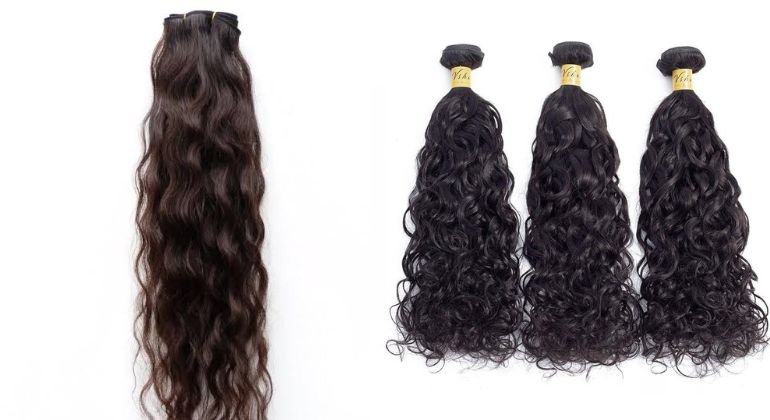
India’s supply runs through two very different channels. Temple hair, most visibly from the Tirumala Tirupati Devasthanams (TTD) at Tirupati, comes from devotees who voluntarily tonsure their hair as a religious offering. The temple collects, sorts by grade, and sells the hair through a public quarterly e-auction open to international bidders, a system that is, notably, more transparent about volume and revenue than most private hair-collection operations. Separately, “hair trash” or “hairballs” (loose strands recovered from salon floors, drains, and combs) is a real and much lower-quality category that gets blended with better hair and sold under the same virgin label. The two should never be priced or marketed the same way, but without independent verification, buyers often can’t tell them apart from a listing photo alone.
China
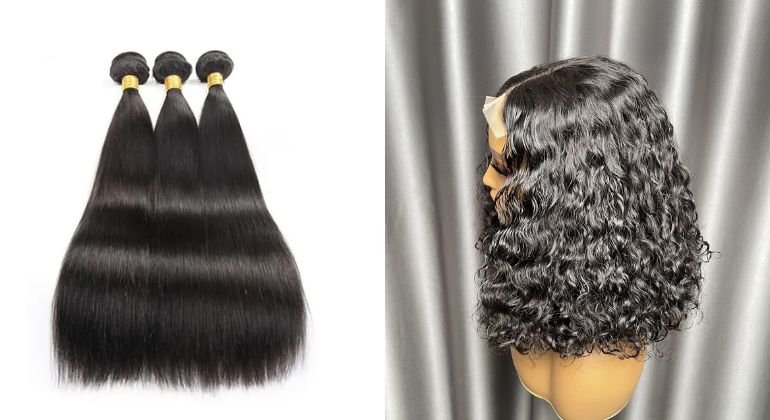
China is the world’s largest processor and exporter of finished wigs and extensions, but it is a manufacturing hub more than a primary collection source. Chinese factories commonly import raw hair from India, Vietnam, and other countries to meet production volume, then process, blend, and finish it domestically. Hair sold as Chinese virgin hair is more likely to be multi-sourced by the time it reaches a factory floor, which is part of why quality and consistency vary widely from listing to listing.
How to Verify Single-Donor Virgin Hair Before You Buy
Beyond the standard tangling and burn tests covered in our bundle verification guide, single-donor claims specifically call for a consistency check:
- Check uniformity across the whole bundle, not one strand. Genuine single-donor hair holds the same diameter, color depth, and curl pattern from the first weft to the last. Visible variation between wefts in the same order is the clearest sign of blended sourcing.
- Ask for traceability, not just a claim. A batch number, a collection region, or a note on how the donor was compensated is a stronger signal than the word “virgin” printed on the packaging.
- Compare an unwashed sample to the finished product. If a seller can show raw, uncoated hair alongside the retail-ready bundle, you can see whether shine is coming from an intact cuticle or a topical coating.
- Vet the seller before the hair. Our guide to buying hair extensions in the USA walks through checking a vendor’s return policy, accreditation, and independent reviews before you place an order.
Keeping Virgin Hair Virgin
Once you color, perm, or chemically treat purchased hair, it’s technically no longer virgin in the strict sense, even if it started that way. That’s fine for styling; it just means “virgin” describes the hair’s condition at the point of sale, not a permanent state. To protect the investment either way, wash with sulfate-free products, dry it properly instead of rough-drying it (our drying guide covers the technique), and address any early shedding with the routine in our shedding guide rather than assuming the hair itself was mislabeled.
Buying Virgin Hair You Can Actually Trust
“Virgin hair extensions” is a real category with a real technical meaning, but it’s a claim you have to verify yourself, not a guarantee that comes with the packaging. Check consistency across the bundle, ask your supplier where the hair comes from and how donors are compensated, and run the verification steps above before you buy. Browse Raw Hair Luxury’s single-donor Vietnamese bundles, closures, and frontals, or contact our team with sourcing questions before you order. Our warranty and returns policy is available in writing before you pay, not after a problem shows up.
Ready to find your perfect match? Contact us today for expert advice and exclusive discounts on premium human hair extensions.
📲Phone/WhatsApp: +1 (206) 698‑5133
🛜Instagram: RAW HAIR LUXURY COMPANY
🌐Tik Tok: RAW HAIR LUXURY
📧 Email: Rawhairluxury.us
🌐Website: rawhairluxury.com

One Reply to “The Truth About Virgin Hair Extensions: What “Virgin” Really Means”
Body Wave vs Deep Wave: The Real Difference
[…] weak or rushed steaming process and will not hold up through a normal wear cycle. Our guide on the truth about virgin hair extensions covers the broader verification steps, including why “virgin” itself has no legal […]