
For wholesale grade wigs, Vietnam produces the best human hair on the market in 2026, on the strength of single-donor sourcing and consistent cuticle alignment. India still supplies the largest volume of raw hair worldwide, and China still manufactures the most finished wigs, but two regulatory shifts in the past eighteen months, an Indian export restriction and a US tariff overhaul, have changed the sourcing math for every country on this list. Here is what actually determines the right source for your business in 2026, not just which country sounds premium.
The 2026 Wig Supply Chain: What Changed Since Last Year
The global human hair extension market reached $5.36 billion in 2025 and is projected to hit $5.90 billion in 2026, growing toward $13.36 billion by 2034 at a compound annual growth rate of 10.75 percent, according to Fortune Business Insights. North America holds 47.43 percent of that market, which is why sourcing decisions made by US wig makers and resellers ripple through pricing worldwide.
Two events reshaped where that hair actually comes from. In February 2025, India’s Directorate General of Foreign Trade (DGFT) reclassified raw human hair exports from “restricted” to “prohibited,” unless a shipment clears $65 per kilogram on a free-on-board (FOB) basis. Then on February 20, 2026, the US Supreme Court struck down the tariff regime that had pushed Chinese-origin hair and wig imports to headline rates of 125 to 145 percent, replacing it with a lower but more durable stack of duties.Neither shift makes headlines the way “best hair country” roundups do, but both directly change your landed cost and your supplier’s reliability.
Vietnam: Why Single-Donor Sourcing Still Wins Wholesale
Vietnamese raw hair earns its wholesale reputation from how it is collected, not from marketing copy. Rural and highland women sell ponytails directly to buyers in a single cut, so every strand in a bundle keeps its cuticle running root to tip in one direction. That structural starting point has laboratory backing: a 2020 clinical review in Clinical, Cosmetic and Investigational Dermatology found Asian hair, the category Vietnamese hair falls under, has the largest cross-sectional diameter and the highest mechanical hardness among the major hair types studied, ranking above Caucasian and African hair on both measures.
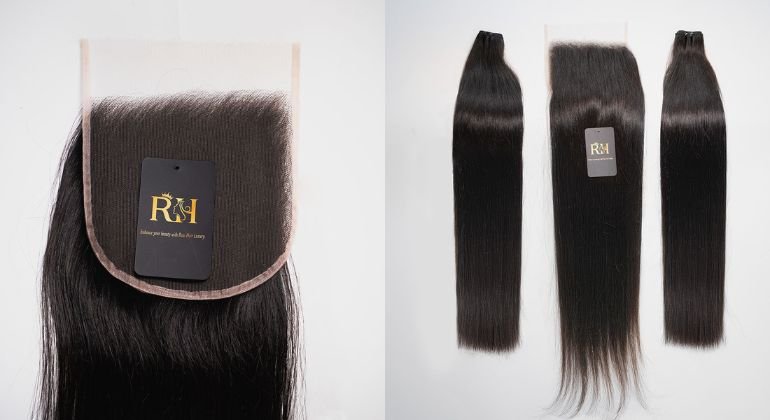
For a wholesale buyer, that structure translates into fewer client complaints. Genuine single-donor Vietnamese hair with intact cuticles resists the friction and cuticle damage that drive tangling and matting, a mechanism documented in recent fiber-mechanics research published by the Royal Society. We break down the fiber-by-fiber comparison against other hair types in our dermatology-sourced Vietnamese hair guide, and the raw-versus-Remy grading that determines whether a bundle actually reaches that lifespan in our Vietnamese hair bundles guide.
The trade-off is price and lead time. Typical minimum order quantities run 5 to 10 kilograms for raw bulk, or roughly 10 to 20 finished wig units, with factory-direct lead times of 7 to 14 business days and longer runs for private label orders.
India: Still the Volume Leader, Now With a Price Floor
India remains the largest exporter of raw human hair by a wide margin, but the number worth knowing in 2026 is not market share, it is the new price floor. As of February 2025, India’s DGFT prohibited raw human hair exports priced below $65 per kilogram FOB, a move aimed at curbing under-invoicing and smuggling into Myanmar and China. For buyers used to budget-tier Indian raw hair, that policy alone pushes the entry price higher regardless of grade.
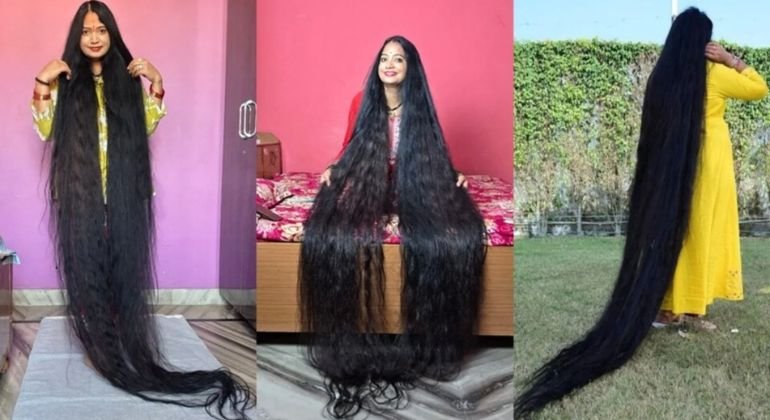
Within India, the quality split still runs along a familiar line. Temple-donated hair from sites such as Tirupati enters the supply chain with intact, traceable cuticle direction. Hair swept from salon floors and household brushes, known in the trade as hair ball or non-Remy hair, gets sold at scale only after an acid bath strips the cuticle and a silicone coating fakes the shine back on. That coating rinses out within a handful of washes, and lifespan drops from years to months. Our full Vietnamese hair versus Indian hair comparison covers the grading breakdown and where each origin fits your product line.
China: Manufacturing Scale Meets a New Tariff Reality
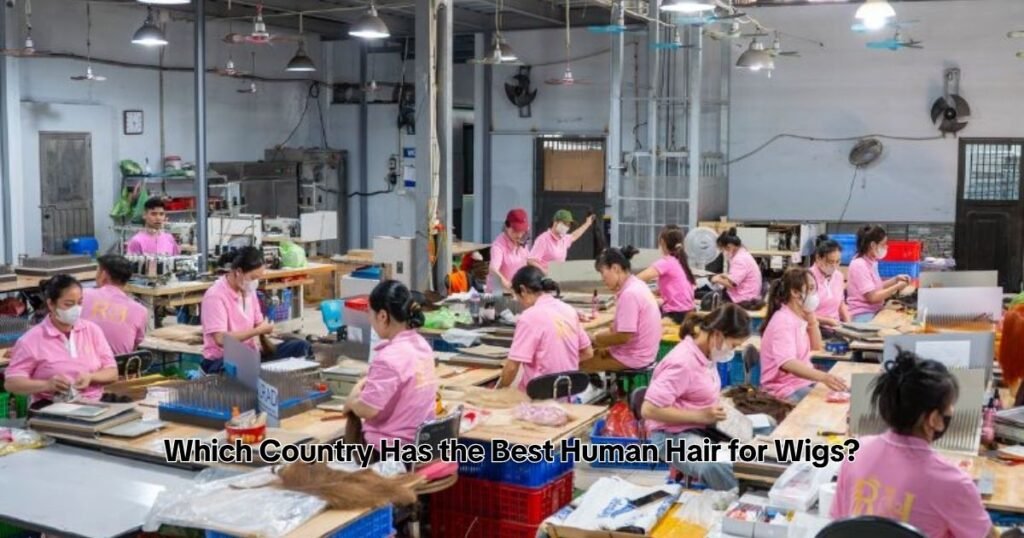
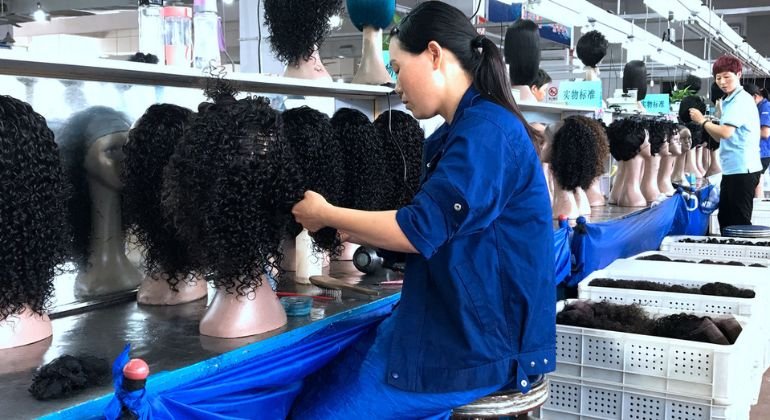
China still finishes more wigs than any other country, drawing on raw hair imported mostly from Vietnam and India, because domestic Chinese hair supply is commercially negligible at scale. What changed is the cost of bringing that finished product into the US. Chinese-origin wigs and hair extensions, classified under HTS 6703 and 6704, were hit with tariffs as high as 125 to 145 percent through most of 2025 under the International Emergency Economic Powers Act (IEEPA).On February 20, 2026, the Supreme Court ruled in Learning Resources, Inc. v. Trump that IEEPA does not authorize those tariffs, and struck them down.
That ruling did not zero out the cost. The administration replaced IEEPA duties with a Section 122 surcharge plus existing Section 301 tariffs, which for most Chinese consumer goods puts the combined rate somewhere in the 30 to 35 percent range as of mid-2026, well above pre-2025 levels but a fraction of last year’s peak.Section 301 was not touched by the ruling, and a further investigation opened in March 2026, so any sourcing plan built on last year’s 125 percent headline number is already working from stale math.
Vietnam vs India vs China: Side-by-Side for B2B Buyers
| Criteria | Vietnam | India | China |
| Role in supply chain | Premium wholesale-grade raw and finished hair | Largest raw hair exporter by volume | Largest finished-wig manufacturer |
| Typical sourcing model | Single-donor, direct ponytail collection | Mixed: temple donation plus salon/floor collection | Imports raw hair, processes at industrial scale |
| Cuticle integrity (top grade) | Intact, single-direction | Intact for verified temple hair only | Variable, depends on imported grade |
| Key 2026 sourcing risk | Higher upfront cost; limited raw material supply | $65/kg FOB export floor in effect since Feb 2025 | ~30–35% combined US tariff as of mid-2026 |
| Typical MOQ | 5–10 kg raw / 10–20 finished units | Flexible, varies by processor | 50–100+ finished units |
| Best fit | Premium salons, private label, US/EU resale | Textured/curly-pattern product lines, budget tiers | High-volume fashion wigs, seasonal SKUs |
The Compliance Layer Most “Best Country” Guides Skip
Country of origin matters for more than sourcing pride. Every finished wig entering the US is generally classified under HTS 6704.20.0000, per US Customs and Border Protection ruling N305621, and under 19 CFR Part 134, the article itself, not just the shipping carton, typically has to carry a legible, permanent country-of-origin mark before it reaches a US buyer.Reselling wigs without confirming your supplier handled that marking correctly is a compliance gap that surfaces during a customs audit, not at the point of sale.
The word “virgin” carries no legal weight either. The only federal guidance that ever defined terms like “virgin hair” and “custom-made,” the FTC’s Guides for Labeling, Advertising, and Sale of Wigs and Other Hairpieces, was formally rescinded in 1995.Since then, nothing stops a listing from calling any hair “virgin” regardless of donor count or processing history, in any of the three countries covered here. Our guide to virgin hair claims covers what that gap means for buyers and how to verify a listing yourself.
The Bottom Line for B2B Buyers
There is no single best country once you are buying at wholesale volume. There is a best fit for your quality tier, your minimum order size, and your risk tolerance for a supply chain that shifted twice in eighteen months. Vietnam remains the strongest default for premium, long-wear wholesale product. India’s new export floor makes budget-tier Indian raw hair a smaller category than it was a year ago. China’s tariff reset makes finished-wig imports viable again, but at a meaningfully higher landed cost than buyers saw before 2025.
Ready to find your perfect match? Contact us today for expert advice and exclusive discounts on premium human hair extensions.
📲Phone/WhatsApp: +1 (206) 698‑5133
🛜Instagram: RAW HAIR LUXURY COMPANY
🌐Tik Tok: RAW HAIR LUXURY
📧 Email: Rawhairluxury.us
🌐Website: rawhairluxury.com