

The best wholesale hair extensions for licensed hairstylists are raw or virgin, cuticle-aligned human hair from a supplier that sells you a test sample, keeps bundle weight and texture the same on every reorder, and tells you in writing how the hair was processed. Grade decides how long an install lasts. Labels like “Brazilian” or “Peruvian” tell you almost nothing.
This guide is for the stylist who already has the license and the clients, and now wants hair that stops costing redo appointments. It covers how to read hair grades, a four-week supplier test you can run on your own station, the margin math, and which hair fits which install method.
The stakes are personal for most stylists. The U.S. Bureau of Labor Statistics counts about 595,000 hairdressers, hairstylists, and cosmetologists, and 48% of them are self-employed, with a median wage of $17.21 per hour in May 2025 (BLS Occupational Outlook Handbook). If you rent a suite or run your own chair, you pick the supplier, and you absorb the cost when a bundle fails.
What Makes a Wholesale Hair Extensions Supplier the “Best” for Stylists?
A good supplier earns the title on four things you can check: hair grade, consistency between orders, honest processing disclosure, and a return path when a batch goes wrong. Price per bundle matters less than it looks, because one failed install wipes out the savings on several cheap bundles.
Start with grade. Human hair extensions fall into four processing tiers, and each behaves differently in your chair.
| Grade | How it’s processed | Cuticle | Color service | Best client fit |
| Raw | Washed and wefted only; no steam, acid bath, or dye | Intact, one direction | Lifts evenly; takes toner well | Long wear, reuse, custom color |
| Virgin | Never dyed or permed; may be steam-textured | Intact, one direction | Good lift; slightly less predictable | Most professional installs |
| Remy | Cuticle aligned but often color-processed | Aligned, sometimes thinned | Limited further lightening | Short-term installs, budget clients |
| Non-Remy | Cuticle stripped in acid, then coated in silicone | Removed or mixed | Poor; coating hides damage | Not recommended for pro work |
Peer-reviewed research backs up why the cuticle column matters. A damaged cuticle raises friction between fibers and leaves the cortex exposed to breakage (Systems approach to human hair fibers, PMC), and repeated bleaching and acid straightening detach cuticle layers and break disulfide bonds (thermal and chemical changes study, PMC). That is what your client feels at week six as tangling and dryness. For a deeper breakdown, read our ultimate guide to raw hair.
Raw vs Virgin Hair: Which Grade Fits Which Client?
Book raw hair for clients who want platinum or custom color, plan to reuse the hair across two or more installs, or wear their hair natural and need a close texture match. Virgin hair covers most everyday sew-ins and wig units at a lower cost. Remy makes sense for a one-time event install, and you should price it that way so the client knows what she is getting.
How to Vet a Wholesale Hair Vendor for Stylists in Four Weeks
You can test a supplier with one sample, one reorder, and a kitchen scale. Run these steps before you commit real volume.
- Check the business before you pay. Look for a US return address, a written return policy, and a person who answers product questions in writing. Ask directly: “Has this hair been steamed, acid-washed, or dyed?” A vague answer is your answer.
- Test one sample bundle. Weigh it (most suppliers sell 100-gram bundles, so check that yours is). Run your fingers from tip to root and feel for resistance in one direction only. Wash it with a clarifying shampoo, brush it, and count the hairs that come loose. Lift a small strand with lightener to see how evenly it moves.
- Reorder the same SKU. Two to three weeks later, order the identical texture and length. Compare weight, length, weft width, and color side by side. Most suppliers fail at this step, because a great sample proves nothing about batch two.
- Read the reviews with a skeptical eye. Since October 2024, the FTC rule on consumer reviews bans fake and AI-generated reviews and lets the agency seek civil penalties against knowing violators (FTC announcement). Enforcement does not reach every seller. Trust reviews from stylists who mention reorders and month-three results.

Hair Extension Profit Margin: A Worked Example
The numbers below are illustrative, not market prices. Plug in your own.
Say you charge $250 for a sew-in and sell the client three bundles plus a closure. Bundle A costs you $55 each. Bundle B costs $80 each but is raw and cuticle-aligned. On paper, Bundle A saves you $75 per install.
Now suppose one Bundle A install in four starts matting by week five, and you redo it free to keep the client. That redo costs you a fresh set of hair plus two to three hours of chair time you could have booked. Spread across four installs, the “cheap” hair has cost you more than the premium hair, before you count the client who quietly books elsewhere.
Why Cheap Bundles Cost Licensed Stylists More
Track two numbers for three months: redo rate and reuse rate. If your clients bring hair back for a second install, raw hair earns its price twice. If your redo rate climbs above one in ten, the bundle is the likely problem, not your technique.
Match Wholesale Hair Extensions to the Install Method
Different methods stress the hair in different places, so buy by method, not by habit.
- Sew-ins and wig units: Machine wefts in raw or virgin hair give you the most reuse. Pair them with lace pieces from the same batch so the texture matches; our lace closure guide covers 4×4, 5×5, and HD lace.
- Tape-ins and keratin tips: The bond takes heat or adhesive, so start with an intact cuticle. Processed hair near the bond breaks first.
- Clip-ins: Clients handle these daily, so tangle resistance matters more than price.
Client safety belongs in the buying decision too. The American Academy of Dermatology advises limiting weaves and extensions to two or three months before a break, and says pain or headaches mean the style is too tight (AAD guidance on weaves and extensions). Heavy, low-grade hair adds weight at the root. Lighter, denser raw wefts let you use fewer tracks for the same fullness. Send clients home with our extension care guide so the hair lasts to the next appointment.
US-Based Hair Vendor or Factory Direct?
Both models work for licensed stylists. A US warehouse gets hair to you in days and gives you a domestic return address. A factory-direct supplier cuts out distributor markup and lets you ask the people who wefted the hair how they processed it. The best setup combines the two: manufacturer pricing and disclosure, with US stock and a US return point. Before you choose, ask each supplier three questions: where the inventory ships from, how long a return takes, and who answers when a batch is off. We compare Vietnamese manufacturers in our guide to wholesale Vietnam hair vendors for raw hair.
Where Raw Hair Luxury Fits
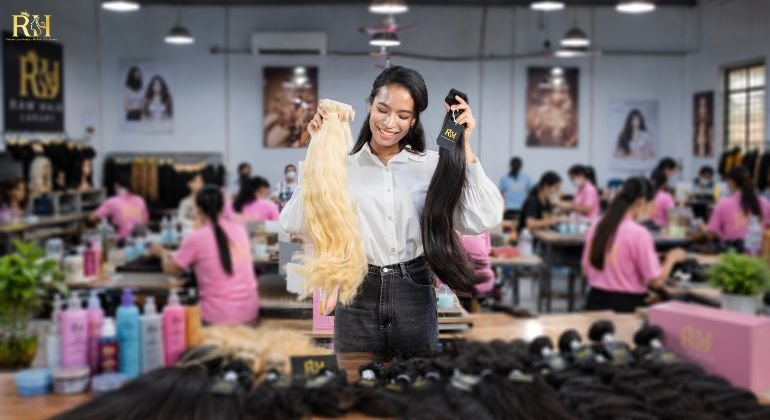
Raw Hair Luxury supplies Vietnamese human hair, including raw bundles, HD lace closures and frontals, wigs, and clip-ins, to salons and resellers from Marysville, Washington. We will tell you the grade of every product we sell. Our return terms are on the policies page.
Frequently Asked Questions
Do I need a cosmetology license to buy wholesale hair extensions?
It depends on the supplier. Some US programs gate stylist pricing behind a verified state license, while factory-direct vendors sell to any business buyer. A license gate protects price stability, but it says nothing about hair quality. Judge the supplier on grade, sample results, and reorder consistency.
What grade of hair extensions should a licensed stylist buy?
For clients who want color, reuse, or installs that last past a few months, buy raw or virgin cuticle-aligned hair. Remy works for short-term installs and budget clients. Avoid non-Remy for professional work, because silicone coatings wash off and mixed cuticle directions cause tangling and matting.
How can I tell if wholesale hair is really raw?
Raw hair shows slight natural variation in texture and tone, lifts evenly with lightener, and keeps its movement after the first wash. Run your fingers from tip to root: you should feel mild resistance in one direction only. A bundle that feels waxy or loses its shine after one wash was likely coated.
Is there a minimum order for wholesale hair extensions?
Minimums vary widely. US stylist programs often have no minimum, while factories may set one per texture or per shipment. Ask for the minimum in writing, ask whether a single sample bundle is available, and ask whether the price changes if you mix textures and lengths in one order.
How often should clients take a break from extensions?
The American Academy of Dermatology advises wearing weaves or extensions for two to three months at most before giving the natural hair a break, and warns that pain or headaches mean an install is too tight. Build that break into your rebooking schedule.
The Bottom Line for Licensed Stylists
Buy by grade, prove it with a sample, and trust the supplier only after the second order matches the first. Raw or virgin cuticle-aligned hair costs more per bundle and less per client, because it survives washing, color, and a second install. Track your redo and reuse rates for three months and let those numbers pick your supplier.
Want to run the four-week test on our hair? Message Raw Hair Luxury on WhatsApp to request a sample bundle and tell us your install method; we will match the grade and texture to your clients.
📲Phone/WhatsApp: +1 (206) 698‑5133
🛜Instagram: RAW HAIR LUXURY COMPANY
🌐Tik Tok: RAW HAIR LUXURY
📧 Email: Rawhairluxury.us
🌐Website: rawhairluxury.com