
If you have ever pulled your hair extensions out of a drawer only to find them matted, dull, or smelling musty, you already know that a beautiful set of extensions is only as good as the care you give it between wears. Learning how to store hair extensions properly is the single most overlooked step in hair extension maintenance, yet it determines whether your set lasts six months or two years. This guide goes beyond the basics and walks you through exactly how to store hair extensions so they stay soft, tangle-free, and salon-fresh for every wear.
Whether you own clip-ins, tape-ins, weft hair, or I-tip strands, the way you store hair extensions between uses has a direct impact on their texture, shine, and overall lifespan. Below, we cover the benefits of proper storage, the prep work that matters most, the best storage methods for every extension type, the ideal storage environment, common mistakes to avoid, and how to revive extensions that have already lost their shape.
Why Learning How to Store Hair Extensions Properly Matters
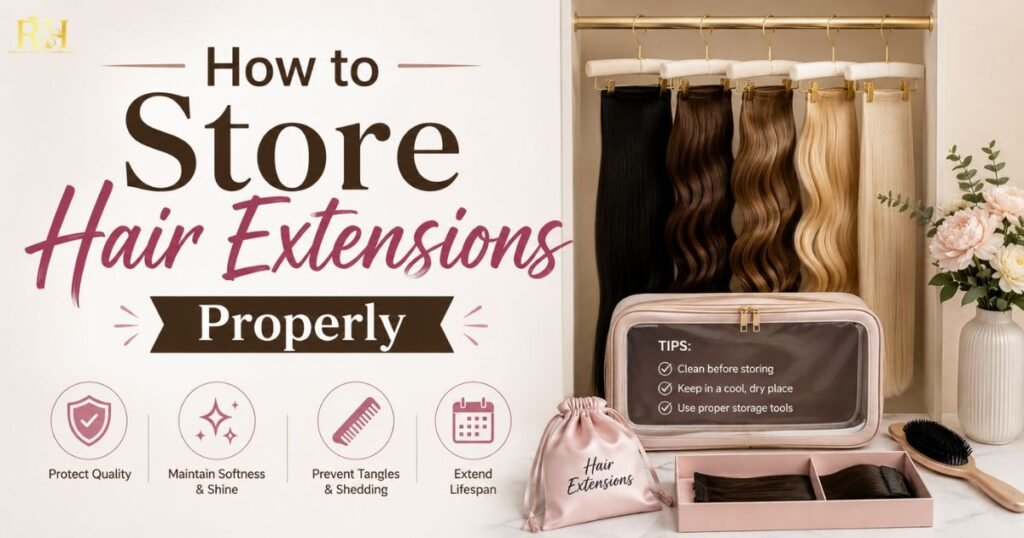
Quality hair extensions are an investment, and the way you store hair extensions when they are not in use is what protects that investment. Proper storage offers three major benefits.
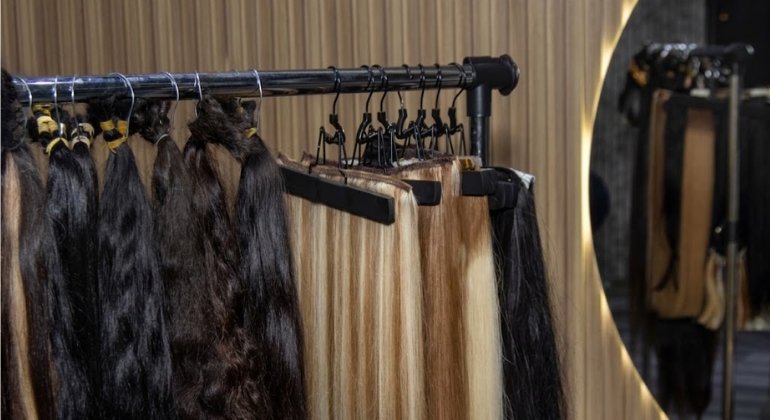
First, it keeps the cuticle layer of the hair smooth. Human hair extensions still have a natural cuticle, and friction from being tossed in a bag or drawer roughens that cuticle over time, leading to dryness and frizz. Second, correct storage prevents tangling. A tangled weft or clip-in set is far harder to repair than to prevent, and aggressive detangling often causes shedding. Third, storing hair extensions correctly extends their usable life. Extensions that are washed, dried, and stored using the right method can realistically last twelve months or longer with regular wear, while poorly stored sets often become unusable within a few weeks.
How Extension Type Changes the Way You Should Store Hair Extensions
One detail most guides skip when explaining how to store hair extensions is that the best method depends heavily on the type you own.
Clip-in wefts are the easiest to manage because they are removed daily. They do best on a dedicated extension hanger or in a flat storage box, laid out so the clips do not snag the hair underneath. Tape-in extensions are more delicate; since the tape bonds can soften with heat, they should never be stored near a heater, radiator, or sunny window, and they should always lie flat rather than hang, to protect the adhesive strip. Sew-in wefts and bulk hair store well rolled loosely or twisted, then secured in a breathable storage bag. I-tip, U-tip, and V-tip extensions, which use keratin or silicone-lined bonds, should be stored upright in a box or pouch so the bonds do not crush together and fuse.
Curly and wavy textures also need different handling than straight hair. Loosely finger-coiling or twisting curly extensions before storage helps the curl pattern hold its shape, while straight extensions should be laid flat and brushed smooth so they do not develop creases.
How Long Can You Store Hair Extensions
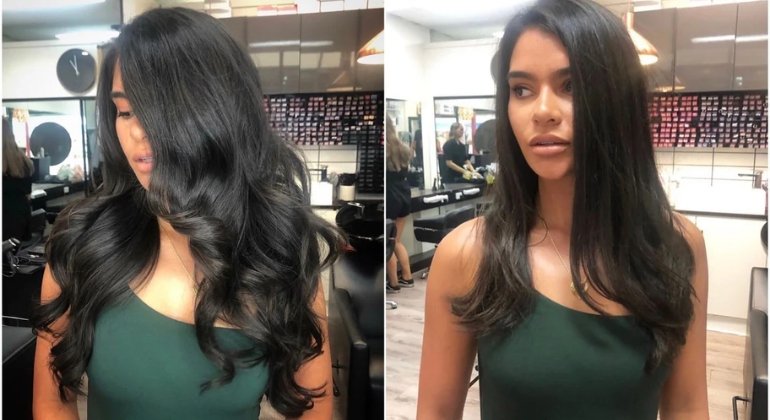
A common question is how long extensions can sit in storage before quality declines. Properly washed, dried, and packed human hair extensions can be stored for one to two years without significant loss of quality, since the hair itself does not “expire” the way skin or food products do. What does degrade faster is shape and texture if extensions are stored damp, exposed to sunlight, or left tangled, which is why following the prep checklist above matters more than the calendar.
Common Mistakes That Damage Stored Hair Extensions
Even well-meaning owners make a few avoidable errors when they store hair extensions.
- Packing them away while still slightly damp, which leads to odor and mildew.
- Using tight rubber bands or elastics that crease or break the strands.
- Leaving extensions near a window or under direct light for extended periods.
- Stacking heavy items on top of a storage box, which crushes the bonds or wefts.
- Forgetting to brush before storage, which guarantees tangles on the next wear.
The Right Way to Pack Hair Extensions While Traveling
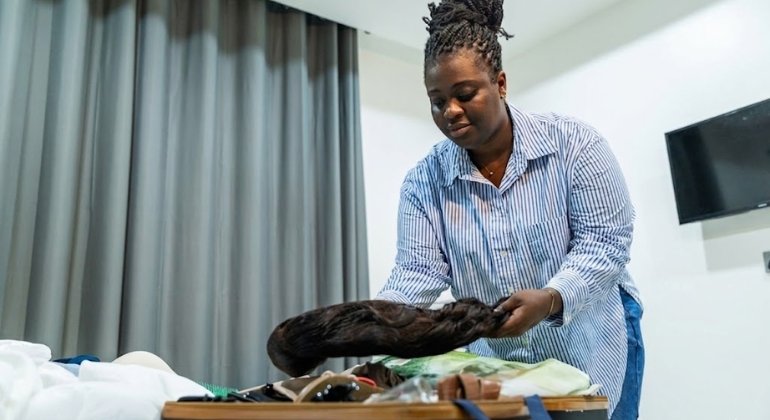
Travel is where storage habits are tested the most. Brush and lightly twist your extensions, then place them in a compact storage box or a dedicated travel pouch rather than loose in a suitcase pocket. If space is tight, a folded extension hanger tucked between clothing works well and keeps the hair flat rather than crumpled. Keep extensions away from liquids and toiletries in your bag, since leaks can leave both stains and odors that are difficult to wash out.
How to Revive Hair Extensions After Improper Storage
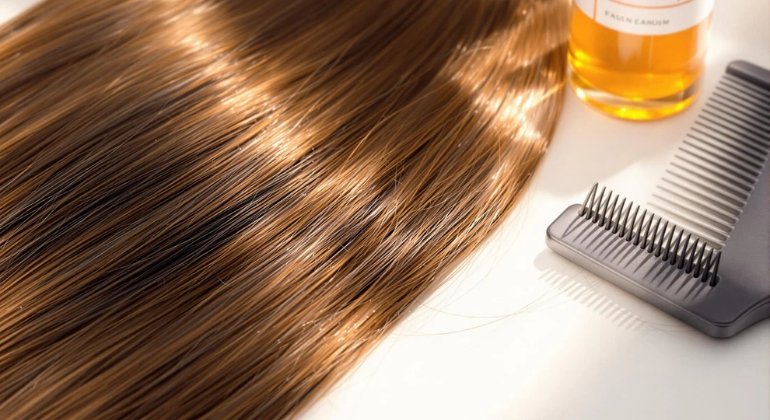
If your extensions have already become tangled or lost their softness, they are often salvageable. Fill a basin with warm water and a generous amount of moisturizing conditioner, then submerge the extensions and let them soak for several hours or overnight. Rinse thoroughly with cool water to seal the cuticle, then let the hair air dry on a flat towel rather than wringing it out. Once dry, gently brush from the ends upward, and finish with a small amount of argan or coconut oil to restore shine. For extensions that remain frizzy after this treatment, a deep conditioning hair mask left on for thirty minutes before rinsing can make a noticeable difference.
Frequently Asked Questions
Can I store hair extensions in a Ziploc bag? It is better to avoid sealed plastic for long-term storage, since trapped moisture encourages mildew; a breathable bag or box is safer.
Should I store hair extensions wet or dry? Always store extensions completely dry. Damp hair stored in an enclosed space is the top cause of odor and bacterial buildup.
Do synthetic and human hair extensions need different storage? Synthetic fibers are more sensitive to heat and should be kept away from any warm storage area, while human hair extensions tolerate normal room temperatures but still need to stay dry and shielded from sun.
How often should I check on stored extensions? If a set will sit unused for several months, check on it every few weeks to confirm it remains dry and tangle-free.
Final Thoughts
Knowing how to store hair extensions properly is what separates a set that looks salon-fresh after a year from one that needs replacing after a few wears. A little preparation, the right container, and a cool, dry storage spot are all it takes to protect your investment and keep your hair extensions soft, shiny, and ready whenever you need them.
Ready to upgrade to extensions worth taking care of? Contact our team today for expert advice and an exclusive discount on your next set of premium hair extensions.
Ready to find your perfect match? Contact us today for expert advice and exclusive discounts on premium human hair extensions.
📲Phone/WhatsApp: +1 (206) 698‑5133
🛜Instagram: RAW HAIR LUXURY COMPANY
🌐Tik Tok: RAW HAIR LUXURY
📧 Email: Rawhairluxury.us
🌐Website: rawhairluxury.com