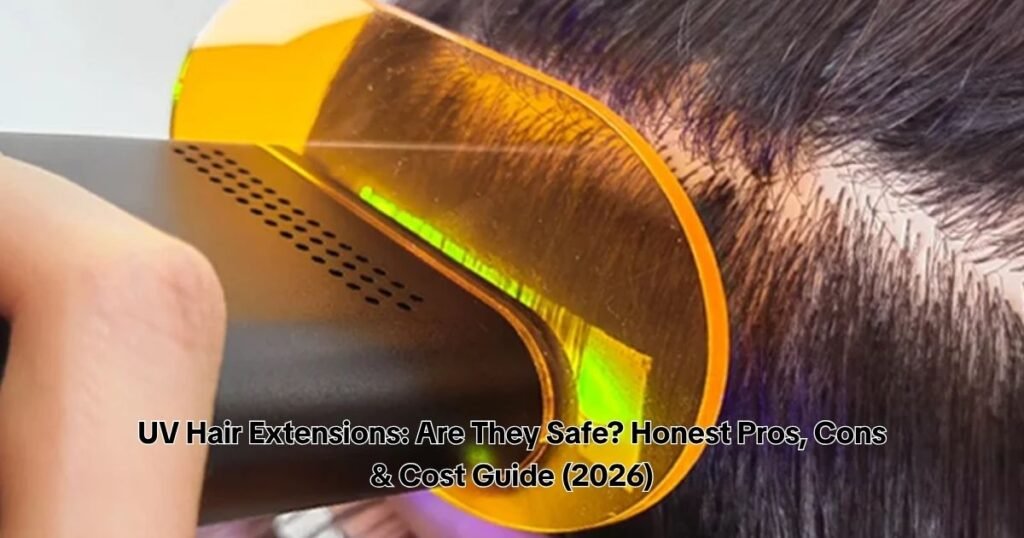
UV hair extensions, also marketed as V-Light extensions, bond strand by strand using a light-cured resin instead of heat or tape, and the trade-off is real: an almost invisible attachment point in exchange for scalp exposure to UVA light, a wavelength range regulators classify as carcinogenic with repeated use. They’re not dangerous in one appointment, but they’re not risk-free either, and most articles covering this method skip that part entirely.
What Are UV Hair Extensions?
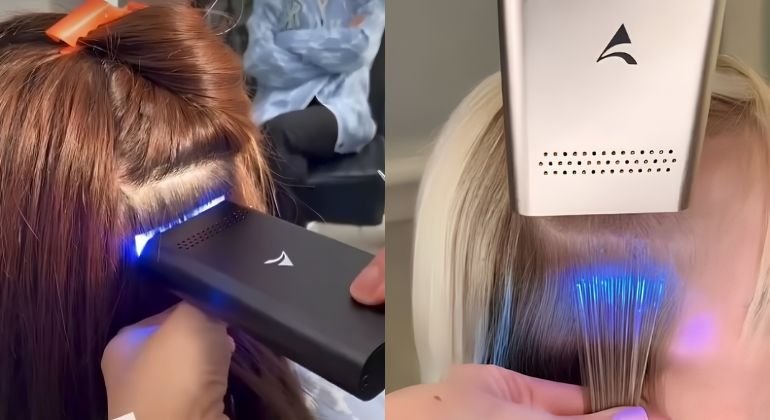
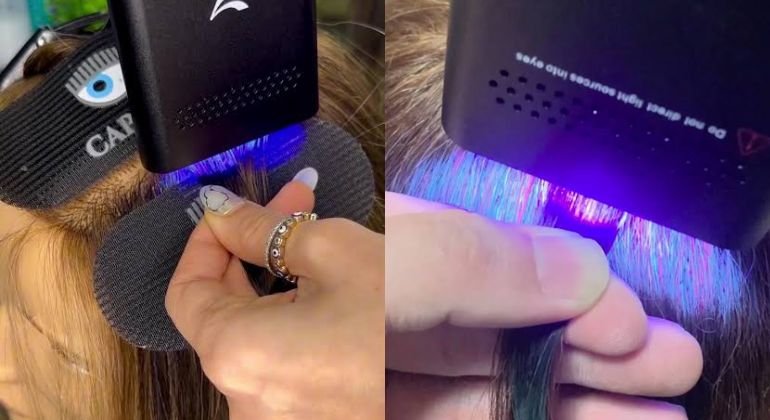
UV hair extensions, sometimes sold under brand names like V-Light, are a strand-by-strand installation method that uses a UV-curable resin instead of melted keratin or adhesive tape. A stylist attaches a small extension strand to a section of natural hair, applies a drop of resin, then holds a handheld UV or LED device against the bond for a few seconds until it hardens. The result is a flat, low-profile bond that sits closer to the scalp than a tape weft or a keratin tip, which is why the method gets marketed heavily toward people with fine or thinning hair.
One clarification worth making up front: UV hair extensions are not the same product as UV-protective hair extensions, which are simply extensions treated with a coating that resists sun fading. The names overlap in search results, but the products have nothing in common.
How the Application Actually Works
Manufacturer specs for these devices typically list a curing wavelength of 395 to 405 nanometers, held against each bond for roughly 3 to 10 seconds. A full head usually takes 30 to 90 minutes, faster than the 2 to 3 hour wait common with keratin bonds. Worth knowing: some brands label this range “UV-B” in their marketing, but 395 to 405 nanometers actually falls inside the UVA band (315 to 400nm) under standard photobiology classification, not UVB (280 to 315nm). It’s a small labeling error, but it matters when you’re trying to research the actual safety profile, since UVA and UVB carry different risk characteristics.
The process itself follows four steps: sectioning the natural hair, applying a small amount of resin to the bond point, curing it under the light, then repeating strand by strand across the head before a final blend and style.
Are UV Hair Extensions Safe? What the Research Actually Says
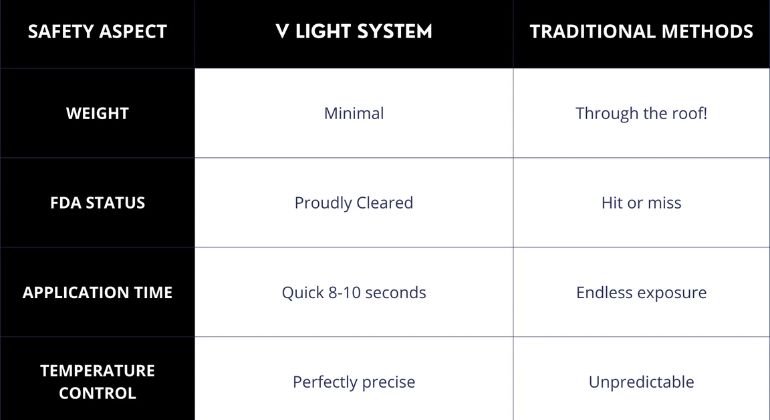
This is the question most marketing pages either skip or wave away, so it deserves a straight answer built on actual sources rather than reassurance.
The Light Exposure
The wavelength used to cure V-Light resin sits in the UVA range, the same range used in gel manicure lamps. The International Agency for Research on Cancer (IARC), the World Health Organization’s cancer research arm, classifies UV radiation as a whole, including UVA, as a Group 1 carcinogen, its highest-risk category, based largely on tanning bed and sunbed research.
The closest direct research on curing-lamp exposure comes from a 2023 study in Nature Communications, where researchers at UC San Diego exposed mammalian skin cells to a UV nail polish dryer and found it caused DNA damage and cell death, with mutation patterns resembling those seen in skin cancer. A single 20-minute session killed 20 to 30 percent of exposed cells in their model. That study looked at nail lamps, not hair extension curing tools specifically, and a hair extension bond is cured for seconds at a time on a much smaller area than a full nail-lamp session, so the exposure profile isn’t identical. But the underlying light source is the same technology, which is a meaningful data gap the marketing rarely mentions.
To be fair to the other side of this: separate research quantifying real-world nail lamp exposure has found that typical sessions stay well under occupational UV exposure limits, and regulatory reviews have generally described these lamps as low risk when manufacturer directions are followed. The honest summary is that the science is genuinely mixed and still developing, not settled in either direction, which is exactly why asking your stylist about it matters more than trusting a product page.
The Adhesive
The resin used in UV bonding is cyanoacrylate-based, the same chemical family as super glue. A systematic review published in Contact Dermatitis looked specifically at allergic contact dermatitis among hairdressers and beauticians performing hair extension, eyelash, and nail applications with these adhesives, and documented real cases of scalp irritation and allergic reaction tied to cyanoacrylate exposure. A separate case report published through the National Institutes of Health documented a patient who developed contact dermatitis from cyanoacrylate-based wig adhesive, confirmed through patch testing. Reactions are not common for most people, but they’re documented, not hypothetical.
How to Protect Yourself
None of this means skip the service. It means ask a few direct questions before you sit in the chair:
- How long is the light held against each bond, and is exposure limited to the bond point rather than the surrounding scalp?
- Do you use any kind of shield or barrier around the treated section?
- Are you on any medication that increases UV sensitivity, such as certain antibiotics, oral contraceptives, or retinoids? Flag this to your stylist beforehand.
- Have you had any reaction to adhesives, glues, or acrylates in the past, including nail products or false lashes?
This article covers general information, not medical advice. If you have a history of skin sensitivity, photosensitivity, or scalp conditions, it’s worth a quick conversation with a dermatologist before booking.
Do UV Hair Extensions Damage Your Hair?
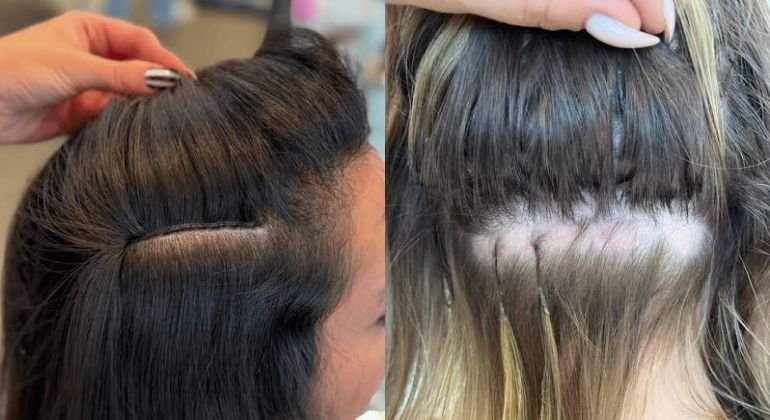
Not inherently. The method uses no heat and very little tension, which on paper makes it gentler than keratin fusion. In practice, damage shows up under four conditions: an inexperienced installer, improper removal, poor-quality adhesive, or skipped maintenance appointments. That pattern isn’t unique to UV extensions either; it’s nearly identical to what causes breakage with tape-in extensions and K-tip keratin bonds. Across every strand-by-strand or weft method we’ve covered, the extensions themselves are rarely the real cause of breakage. Bad application, DIY removal, and cheap hair are.
UV Extensions vs Tape-Ins vs K-Tips vs Microlinks
Here’s how UV/V-Light extensions actually stack up against the other strand-by-strand and weft methods on the market:
| Method | Bond Type | Typical Wear Time | Heat or UV? | Best For |
|---|---|---|---|---|
| UV / V-Light | UV-cured resin | 5-8 weeks | UV light, seconds per strand | Fine hair, invisible bonds, targeted areas |
| Tape-ins | Adhesive tape strips | 6-8 weeks | None | Fast full-head application |
| K-Tip (keratin) | Heat-fused keratin | 3-5 months | Heat | Long-term wear, 360° movement |
| Microlinks (I-Tip) | Copper or silicone bead | 2-3 months | None | No heat or adhesive at all |
The pattern worth noticing: UV extensions trade the longest wear time for the flattest, most discreet bond. If longevity matters more to you than invisibility, keratin or microlinks are the stronger fit, and it’s worth reading how cold-fusion microlinks compare to heat-fused keratin tips before you decide between the no-heat, no-UV options.
Who UV Hair Extensions Actually Work Best For
| Good Fit | Better to Skip |
|---|---|
| Fine, thinning, or fragile hair where bulkier bonds show | Anyone wanting the longest possible wear time |
| Targeted volume at the crown, part line, or temples | A history of cyanoacrylate or acrylate sensitivity |
| Short-term, high-precision styling where invisibility matters most | Concern about additional UV exposure to the scalp |
| Clients open to frequent touch-up appointments | Budget-conscious buyers, since specialized tools and training push the price up |
Aftercare: How to Make UV Extensions Last
The 5-to-8-week lifespan only holds up under the right routine:
- Skip washing for 24 to 48 hours after application so the resin fully sets.
- Switch to a sulfate-free, extension-safe shampoo; sulfates break down the bond faster.
- Sleep in a loose braid or low ponytail to cut down on friction and tangling.
- Keep heavy oils and rich conditioners away from the root area, since they can loosen the adhesive.
- Never pull or cut bonds out yourself; improper removal is one of the most common causes of breakage with this method.
- Book maintenance every few weeks as your natural hair grows, rather than waiting until bonds visibly shift.
For a deeper routine that applies across bonded and taped methods alike, our hair extension care and maintenance guide covers brushing technique, product selection, and nighttime protection in more detail.
How Much Do UV Hair Extensions Cost?
For US buyers, a full set typically runs $300 to $800, averaging around $500, based on published salon pricing for the method. Where you land in that range depends on three things: how much hair you need, the grade of hair used, and whether your stylist is experienced with UV curing specifically, since it’s a newer technique than tape-ins or keratin. That price usually bundles the hair and the installation labor, though some salons quote them as separate line items, so ask for an itemized quote before booking.
Hair quality drives more of the long-term value here than the bonding method does. Single-donor, cuticle-aligned hair holds its shine and resists tangling through repeated bond cycles, while lower-grade or heavily processed hair can look fine on day one and start shedding or matting within weeks, regardless of how good the UV installation was. If you’re sourcing your own hair for an install, our guide on how to verify original, unprocessed hair walks through the physical checks worth running before you buy. For a full breakdown of what drives hair extension pricing across every method, see our complete hair extension cost guide.
The Bottom Line
UV hair extensions deliver on the discreet-bond promise better than most heat-fused or taped methods, and for fine or thinning hair, that flat profile is a genuine advantage. But the UVA exposure and cyanoacrylate adhesive are real trade-offs with actual research behind them, not just internet rumors, and any guide that skips that part isn’t giving you the full picture. Ask your stylist the direct questions above, confirm the hair itself is worth the investment, and you’ll have what you need to decide with your eyes open rather than off a product page.
Whatever bonding method you and your stylist land on, the hair underneath the bond still determines how it shines, tangles, and wears months from now. Browse our single-donor, cuticle-aligned Vietnamese hair bundles or reach out with questions about sourcing the right grade for your next install.
Ready to find your perfect match? Contact us today for expert advice and exclusive discounts on premium human hair extensions.
📲Phone/WhatsApp: +1 (206) 698‑5133
🛜Instagram: RAW HAIR LUXURY COMPANY
🌐Tik Tok: RAW HAIR LUXURY
📧 Email: Rawhairluxury.us
🌐Website: rawhairluxury.com