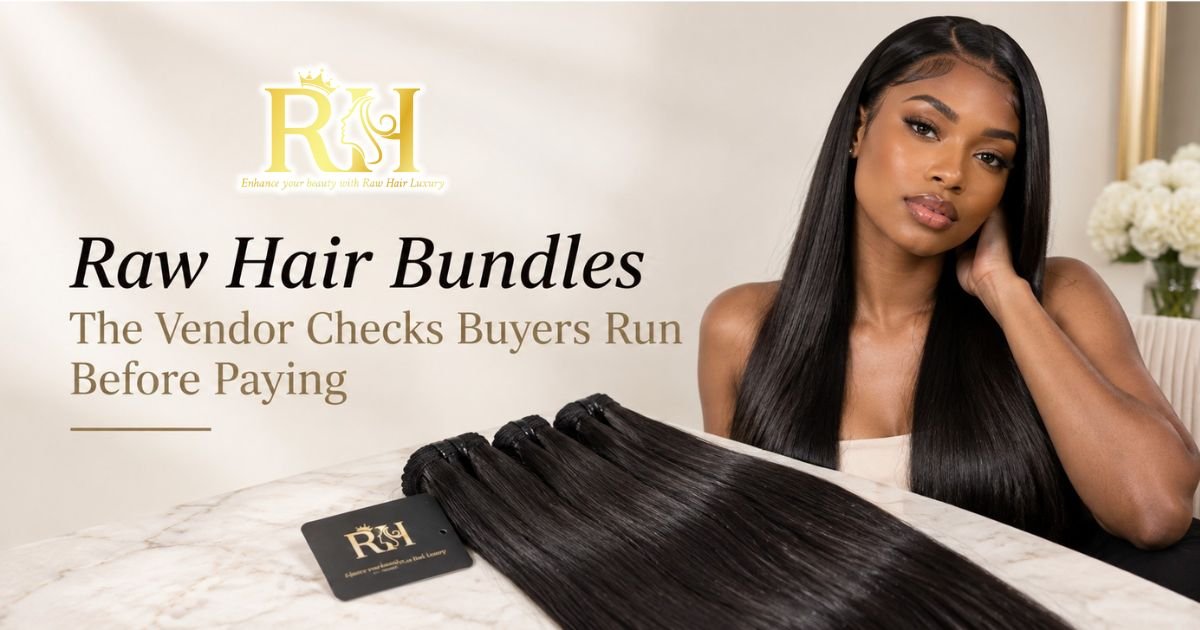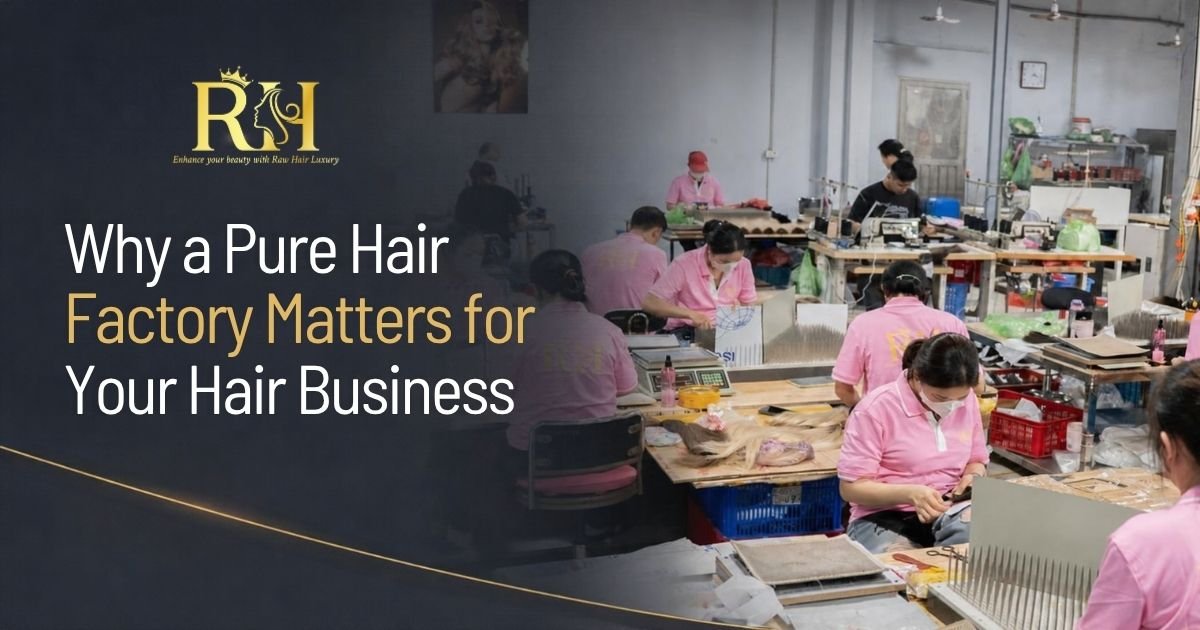


Most US buyers source hair extensions from one of four channels: domestic suppliers with US based inventory, overseas wholesale factories in Vietnam, China, or India, professional beauty distributors, and open marketplaces. Each trades off price, wait time, and how much recourse you have if a bundle arrives matted or mislabeled. This guide compares all four, explains what “virgin,” “Remy,” and “raw” actually mean, and walks through a five-point quality check you can run before you commit to an order.
The 4 Places Americans Actually Buy Hair Extensions
Before comparing individual vendors, it helps to understand the buying channel itself, because that choice drives price, shipping time, and what happens if something goes wrong.
- Domestic direct-to-consumer suppliers. US-warehoused sellers, such as Raw Hair Luxury’s own machine weft and closure range, shipped from a US address. Faster delivery, and any warranty or return process happens under US consumer norms rather than across a border.
- Overseas wholesale factories. Direct sourcing from Vietnam, China, or India at factory pricing, usually with a minimum order quantity, longer sea or air shipping, and a customs step (covered below).
- Professional beauty distributors. Salon-exclusive brands sold through licensed distributors. Quality is generally vetted, but the markup reflects that.
- Open online marketplaces. Amazon, Etsy, and similar platforms. Convenient, but the platform itself does not verify a seller’s hair-origin claims, so buyer diligence matters most here.
| Channel | Typical pricing | Shipping time to buyer | Customs step | Return support |
| Domestic US supplier | Retail to wholesale tiers | 2 to 7 days | None, already in the US | Direct domestic warranty/return |
| Overseas factory (Vietnam, China, India) | Factory-direct, MOQ-based | 1 to 6 weeks (air or sea) | Yes, HTS classification and processing fee | Limited; cross-border returns are costly and slow |
| Professional distributor | Premium, salon pricing | 3 to 10 days | None | Distributor-backed |
| Online marketplace | Wide range | Varies by seller | None for the buyer | Platform policy only; seller verification is limited |
Hair Type and Origin Terms: What “Virgin,” “Remy,” and “Raw” Really Mean
These three words show up on nearly every listing, and they get used loosely:
- Virgin hair refers to hair that has not been chemically colored, permed, or relaxed. The cuticle layer is intact.
- Remy hair means the cuticles are all aligned root-to-tip in the same direction, which is what reduces tangling and matting, regardless of whether the hair is also virgin.
- Raw hair generally refers to how the hair was collected, cut directly and kept in its original cuticle direction, with minimal processing afterward.
None of these terms are regulated or certified by a US agency. A listing can say “100% virgin raw hair” without that claim being independently verified. That’s exactly why the checks in the next section carry more weight than the label on the package.
A 5 Point Quality Check Before (or Right After) You Buy
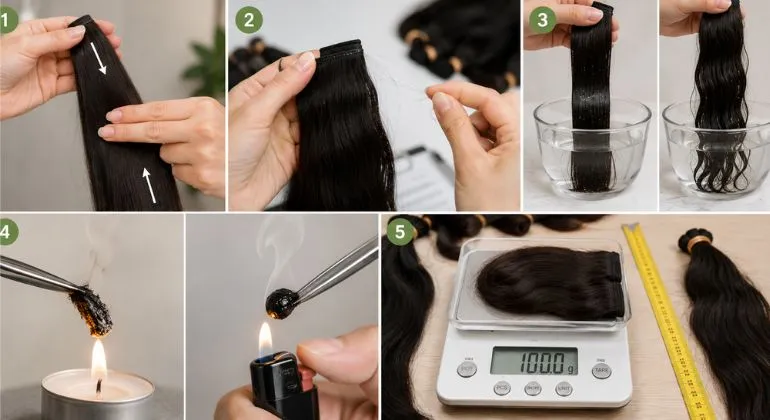
Run these five checks on a sample or on a bundle you’ve already received, ideally within a seller’s return window:
- Cuticle direction test. Run your fingers down the strand, then back up. Genuine Remy hair resists tangling in one direction and tangles slightly in the other. Hair that tangles both ways usually has mixed or stripped cuticles.
- Shedding test. Gently tug a small section near the weft. A few loose hairs from natural shedding or the cutting process is normal; hair pulling out from the weft base itself signals poor construction. If shedding becomes an ongoing issue after install, this guide on stopping shedding covers the maintenance side.
- Water test. Wet a small section and let it air-dry without product. Human Remy hair dries with a natural fall. Heavily silicone-coated or synthetic-blended hair often reverts to an unnaturally high shine or frizzes unevenly.
- Burn test. On a small, discreet snippet only, in a ventilated area: human hair singes, smells like burning keratin, and turns to a soft ash. Synthetic fiber melts into a hard bead and smells like burning plastic. This is the fastest way to catch a mislabeled synthetic blend.
- Weight-to-length check. Reputable sellers state gram weight at a specific length, for example 100g at 20 inches. If the delivered bundle feels noticeably lighter than advertised, that’s a sign of “bundle stretching,” where shorter or lower-grade hair is mixed in to pad the length.
Attachment Method Comparison: Weft, Tape-In, Clip-In, and I-Tip
The buying channel matters, but so does the attachment method, since it determines cost per wear and how often you’re back in the chair (or back on the site reordering).
| Method | Installed by | Typical reinstall interval | Best for |
| Machine weft (sew-in) | Stylist | 6 to 8 weeks | Lowest cost per wear, longer-term wear |
| Tape-in | Stylist | 4 to 6 weeks | Natural lay, low bulk at the root |
| Clip-in | Self-applied | Removed nightly, no reinstall | Occasional wear, no salon visit needed |
| I-tip / microlink | Stylist | 8 to 12 weeks | No heat or glue, longer wear between visits |
For a deeper breakdown of the two most-compared methods, see clip-in vs. tape-in hair extensions.
Scalp Safety: What Dermatologists Want Extension Wearers to Know
This is a gap most buying guides skip entirely, and it shouldn’t be. The American Academy of Dermatology notes that tight hairstyles, including weaves and extensions, can damage natural hair and cause traction alopecia when the pulling force at the root is repeated over time. Research from Johns Hopkins University has found that an estimated one-third of African American women who regularly wear high-tension styles like weaves and extensions show some degree of traction alopecia, with the researchers noting that combining tight tension with chemically relaxed hair is the highest-risk factor, not the hair source itself.
The practical takeaway for buyers: this is a wear-and-tension issue, not a “which vendor” issue. Ask your stylist for looser tension at the hairline, flag any sustained pulling or tenderness beyond the first day, and give your natural hair a rest period between reinstalls.
Importing From Overseas? What US Buyers Need to Know About Customs
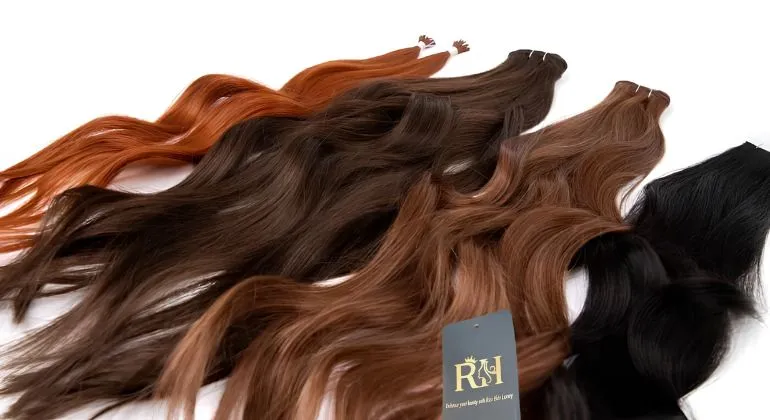
If you’re sourcing wholesale directly from a factory in Vietnam, China, or India rather than buying from a US-based supplier, the shipment has to clear customs. Finished human hair wigs, wefts, tape-ins, and tip extensions are classified under HTS 6704.20.0000 in the US, and a formal CBP tariff classification ruling confirms the general duty rate for this classification is Free.
Duty-free doesn’t mean hassle-free. A formal customs entry still involves a processing fee, correct product documentation, and the risk of delay if the shipment description doesn’t match the actual goods. It also doesn’t shorten the shipping window or lower the minimum order quantity most factories require. That’s the real trade-off: overseas wholesale can lower your per-unit cost at volume, but it adds weeks of lead time and makes a defective shipment expensive and slow to resolve. Many US salons and resellers who do import in bulk still keep a domestic supplier in the mix for restocks between orders.
How to Vet a Hair Vendor Before You Pay
- Check the seller’s accreditation and complaint history through the Better Business Bureau before placing a first order.
- Ask for a current, dated photo or video of your actual bundle or batch, not stock photography from a product listing.
- Get the return and exchange policy in writing before you pay, not after a problem shows up. Raw Hair Luxury’s warranty and returns policy is a useful example of what that should look like in writing.
- Start with a small or sample order before committing to a bulk wholesale purchase, even if the per-unit price is better at volume.
- Cross-check reviews on at least two independent platforms rather than relying only on testimonials posted on the seller’s own site.
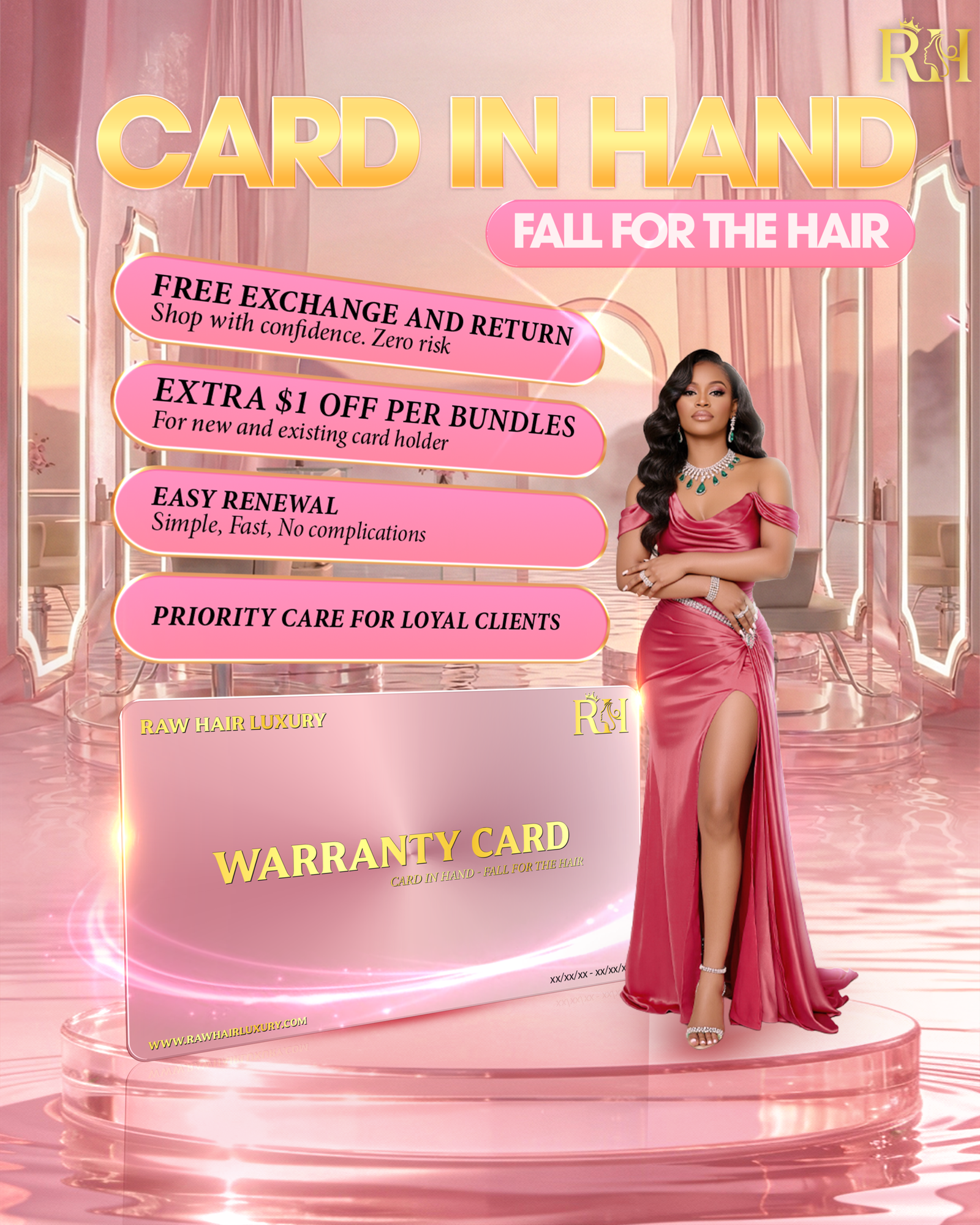
If you’d rather skip the sourcing research entirely, Raw Hair Luxury ships 100% Vietnamese human hair from US-based inventory in Marysville, Washington, with a warranty card program covering free exchanges and returns.
Ready to order? Browse Raw Hair Luxury’s in-stock machine weft bundles, HD closures, and frontals, or contact our team for salon and wholesale pricing.
📲Phone/WhatsApp: +1 (206) 698‑5133
🛜Instagram: RAW HAIR LUXURY COMPANY
🌐Tik Tok: RAW HAIR LUXURY
📧 Email: Rawhairluxury.us
🌐Website: rawhairluxury.com