

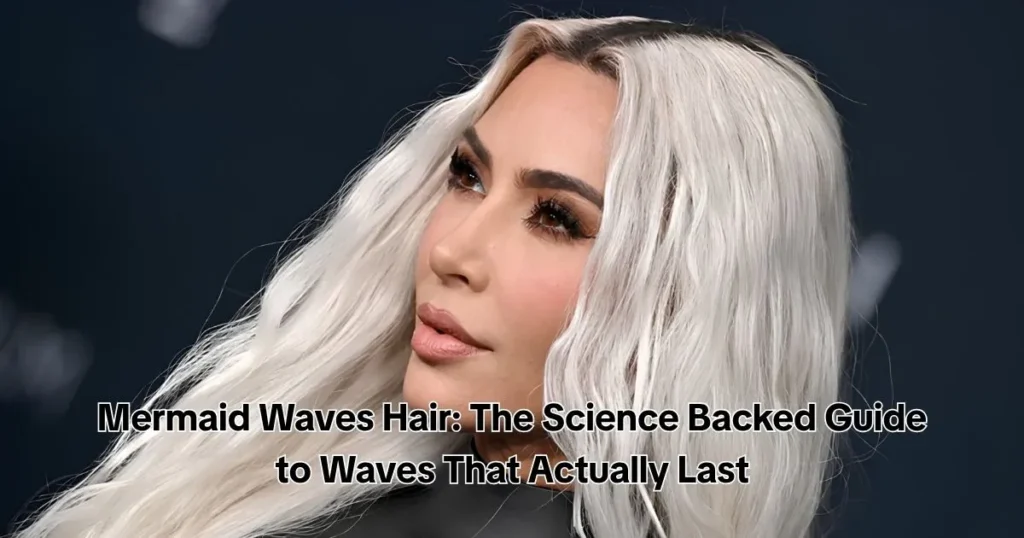
Mermaid waves hair is a styling technique that creates continuous, S-shaped curls running from root to end, echoing the rippled movement of a mermaid’s tail. The difference between waves that hold until bedtime and waves that go flat by lunch has less to do with which tool you buy and more to do with what is actually happening inside each strand when heat meets hair. This guide covers the mechanics behind the style, the tool and technique choices that change your results, and what shifts when you are working with human hair extensions or a wig instead of your own hair.
What Is Mermaid Waves Hair?
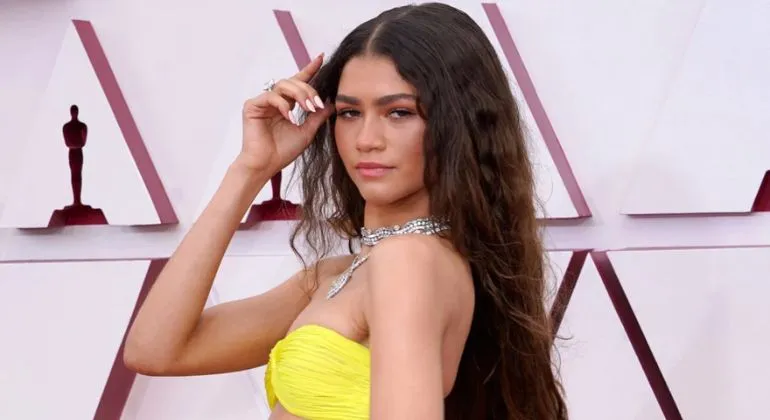
Mermaid waves are built from a repeated S-shaped pattern that runs down the length of the hair, rather than the looser, more irregular texture of a beach wave. The pattern reads as more structured and more voluminous, which is why it shows up so often in bridal, editorial, and red-carpet styling: it photographs cleanly and holds its shape under lights.
Mermaid Waves vs Beach Waves: A Quick Comparison
| Trait | Mermaid Waves | Beach Waves |
| Wave shape | Uniform, repeated S-pattern | Irregular, loose bends |
| Finish | Structured, glossy, defined | Tousled, matte, undone |
| Best tool | 3-barrel waver or small curling wand | Flat iron or large-barrel wand |
| Occasion fit | Weddings, events, photoshoots | Everyday, casual wear |
| Typical hold time | Longer, due to tighter pattern | Shorter, loosens by design |
The Hair Science Behind Long-Lasting Waves
Every curling iron, hair waver, or overnight braid is doing the same basic job: temporarily breaking and then reforming the hydrogen bonds that hold your hair’s keratin strands in place. Hair fiber research from McGill University’s Office for Science and Society explains that wet hair can be readily reshaped because water breaks these hydrogen bonds, and that applying heat evaporates the water and lets the bonds reform in the new, curled configuration. That new shape holds until moisture, whether from humidity, sweat, or your next wash, gets back into the strand and resets the bonds to their original position.
This is why every tip in this guide eventually comes back to two things: keeping moisture out of the hair once it is styled, and starting from hair that is genuinely dry before you begin.
Porosity plays a role too. Hair with an intact, tightly closed cuticle resists letting moisture back in, so the reformed hydrogen bonds stay put longer. Hair that has been bleached, permed, or heavily processed has a rougher, more open cuticle, which lets ambient humidity in faster and drops the wave sooner. This is one practical reason raw, unprocessed human hair extensions tend to hold a curl pattern longer than extensions made from hair that has been chemically stripped and reprocessed to match a color chart: the cuticle is doing less work to keep moisture out.
How to Create Mermaid Waves Hair, Step by Step
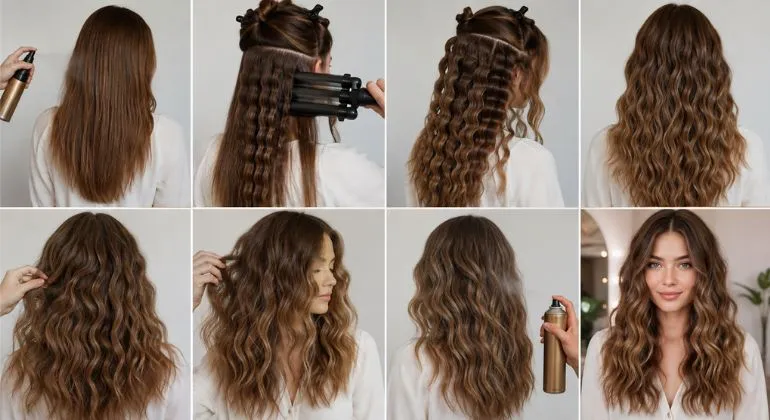
Step 1: Start From Fully Dry, Detangled Hair
Damp patches left inside a section will not let the hydrogen bonds reform properly, so that piece drops its curl first, usually within an hour. If you are working with extensions or a wig, this is the step people rush most. Our guide on how to dry hair extensions like a pro covers the airflow and technique that gets a weft fully dry at the root, not just on the surface, before you ever pick up a hot tool.
Step 2: Pick the Right Tool for Your Wave Pattern
| Tool | Best For | Approx. Heat Range | Skill Level |
| 3-barrel waver | Classic, uniform mermaid pattern, fastest for long hair | Lower-to-mid setting; start low | Beginner |
| Curling wand (1 inch or smaller) | Tighter, more defined S-waves | Lower-to-mid setting; start low | Intermediate |
| Flat iron (wave technique) | Softer, slightly looser waves; doubles as a smoother | Lower-to-mid setting; start low | Intermediate |
| Overnight braids (heatless) | Zero heat exposure, softer undone finish | No heat | Beginner |
On exact temperature, the safest approach is the one dermatologists actually recommend: the American Academy of Dermatology advises using the lowest heat setting that still gives you the result you want, and limiting how long the tool touches any one section. In practice, that means testing a low setting on an inner section first and only increasing it if the wave does not hold after a few tries, rather than starting on high.
Step 3: Section, Wrap, Hold
Divide hair into sections roughly one to one and a half inches wide. Smaller sections give a tighter, more defined mermaid pattern; wider sections give a softer, more relaxed wave. Wrap each section around the barrel, hold for a few seconds until you feel the heat move through the strand, then release into your palm and let the curl cool completely before separating it. That cooling step matters: releasing a hot curl too early lets gravity pull the shape straight before the hydrogen bonds have had a chance to set.
Step 4: The Heatless Overnight Method, With Real Timing
Start with hair that is damp, not dripping, ideally already about three-quarters dry from air drying. Divide it into two to four loose braids or twists, secure the ends, and sleep on it for at least six to eight hours so the hair has time to fully dry inside the braid. Unravel in the morning and separate the waves with your fingers rather than a brush.
Step 5: Set It Without Weighing It Down
Once the waves are shaped, a lightweight mousse, texturizing spray, or flexible-hold hairspray forms a thin, flexible film around the hair that helps the reformed hydrogen bonds resist humidity without gluing the strands together. Heavy oils and rich creams do the opposite: their weight pulls the S-pattern down and straightens it out from the root, often within a few hours, regardless of how well the curl was set.
Mermaid Waves on Human Hair Extensions and Wigs
Styling extensions or a wig is not identical to styling your own hair, mainly because of two things: the hair’s processing history, and the hardware holding it in place.
Raw versus processed hair extensions. As covered above, hair with a less-disturbed cuticle holds a curl pattern longer because it resists moisture re-entry. Raw, unprocessed human hair extensions, which have never been stripped and reprocessed to hit a uniform color, generally fall into this lower-porosity category. If you find your waves are dropping within an hour or two on a set of extensions, over-processed or heavily bleached hair is one of the more common culprits, not necessarily your technique.
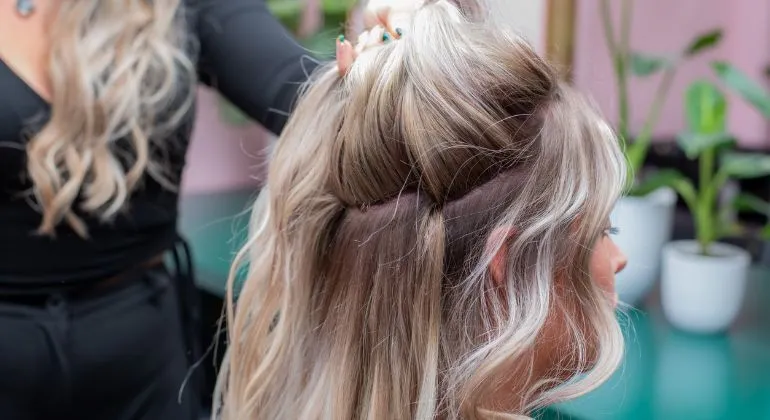
Heat near the attachment point. Keep hot tools at least an inch or two away from tape tabs, clips, or a weft’s sewn track. Heat can soften tape adhesive and weaken the thread on a machine weft over repeated styling sessions. Our comparison of clip-in versus tape-in hair extensions goes into more detail on how each attachment method holds up to daily styling and heat.
Starting from pre-textured hair. If daily heat styling is not something you want to add to your routine, a bundle that already carries a wave pattern, such as a Raw SEA Wavy Bundle, gives you a head start and needs only light finger-styling or a quick low-heat touch-up to read as full mermaid waves.
Troubleshooting: Why Mermaid Waves Fall Flat or Turn Frizzy
| Problem | Likely Cause | Fix |
| Waves collapse within a couple of hours | Hair wasn’t fully dry before styling, or product was too heavy | Confirm roots are bone dry before styling; switch to a lightweight mousse or spray |
| Waves look frizzy instead of defined | Hair was brushed after styling, disrupting the reformed hydrogen bonds | Separate curls with fingers or a wide-tooth comb only, never a brush |
| Waves are uneven across the head | Inconsistent section size or hold time per section | Keep sections a consistent width and count seconds evenly on each one |
| Waves feel stiff or crunchy | Too much strong-hold product applied before the curl cooled | Apply product after the curl has fully cooled, and use a flexible-hold formula |
How to Make Mermaid Waves Last Longer

- Protect before you heat. A heat protectant spray reduces moisture loss at the point of contact, which helps the hydrogen bonds reform cleanly instead of getting scorched out of shape.
- Choose flexible-hold products. Lightweight mousse or texturizing spray lets waves move naturally without collapsing; heavy oils and creams work against the pattern, not for it.
- Hands off the brush. Finger-comb or use a wide-tooth comb to loosen waves when needed. A brush breaks the S-pattern into frizz almost immediately.
- Protect waves overnight. Loosely gather hair into a high pineapple pony or a loose braid before bed, and use a smooth pillowcase to cut down on friction. Our guide on how to wrap your hair or wig at night covers the exact method step by step.
- Refresh instead of restyling. A light mist of water or a wave-refreshing spray, followed by finger-reshaping, can revive waves for a second or third day without full heat exposure.
- Keep the extensions themselves healthy. Repeated heat styling on hair that is already shedding or thinning at the wefts makes waves harder to hold. If shedding is an issue separate from styling, our guide on how to stop your wig from shedding addresses the root cause.
The American Academy of Dermatology’s guidance on preventing damage from weaves and extensions is worth a read as well if you are styling extensions regularly, since heat is only one of several stressors extensions face over their lifespan.
Ready to Build Your Mermaid Wave Look?
Waves only look as good as the hair holding them. Shop our full collection of raw human hair extensions to find a texture that takes a curl cleanly and holds it, whether you’re starting from a straight bundle or a pre-textured wavy set.
📲Phone/WhatsApp: +1 (206) 698‑5133
🛜Instagram: RAW HAIR LUXURY COMPANY
🌐Tik Tok: RAW HAIR LUXURY
📧 Email: Rawhairluxury.us
🌐Website: rawhairluxury.com




One Reply to “Mermaid Waves Hair: The Science Backed Guide to Waves That Actually Last”
2B Hair: What the Wave Pattern Really Means
[…] styled with a low-heat wand or overnight flexi-rods gives the most control over wave size. Our mermaid waves guide walks through the tool choices and cooling technique that decide whether a styled wave holds […]