


Vietnamese hair wigs are consistently among the best-selling human hair wig categories because Vietnamese hair belongs to the Asian hair type, which peer-reviewed dermatology research links to a larger fiber diameter, a thicker cuticle layer, and faster natural growth than Caucasian or African hair. That structural starting point is real, but it only translates into a good wig if the grade, cap construction, and density are also right for your head and your budget. This guide walks through each of those factors so you can evaluate a Vietnamese hair wig the way a hair scientist would, not just by how shiny it looks in a product photo.
What Actually Makes Vietnamese Hair Different for Wigs?
Vietnamese hair falls into the broader Asian hair category, and the most detailed clinical review of that category, published in Clinical, Cosmetic and Investigational Dermatology, found that Asian hair has the largest cross-sectional diameter of the major hair types studied, with a round, cylindrical shape rather than the oval cross-section seen in Caucasian hair or the flattened, elliptical shape typical of African hair (Leerunyakul & Suchonwanit, 2020). The same review reported a thicker, more tightly compacted cuticle layer and a faster growth rate compared with Caucasian or African hair. Independent SEM (scanning electron microscope) measurements back this up at the fiber level, putting Asian hair at roughly double the diameter of Caucasian hair (International Society of Hair Restoration Surgery).
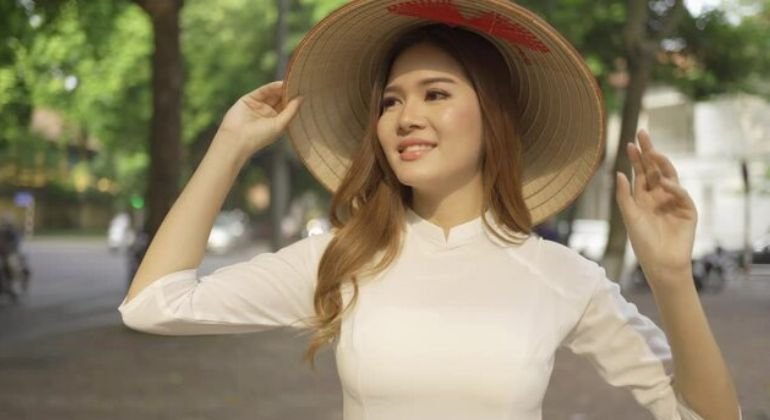
For a wig specifically, that matters in two practical ways. A rounder, thicker fiber reflects light more evenly along its length, which is a large part of why raw Vietnamese hair wigs read as glossy rather than dull under normal light. A thicker, more intact cuticle also resists the friction and abrasion a wig unit takes from brushing, wind, and the constant rubbing of a cap edge against skin and hair, which is a major cause of tangling in lower-grade units. You can read the full cross-section breakdown, including how Vietnamese hair compares to Caucasian and African hair types, in our guide to the science behind Vietnamese long hair.
None of this makes Vietnamese hair immune to damage. A structurally strong fiber that has been over-processed, silicone-coated to fake shine, or cut from multiple donors and blended together will still shed, tangle, and dull out faster than the biology suggests it should. The fiber gives a wig a strong starting point. The grade determines whether that starting point survives manufacturing.
Raw vs Virgin vs Remy: The Grade That Actually Determines Wig Performance
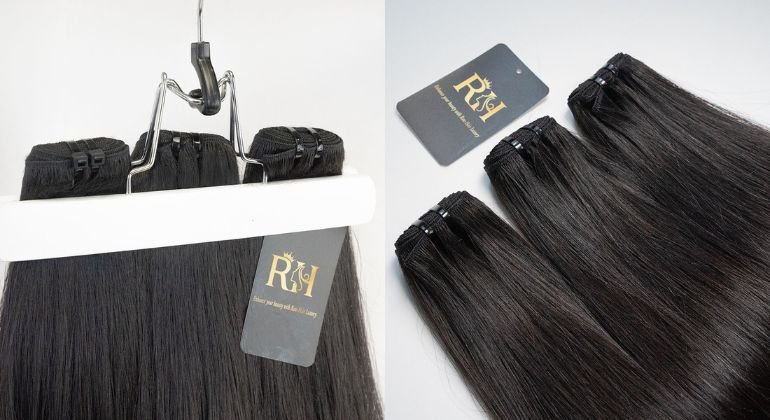
These three terms get used almost interchangeably in wig listings, but they describe different things, and the difference matters more for a wig than for loose bundles because a wig unit gets far more daily friction, heat, and manipulation at the cap edge.
- Raw hair is collected from a single donor, keeps its cuticle intact and running in one natural direction, and has not been acid-washed, chemically stripped, or silicone-coated to create artificial uniformity.
- Remy hair also has an aligned cuticle, but the term is sometimes applied to hair blended from multiple donors or lightly processed to look consistent across a unit.
- Virgin hair means the strands have never been dyed, permed, relaxed, or bleached. That is a separate claim from single-donor sourcing, so hair can be “virgin” and still be a multi-donor blend.
It is worth knowing that “virgin” carries no enforceable legal definition in the United States. The only federal guidance that ever defined it, the FTC’s Guides for Labeling, Advertising, and Sale of Wigs and Other Hairpieces, was formally rescinded effective August 9, 1995 (Federal Register, 1995), which means the label on a wig listing is only as reliable as the supplier behind it. We unpack this in full, including what to ask a supplier before you buy, in The Truth About Virgin Hair Extensions.
| Grade | Cuticle | Donor Sourcing | How It Behaves in a Wig |
| Raw | Intact, single direction | Single donor | Slowest to tangle at the cap edge; holds a consistent texture across the whole unit |
| Remy | Aligned, sometimes blended | Often multi-donor | Generally reliable but can shed unevenly if donors were mixed |
| Virgin (non-Remy) | Not guaranteed aligned | Varies | Higher tangle risk regardless of “unprocessed” claims, since cuticle direction, not chemical history, drives matting |
Cap Construction and Lace Type: What You’re Actually Paying For
Two wigs made from identical hair can perform completely differently depending on how the cap is built. This is the part most buying guides skip, and it is where a lot of the price difference in “Vietnamese hair wigs” actually comes from.
Lace Front, Full Lace, Closure, and 360 Wigs
A lace front wig has lace only across the front hairline, giving a natural part and edge while the rest of the cap is machine-wefted, which keeps the price down. A full lace wig has lace across the entire cap, allowing parting and styling in any direction but requiring more careful handling since more of the cap is delicate mesh. A closure wig, like a 5×5 HD Swiss closure unit, has a lace panel at the crown with the back constructed from machine-sewn wefts, which is a middle ground between natural styling flexibility and everyday durability. A 360 wig has lace running around the entire perimeter, which allows high ponytails and updos that a standard closure or lace front cannot support.
HD Lace vs Transparent vs. Swiss Lace
HD (high-definition) lace is the thinnest and most transparent option, designed to disappear against a wide range of skin tones, but it is also the most fragile and typically needs more careful washing. Standard transparent lace is slightly thicker and more forgiving for everyday wear. Swiss lace sits in between: fine enough for a natural hairline but more durable than HD lace, which is why it shows up on mid-range and salon-durable units.
Wig Density Explained: What 130%, 150%, and 180% Actually Mean
Density describes how much hair is sewn into the cap relative to a natural head of hair, where 100% is roughly what grows naturally from a scalp. It is not the same as hair grade or lace type, and buyers frequently confuse the two.
- 130%–150% density reads as a natural, everyday fullness and is the most common recommendation for a first human hair wig.
- 180% density gives a fuller, more voluminous look while still passing as natural under most lighting.
- 200%+ density is glamorous and photo-ready but can look artificially thick unless the hair texture and parting are managed carefully.
Higher density also means more hair sewn into the same cap footprint, which can make a unit warmer and heavier to wear for extended periods. If you run warm or wear a wig daily, 130%–150% is usually the more comfortable long-term choice even if 180% looks fuller in photos. This matters beyond comfort alone: the American Academy of Dermatology notes that wigs and hairpieces are a standard option for covering hair loss (AAD, alopecia areata treatment), and a breathable, appropriately weighted cap is part of what makes a unit wearable for a full day rather than just a few hours.
How to Check Wig Quality Before You Buy
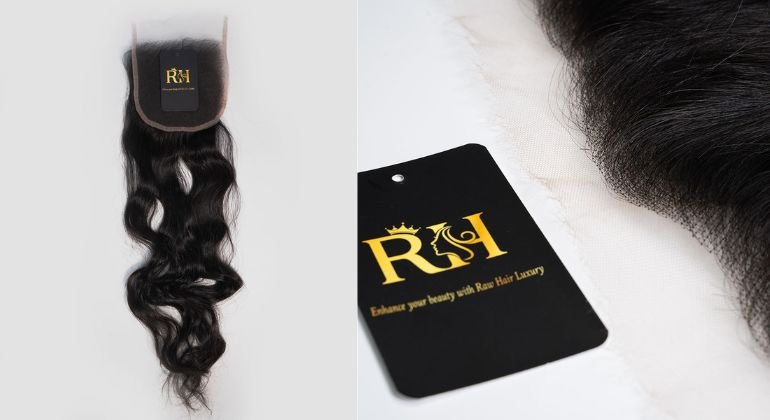
A visual check can tell you a meaningful amount before you commit, whether you’re shopping in person or reviewing product photos and video online.
- Check cuticle direction, not just shedding. Run your fingers from root to tip and then tip to root. Hair with intact, aligned cuticles feels smooth going one direction and slightly rough going the other. Hair that feels equally smooth both ways has often been acid-bathed to erase that texture, a common way lower-grade hair is dressed up to look raw.
- Inspect the lace, not just the hair. Look for even, consistent knots at the part and hairline. Overly bleached knots or visibly thick, plasticky lace are signs of a lower manufacturing tier regardless of what the hair itself is graded.
- Ask for the donor and processing story. A supplier who can tell you whether a unit is single-donor and how it was collected is generally more trustworthy than one who only repeats marketing terms like “100% raw” without specifics.
- Test with water, not just a dry stroke. Genuinely raw, cuticle-intact hair reverts to its natural pattern after a wash and air dry. Hair that was chemically permed into a “wave” pattern to fake a texture will often relax or frizz unevenly after its first proper wash.
- Confirm the cap size and construction match your head. Even excellent hair on the wrong cap size will look unnatural and feel uncomfortable. Measure your head circumference before you order rather than relying on a generic size label.
How Long Do Vietnamese Hair Wigs Actually Last?
Lifespan claims in this category vary wildly, and a lot of the specific year ranges you’ll see quoted online are not independently verified. What clinical literature does support is a general comparison between human hair and synthetic fiber: dermatology clinical guidance puts human hair wigs at roughly one to two years of wear with proper care, versus about six to twelve months for synthetic wigs, since synthetic fibers can’t withstand repeated heat styling (MDedge Dermatology).
Within human hair, grade and care routine matter more than any single number. A single-donor, cuticle-intact raw unit that is washed gently, stored on a stand, and not exposed to daily heat styling will typically outperform a multi-donor Remy unit worn and styled the same way, but exactly how much longer depends on wear frequency, climate, and maintenance, which is why we don’t quote a specific extended range here without our own controlled testing data.
Choosing the Right Wig for Your Face, Head Size, and Lifestyle
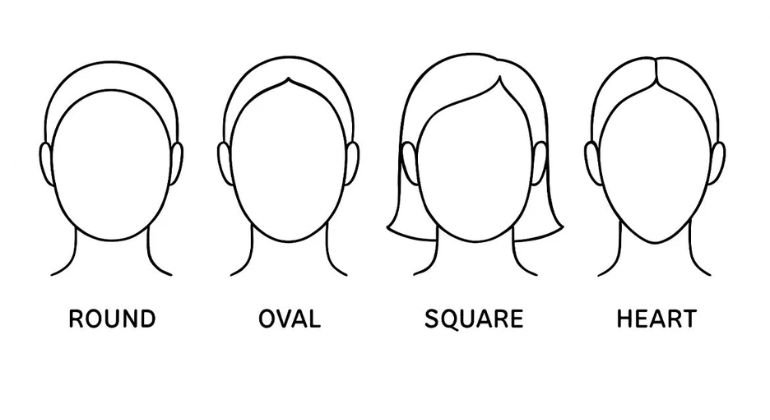
Once the hair grade and cap construction are sorted, fit and styling decisions come down to your own head shape and daily routine rather than the wig’s origin.
- Face shape affects which lengths and part styles look most balanced; rounder faces generally suit longer layers that elongate the face, while angular faces have more flexibility with blunt, shorter cuts.
- Head size is the single most common fit mistake. Most wigs ship in a medium adjustable size, which does not automatically fit smaller or larger head circumferences well. If you have a smaller head, our guide to choosing a wig for a small head walks through the exact measurements to check before ordering.
- Color and undertone should be chosen against your natural skin undertone rather than trends alone; our hair color depth guide explains how professional colorists read levels like this so you can match shade descriptions accurately when shopping online.
- Texture should match how much daily styling effort you’re willing to put in. A straight, single-donor texture like Raw SEA Straight holds a sleek finish with minimal upkeep, while a wavy texture blends more easily with looser natural curl patterns but needs slightly more maintenance to keep its pattern defined.
Caring for Your Vietnamese Hair Wig So It Actually Lasts
Even the best raw, single-donor unit will underperform if it’s washed and dried the wrong way. The two habits that damage wigs fastest are over-washing, which strips natural oils the hair no longer receives from a scalp, and rough towel-drying, which roughs up the cuticle and causes tangling. A general rule is washing every 7 to 10 wears rather than after every use, air-drying on a wig stand rather than a towel-twist, and using a heat protectant any time hot tools are involved.
If a unit you already own has started to feel dry, dull, or harder to detangle, that doesn’t automatically mean it’s beyond saving. We cover the full cleanse-condition-deep-condition process, along with the specific signs that a wig needs revival versus replacement, in How to Revive an Old Human Hair Wig.
Find Your Match
If you want to see single-donor, cuticle-intact Vietnamese hair in wig form rather than just read about it, our 5×5 HD Swiss Closure Wig in Raw SEA Straight and Raw SEA Wavy textures are both built from raw Vietnamese hair with a full lace closure front and a machine-sewn back for everyday durability, available from 12 to 28 inches. Browse the full wig hair collection, or contact our team for a free texture and sizing consultation before you order.
Ready to find your perfect match? Contact us today for expert advice and exclusive discounts on premium human hair extensions.
📲Phone/WhatsApp: +1 (206) 698‑5133
🛜Instagram: RAW HAIR LUXURY COMPANY
🌐Tik Tok: RAW HAIR LUXURY
📧 Email: Rawhairluxury.us
🌐Website: rawhairluxury.com