
Yes, high grade Vietnamese hair is genuinely good quality, and there is now enough published dermatology research to explain why. Vietnamese hair belongs to the Asian hair type, which peer-reviewed studies link to a larger fiber diameter, a denser cuticle layer, and higher mechanical strength than Caucasian or African hair. But that answer comes with a catch most marketing pages skip: “Vietnamese hair” describes an origin, not a guarantee. Grade, donor sourcing, and how much the hair was processed before it reached you decide whether a bundle performs the way the science suggests, or tangles apart in six weeks. This guide walks through the structural science, the honest trade-offs, and exactly how to verify what you are buying.
What Actually Makes Vietnamese Hair Good Quality? The Fiber Science
Vietnamese hair falls into the broader Asian hair category, and the most detailed clinical review of that category found that Asian hair has the largest cross-sectional diameter and the highest hardness and elastic modulus of the major hair types studied, ranking above Caucasian and African hair on both measures (Leerunyakul & Suchonwanit, Clinical, Cosmetic and Investigational Dermatology, 2020). In practical terms, that means a genuine Vietnamese strand starts out mechanically stronger and stiffer than a strand of Caucasian or African hair before a single wash or heat tool touches it.
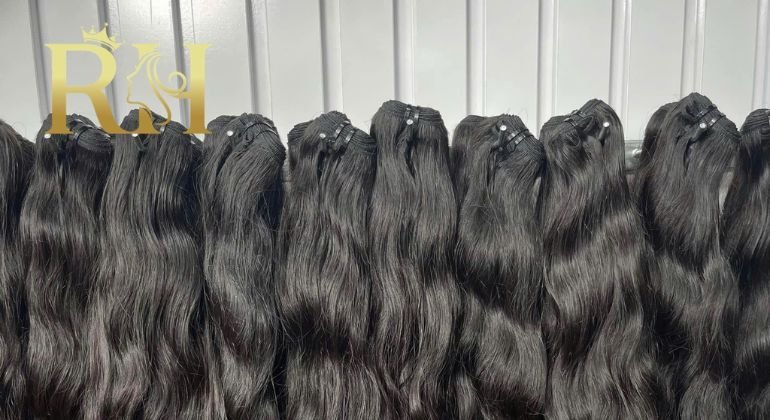
That structural head start explains two things buyers notice immediately. A round, thicker fiber reflects light more evenly along its length, which is why healthy raw Vietnamese hair reads as glossy rather than dull. And a thicker, tightly compacted cuticle layer resists the everyday abrasion of brushing, wind, and cap friction that causes lower-grade hair to fuzz and tangle first. We break down the full cross-section data, including how Vietnamese hair compares fiber-by-fiber to Caucasian and African hair types, in our guide to the science behind Vietnamese long hair.
None of this makes Vietnamese hair immune to damage. A structurally strong fiber that has been acid-stripped, silicone-coated to fake shine, or blended from multiple donors will shed and dull out faster than the biology promises. The fiber sets the ceiling. Grade and processing history decide whether a bundle ever reaches it.
Raw, Virgin, and Remy: The Grade That Actually Determines Quality
This is the part most “is Vietnamese hair good quality” articles gloss over, and it matters more than the country printed on the label.
- Raw hair comes from a single donor, keeps its cuticle intact and running in one direction, and has not been acid-washed or silicone-coated to fake uniformity.
- Virgin hair means the strands have never been dyed, permed, or bleached. That is a separate claim from single-donor sourcing, so hair can be labeled “virgin” and still be a multi-donor blend.
- Remy hair has cuticles aligned in one direction, but the term gets applied loosely to hair that has been lightly processed or pooled from more than one donor to hit a length target.
- Non-remy hair has mismatched cuticle direction and is usually heavily processed to disguise it, which is why it looks fine on day one and mats fast afterward.
Here is the detail almost no vendor discloses: “virgin” carries no enforceable legal definition in the United States. The only federal guidance that ever defined the term, the FTC’s Guides for Labeling, Advertising, and Sale of Wigs and Other Hairpieces, was formally rescinded effective August 9, 1995 (Federal Register, 1995). That original guide specifically addressed how sellers could use terms like “hair,” “virgin hair,” and “custom-made.” Once it was rescinded, nothing stops a listing from calling any hair “virgin” or “raw” with no verification behind it. We unpack exactly what this means for buyers, and how to check a listing yourself, in The Truth About Virgin Hair Extensions, and the full raw-versus-remy grading breakdown for bundles specifically is covered in our Vietnamese hair bundles guide.
How Long Does Vietnamese Hair Actually Last?
Specific year-by-year lifespan claims circulate constantly in this category, and most of them are not independently verified. What clinical guidance does support is a general comparison: human hair wigs and extensions hold up to roughly one to two years of regular wear with proper care, compared with about six to twelve months for synthetic fiber, mainly because synthetic strands cannot tolerate repeated heat styling (MDedge Dermatology).
Within human hair, grade is what moves that number up or down, not the country of origin by itself. A single-donor, cuticle-intact raw bundle that is washed gently and stored properly will reliably outlast a multi-donor remy bundle worn the same way. Exactly how much longer depends on wear frequency, climate, and maintenance, which is why we do not quote a specific multi-year figure without controlled testing data behind it, and any guide that hands you a precise “4 to 5 years” number with no source is asking you to take that number on faith.
Vietnamese Hair vs Other Hair Types: What the Data Actually Shows
Most comparison charts online rank hair by country. The more accurate comparison, and the one dermatology research actually supports, ranks hair by structural type:
| Hair Type | Cross-Section Shape | Relative Diameter | Mechanical Hardness | Typical Natural Texture |
| Asian (incl. Vietnamese) | Round | Largest | Highest | Straight to soft wave |
| Caucasian | Oval | Medium | Medium | Straight to curly, varies widely |
| African | Elliptical / flattened | Smallest, most variable | Lowest (most fragile at the tip) | Tight curl to coily |
Structural comparison sourced from Leerunyakul & Suchonwanit, 2020.
Here is the honest caveat the country-based comparison tables usually skip: labels like “Brazilian” or “Peruvian” frequently describe a curl pattern a seller is marketing, not an actual collection region, since neither country runs a large-scale hair-collection industry comparable to Vietnam, India, or China. If you want origin-specific comparisons with sourcing detail rather than just fiber science, our dedicated guides cover Vietnamese hair vs Indian hair and Vietnamese hair vs Cambodian hair in full.
The Honest Trade-Offs: What Vietnamese Hair Does Not Do Well
A fair answer to “is Vietnamese hair good quality” has to include what it costs you, not just what it delivers.
- Higher upfront price. Genuine single-donor, traceable sourcing is slow and limited, which pushes raw and virgin-grade Vietnamese hair toward the premium end of the market compared with blended or heavily processed alternatives.
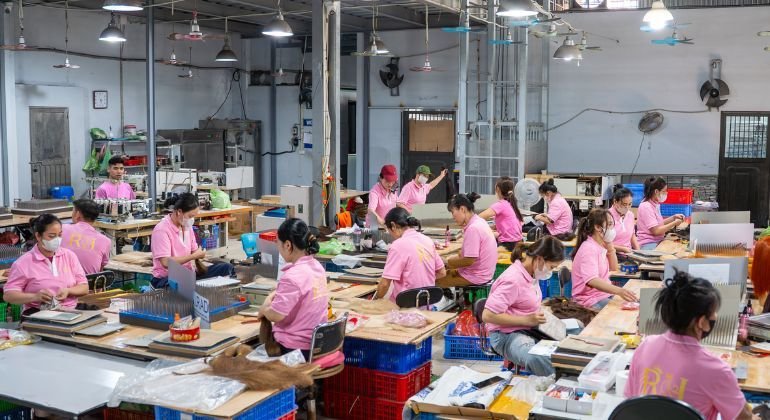
- Longer production and lead times. Because raw material is finite, factory-direct suppliers frequently work made-to-order rather than shipping from unlimited warehouse stock.
- Heavier strand weight. The same thick, round fiber that resists breakage also means Vietnamese hair sits heavier than fine Caucasian or lightweight Asian-blend hair, which can add tension at the scalp in dense installs.
- Installation-related hair loss risk that has nothing to do with origin. Any extension or weave, regardless of where the hair came from, can contribute to traction alopecia if it is installed too tightly or worn without rotation. The American Academy of Dermatology specifically flags weaves and extensions among the styles that need periodic breaks to protect the hairline (AAD, preventing hair damage from a weave or extensions). This is an installation issue, not a hair-quality issue, but it belongs in an honest review.
- Chemical residue is a real, measurable, low-risk factor, not just a marketing bogeyman. A peer-reviewed analysis in the journal Environment and Health tested 44 hair extension samples and detected 169 chemical compounds, 48 of which appeared on hazard lists, including dye components, phthalates, and pesticide residues, as reported by McGill University’s Office for Science and Society (McGill OSS, 2026). The reviewing scientist is clear that hazard is not the same as risk, and ranks hair extensions well below everyday food exposure on any real worry list. Still, it is a genuine reason to favor genuinely unprocessed raw hair over heavily acid-washed or silicone-coated alternatives: fewer processing steps generally means fewer added chemical residues sitting against your scalp.
How to Verify You Are Buying Real Vietnamese Hair
You cannot run a lab test from a product photo, but a few checks catch most misrepresented hair before it reaches your cart.
- The burn test. A small section of genuine human hair singes, curls away from flame, and smells like burnt protein. Synthetic fiber melts into a hard bead and smells like plastic. Ask a supplier to demonstrate this on video before a bulk order.
- The finger-glide test. Slide your fingers from root to tip, then tip to root. Intact, aligned cuticles feel smoother in one direction and slightly resistant in the other. Hair that feels identical both ways has usually been acid-stripped.
- The wash-and-wear test. Genuinely raw hair reverts to its natural pattern after a wash and air dry. Hair chemically set into a “wave” to fake texture often relaxes or frizzes unevenly after its first proper wash.
- Ask for sourcing and import documentation, not just a claim. Legitimate finished human hair extensions and wigs entering the United States are classified under a specific customs subheading, HTS 6704.20.0000, per U.S. Customs and Border Protection rulings on the category (CBP ruling N305621). A supplier who imports directly can typically speak to that process; one who cannot explain how their hair enters the country is a weaker source than one who can.
For the complete verification walkthrough, including the cuticle scrape test and a full do’s-and-don’ts checklist for vetting a vendor, see our step-by-step guide to verifying original bone straight hair, which applies to any texture, not just bone straight.
Where to Buy Quality Vietnamese Hair in the US
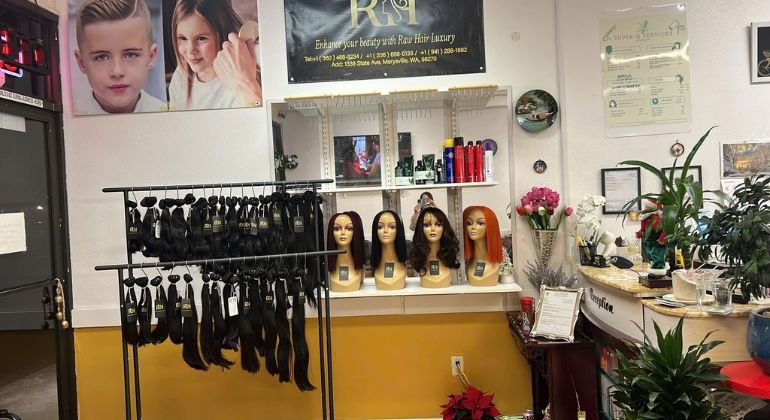
Buying factory-direct from Vietnam gets you a lower per-bundle price if you can verify sourcing yourself and are comfortable with the lead times above. Buying from a US-based supplier with its own domestic inventory trades some of that margin for shorter shipping, easier returns, and a vendor you can actually hold accountable if a bundle does not match its listing. Our guide to buying hair extensions in the USA walks through how to vet either route, including the return-policy and accreditation questions worth asking before you commit to a bulk order.
The Bottom Line
Is Vietnamese hair good quality? The fiber science says yes: genuine, single-donor Vietnamese hair starts out thicker, stronger, and more damage-resistant than several other major hair types, and that is not a marketing claim, it is a measurable property published in peer-reviewed dermatology research. But “Vietnamese” on a label is a starting point, not proof. Grade, donor sourcing, and how the hair was handled before it reached you determine whether you get the hair the science describes or a silicone-coated imitation that fails in a month. Verify before you buy, ask suppliers to show their sourcing rather than just claim it, and judge cost by price per wear rather than price per bundle.
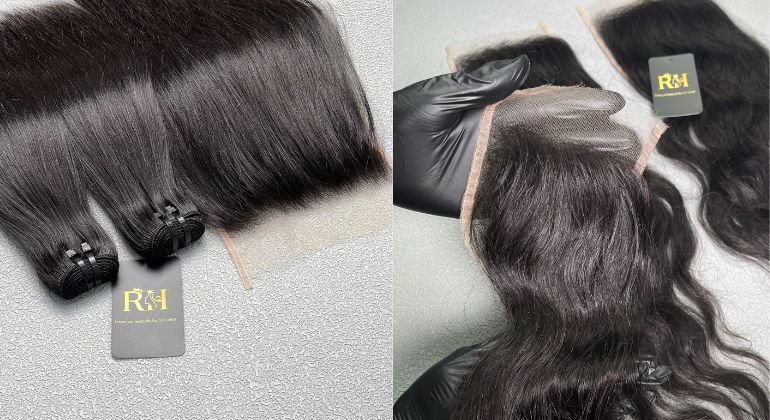
Ready to see single-donor, cuticle-intact raw Vietnamese hair rather than just read about it? Browse Raw Hair Luxury’s raw and virgin Vietnamese bundles, closures, and frontals, or contact our team with sourcing questions.
Ready to find your perfect match? Contact us today for expert advice and exclusive discounts on premium human hair extensions.
📲Phone/WhatsApp: +1 (206) 698‑5133
🛜Instagram: RAW HAIR LUXURY COMPANY
🌐Tik Tok: RAW HAIR LUXURY
📧 Email: Rawhairluxury.us
🌐Website: rawhairluxury.com