

Almost every guide to raw hair bundles says the same three things: the hair is unprocessed, it comes from one donor, and you should buy from a trusted vendor. None explain how to confirm any of it. A reseller can repeat all three claims in a WhatsApp message, send a beautiful swatch cut from a different batch, then ship steamed goods at premium prices.
This guide is written from the buyer’s side: what the grade means, five tests you can run on a sample yourself, the paper trail that separates a factory from a middleman, the import line most articles skip, and the install limits that protect your client’s hairline.
What Raw Hair Bundles Actually Are
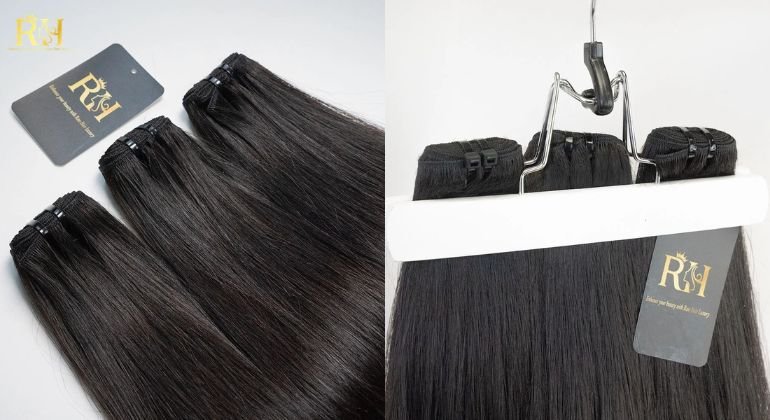
The grade describes hair collected from a single donor and sold with no chemical alteration. No colour stripping, no acid bath, no silicone coating, no steam perming to force a curl pattern. The cuticle scales are still present, still layered, still running one direction from root to tip.
That is not a marketing detail. The cuticle is the structural shield around the cortex, and microscopy of bleached fibres shows what happens when it goes: heavy bleaching strips the cuticle layer and exposes the cortex, altering the fibre’s structural integrity and degrading the melanin granules inside (peer-reviewed study, PMC). Hair that reaches your salon already stripped has spent part of its usable life before it ever touched a client.
Raw vs Virgin vs Remy: The Grade Ladder That Sets Your Price
Raw hair bundles sit at the top of a four-step ladder, and most pricing confusion comes from treating those four words as synonyms.
- Raw: single donor, no chemical processing, no steam texturing, cuticle intact and aligned. Texture reverts to its own pattern after every wash.
- Virgin hair: no colour or perm chemicals, but usually steamed into a uniform curl and often blended from several donors. It photographs identically.
- Remy: cuticles aligned one direction, processing permitted. Most quality salon stock sits here.
- Non-Remy: mixed cuticle direction, acid washed and silicone coated to stop tangling. The coating washes off in roughly six to eight weeks and the matting starts.
Origin tells you far less than grade. Vietnamese, Cambodian and Burmese stock can be top grade or bottom grade depending on the factory. A vendor who leads with origin instead of grade is usually selling a story. Our breakdown of raw versus virgin hair walks through each processing step.
Vendor Vetting: The Paper Trail Behind a Trusted Supplier
A sample tells you what one batch looked like. Paperwork tells you whether the next twelve will match. A trusted vendor produces these without stalling:
- Business registration and export licence matching the name on your invoice. If the bank transfer name differs from the contract name, stop and ask why.
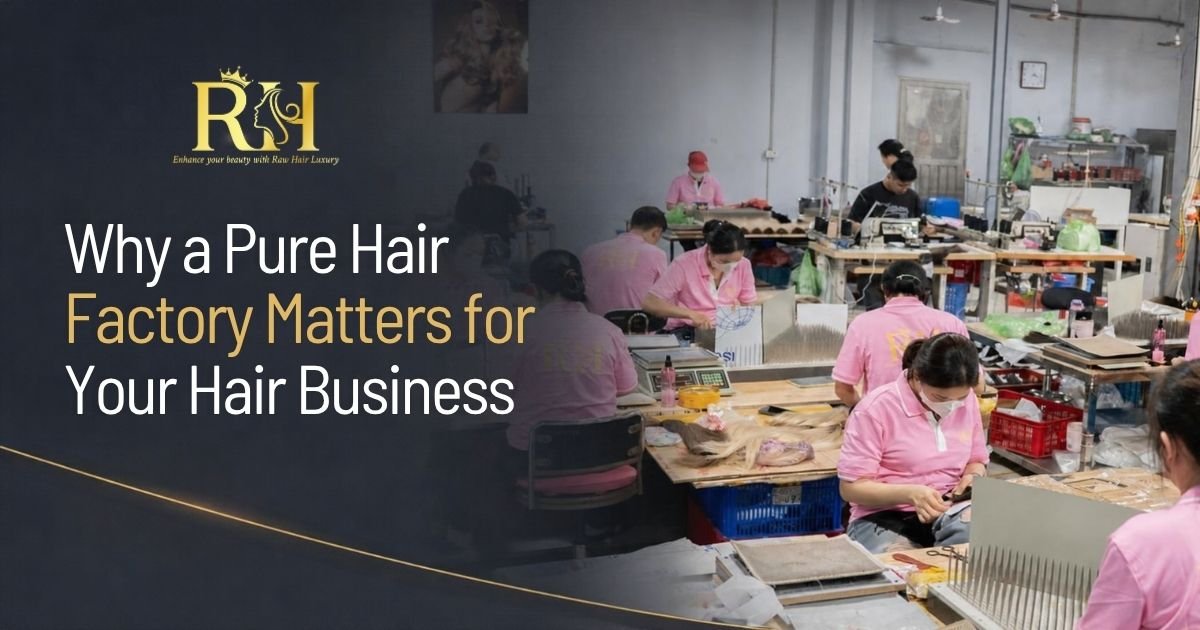
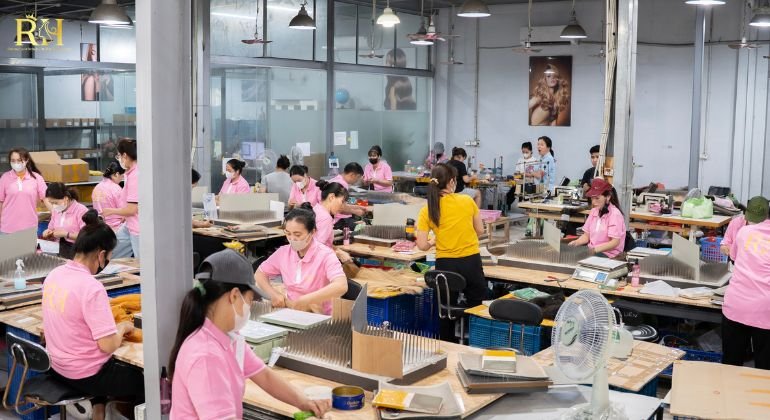
- Unedited factory footage on request, filmed the day you ask, showing the sorting and wefting floor. A real manufacturer does this in ten minutes. A trading company cannot.
- A written tolerance policy covering weight, length and shade variance, with a stated remedy. Goodwill promises are worth nothing once a container is in transit.
- Batch references so a complaint traces to a production run, not a vague apology.
Red Flags in Raw Hair Vendor Marketing
Be careful with suppliers whose social proof is suspiciously uniform. Since 21 October 2024, the Federal Trade Commission’s rule on consumer reviews and testimonials (16 CFR Part 465) has prohibited fake and insider reviews, undisclosed employee testimonials and purchased indicators of social media influence, with civil penalties attached. If a seller’s credibility rests entirely on screenshots they control, that is a sourcing risk and, for anyone reselling in the US, a compliance risk you inherit.
Other warnings: refusal to sell a single sample, quotes far below every other price you hold for the same grade, and refusal to put weight tolerance in writing. Pressure to pay the full balance before production starts is the clearest signal of all. Normal terms are a deposit against production and the balance against inspection or shipping documents.
Protecting the Hairline After the Install
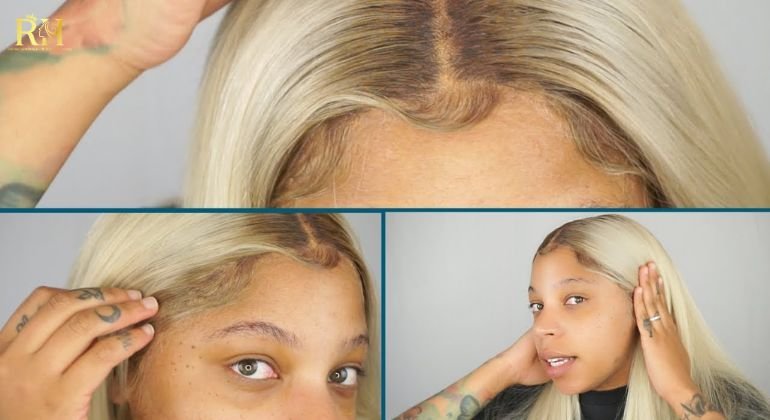
No vendor page covers this, and it decides whether a salon client returns. Good hair installed badly still causes damage.
The American Academy of Dermatology lists extensions and weaves among the styles that cause traction alopecia, a loss pattern that becomes permanent if pulling continues long enough. Their weave guidance builds straight into a service protocol: keep wear periods short, remove immediately on pain or scalp irritation, choose sewn-in methods over bonding glue, and keep cornrow foundations loose. Teach every stylist the four warning signs, which are pain from tight hair, stinging, crusting, and tenting where sections of scalp lift.
Raw hair helps here for a structural reason. An intact cuticle survives repeated installs, so clients reuse rather than reinstall every few months and the scalp gets recovery time between services. Our extension care guide covers the client-facing routine.
The Short Version
Raw hair bundles are worth their premium only when the grade is real, and grade beats origin every time. A trusted vendor proves it with a paid sample you test yourself, traceable paperwork, written tolerances and a willingness to be inspected. Add the import classification and a scalp-safe install protocol and you have a supply relationship that survives past the first order.
Test the hair before you trust the pitch. Every seller sounds the same until a swatch is wet.
Order a Test Bundle and Run the Checks Yourself
We would rather you test our raw hair bundles than take our word for them. Order a sample from general production stock, run all five checks in this guide, and tell us what you find. If it fails any of them, we cover the replacement.
Request a sample and wholesale price list, or send your target length, texture and monthly volume and we will quote within one business day.
📲Phone/WhatsApp: +1 (206) 698‑5133
🛜Instagram: RAW HAIR LUXURY COMPANY
🌐Tik Tok: RAW HAIR LUXURY
📧 Email: Rawhairluxury.us
🌐Website: rawhairluxury.com